India Backs Early Breakthrough in U.S.-Iran Talks, Jaishankar Says
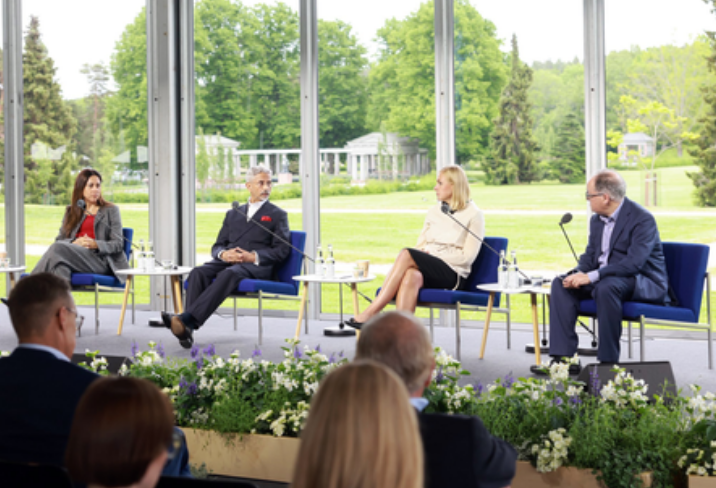

Helsinki — External Affairs Minister S. Jaishankar said India hopes U.S.-Iran negotiations will produce an early breakthrough, warning that the continued conflict is creating problems and leaving much of the world as a “frustrated observer.”
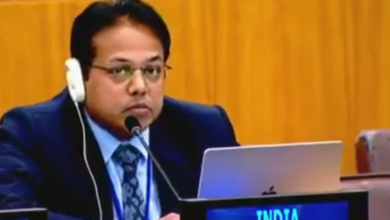
Jaishankar made the remarks during a panel discussion at the Kultaranta Talks in Helsinki with Finnish Foreign Minister Elina Valtonen and UAE Assistant Foreign Minister Lana Nusseibeh. The session focused on “Emerging Powers and the New Geopolitical Competition.”
Asked whether India was stuck in the role of a “frustrated observer” or could do more to address the situation, Jaishankar said many countries were trying to contribute to de-escalation.
“I think at this time much of the world is stuck in the position of a frustrated observer. But a lot of countries are trying to do what they can in this situation. So it’s not for want of trying. I’m talking about us alone, but I think certainly there are not that many countries that would have decent relations with all the parties involved. So, clearly, we have sort of reasoned with the countries. We have been in touch with them. We hope very much that, you know, the US-Iran negotiation leads to an early outcome. And the continuation of the fighting is creating problems,” he said.
Jaishankar said the situation in West Asia is complex because India has strong ties with the key stakeholders, including the United States, Israel, Iran and Gulf countries.
Asked how New Delhi views the challenges posed by the Russia-Ukraine war and the situation involving Iran, Jaishankar said countries often take clear positions on wars they are directly involved in while remaining more equivocal about conflicts they observe.
“Well, you know, mostly countries are committed to wars they fight and are equivocal about ones that they observe as a general proposition. So I can think of a lot of wars close to us where the rest of the world is quite equivocal. In this particular case here’s the challenge. You have, for the sake of simplicity, four parties, which are the US, Israel, and Iran. I’m using the Gulf as a party, though I accept they are; they have a very differentiated position, and we have extremely good, extremely strong relations with all of them,” he said.
When asked whether that assessment also applied to Iran, Jaishankar said India has “good and substantial relations” with Tehran, while noting that New Delhi’s relationships with the four key actors are not identical in scope or nature.
“Yes, we have good; we have good relations, very substantial relations, with Iran. I’m not saying the four relationships are of the same quality. I mean, for example, clearly where the Gulf is concerned, we have ten million Indians living in the Gulf; the largest number of Indian nationals who live outside India are actually in the UAE; the Gulf countries are our primary energy suppliers; many of them would be among our top 10 trading partners,” he said.
Using the UAE as an example, Jaishankar pointed to India’s large community presence, trade ties, energy relationship and growing defense and security cooperation.
“I mean, if I use the UAE as an example… you have a big community… huge trade… significant energy relationship and, in fact, much more than that, a close defense and security relationship as well. So the challenge is in a quadrilateral situation where you have equities, arguably of a different order in each account, how do you manage them while addressing this conflict,” he said. (Source: IANS)