
By Pallavi Nagesha
(Photo Credits: Janardhan Kyathanahalli)
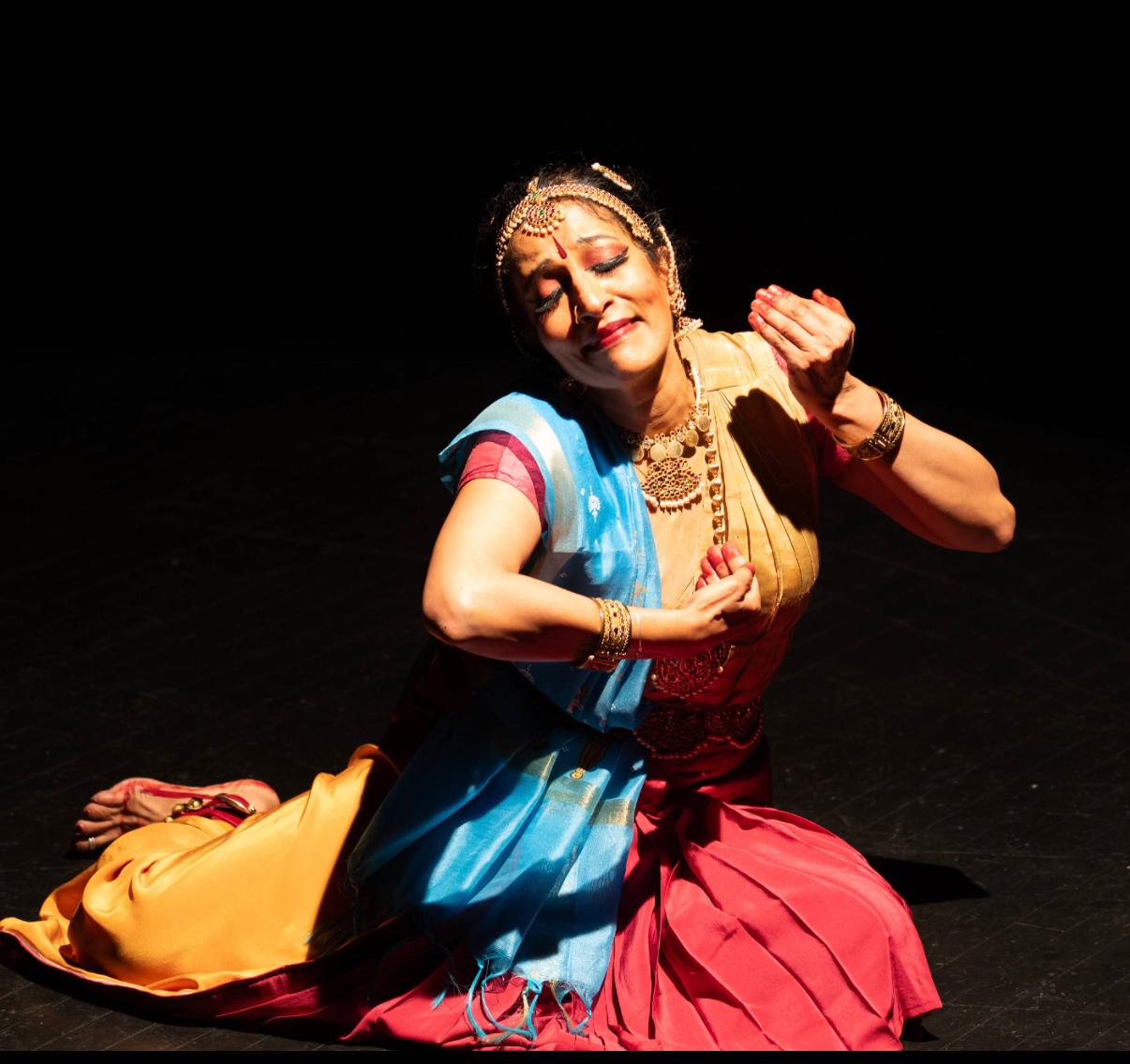
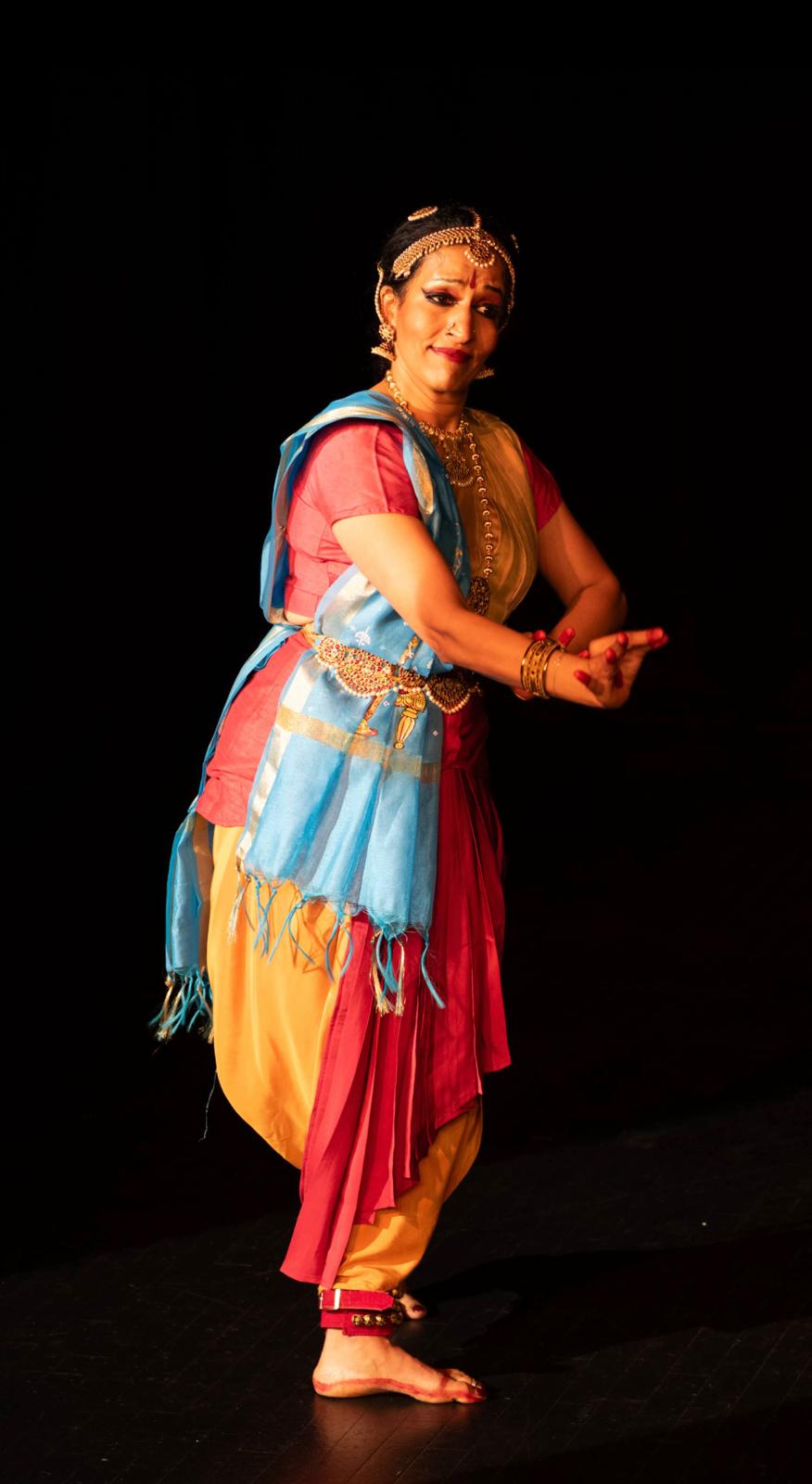
When an artist attempts to thread the needle between the absolute boundaries of physical science and the boundless realm of spiritual experience, the conceptual stakes are incredibly high. In her latest solo production, Adbhutam, debuted at the Black Box Theatre within the Boston Center for the Arts, choreographer and dancer Suman Adisesh set out to explore the profound wonders of the cosmic order through the multi-faceted avatar of Krishna. Developed under the mentorship of Guru Padmini Ravi, the evening put Adisesh’s admirable physical stamina and technical training on full display, offering a production rich in energy and dedication.
Technical Strength and Lineage
Where Adisesh undeniably shined was in her pure nritta (pure dance). Her movements revealed an artist who has invested heavily in rigorous dance conditioning. Her stance was beautifully grounded, her lines were sharp, and her physical endurance was highly commendable—particularly during a lengthy and technically demanding Pada Varnam that anchored the middle of the program.
As a guru behen who shares the same lineage under Guru Padmini Ravi, I found Adisesh’s choreographic blueprint deeply familiar. The structural patterns, spatial design, and movement vocabulary beautifully mirrored our teacher’s signature style, honoring the rich artistic legacy we share.
The production was filled with highlights that were genuinely engaging to watch:
· Vibrant Openings and Transitions: The opening sequence transitioned cleanly into a crisp portrayal of Vasudeva carrying the infant Krishna across the surging Yamuna River.
· Playful Narrative Moments: The Yashodha Stuti captured a wonderful sense of play. The lighthearted interactions between mother and child, featuring a touch of artistic license in the dirt-eating sequence, brought a joyful, human element to the divine narrative.
· Epic Scale: The production closed with a grand, exciting concept in the Bheeshma Stuti, effectively tracking the dramatic transition from the fallen patriarch to the roaring chariot of Arjuna and Krishna on the battlefield of Kurukshetra.

 Opportunities for Growth and Staging Refinements
While the performance excelled in its physical energy, a few adjustments in conceptual framing and technical staging could help elevate the production’s deep emotional potential.
The program notes beautifully invited the audience to ponder cosmic motion and the limits of scientific explanation. However, because the performance itself functioned so beautifully as a classical dance narrative, the connection to physical science was occasionally hard to grasp. The spiritual themes were strong enough to stand entirely on their own.
Additionally, the production encountered a few technical hurdles on the stage:
· Projecting Abhinaya Upward: Because the staging area was technically lower than the audience’s line of sight, some of the crucial, internal expressions—such as Yashoda’s stunned paralysis upon seeing the universe or the Garbha Stuthi prayer—felt directed a bit too far downward. Lifting the gaze and directing the abhinaya (expressive storytelling) higher and more outward would ensure that these profound dramatic peaks are fully visible to the entire room.
· Lighting Management: The lighting design occasionally proved to be a distraction. The placement of the spotlights and cross-lights required the dancer to actively work to catch the light, which unfortunately left her face and specific iconographic gestures—like the transition from the animal movements to the prison cell—in the shadows at times. Smoother, more centered light management would allow Adisesh to fully inhabit her characters without technical interference.
Adbhutam proved that Suman Adisesh possesses a formidable physical instrument; her conditioning, stamina, and technical execution of nritta are attributes any dancer would envy. She has built a rock-solid foundation of strength and lineage. By simply smoothing out the technical production, letting her narrative choices breathe, and directing her expressive gaze upward to meet her audience, Adisesh has all the tools to transform a strong technical presentation into an deeply immersive, moving experience.
(Pallavi Nagesha is a New England-based classical dancer, educator, and arts organizer. She serves as the curator and director of the LearnQuest Dance Festival in Boston, a major annual showcase dedicated to elevating Indian classical dance through professional-grade production and cross-generational collaboration.)