US State Department Exposes Visa Fraud Schemes Involving Fake Staffing Firms and Student Records
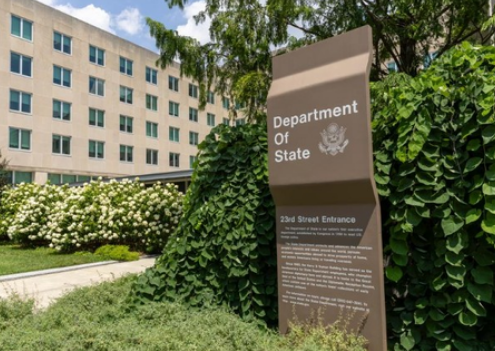

WASHINGTON–The U.S. State Department has identified multiple visa fraud operations involving fraudulent staffing companies, falsified academic records and forged immigration documents as the Trump administration intensifies scrutiny of employment and student visa programs.
In a series of posts on its official X account, the department outlined cases involving immigration fraud networks operating across several countries and detailed enforcement actions taken by American diplomatic missions.
“Fraudsters use sham staffing firms, forged documents, and fake student records to try to cheat the U.S. visa system,” the department said.
“Under President Trump and @SecRubio, the State Department is exposing these schemes, revoking fraudulent visas, and protecting our country from exploitation,” it added.
One investigation involved individuals in an unidentified Caribbean country who allegedly established fraudulent staffing companies and employed unauthorized recruitment agents to bring foreign workers to the United States.
According to the State Department, the operators charged workers thousands of dollars in illegal recruitment fees and placed them in jobs they were not authorized to perform.
The workers were allegedly subjected to exploitative employment conditions through falsified labor contracts. The department said the scheme contributed to visa overstay rates increasing more than fourfold.
Officials at the U.S. Embassy identified dozens of suspicious petitions involving hundreds of workers, prompting criminal investigations.
A separate investigation uncovered a recruitment operation that allegedly used fabricated academic records and false claims about student enrollment to secure participation in U.S. exchange programs.
“A recruiting agency ran a scheme to push unqualified applicants into U.S. exchange programs, using fake academic transcripts and lies about student status,” the department said.
Following the discovery, the State Department’s Bureau of Consular Affairs strengthened its screening procedures and identified 30 additional agencies suspected of fraudulent activity. The effort resulted in 250 visa refusals.
In another case, U.S. officials discovered that immigrant visa applicants in an unidentified South American country had submitted forged police, court and criminal records to conceal their backgrounds.
The U.S. Embassy introduced a fully digital document verification process to address the problem. A subsequent investigation conducted with local law enforcement resulted in dozens of visa refusals and more than 15 arrests.
The department also reported uncovering fraud networks that helped East African nationals obtain visas by falsely claiming citizenship in another country.
According to officials, the applicants used fraudulent identity documents produced by corrupt intermediaries. The State Department said some individuals involved presented potential security concerns.
The findings come as the administration expands efforts to identify fraudulent applications across employment-based, student and immigrant visa categories.
On September 23, the State Department launched an online reporting portal encouraging members of the public to submit information about suspected visa fraud.
At the time, officials said fraudulent practices could involve falsified documentation, fabricated travel itineraries, sham marriages arranged by brokers, shell companies, fictitious employment offers and schemes involving birth tourism.
The department warned that individuals involved in such activities could face visa revocations and referrals to law enforcement agencies for further investigation.
The increased scrutiny is particularly significant for India, which is a major source of skilled foreign workers and international students in the United States.
Employment-based visa programs and student visa pathways are widely used by Indian nationals seeking professional opportunities and higher education in the United States.
Although the State Department did not identify India as the location of any of the specific fraud operations described in its latest announcement, the broader enforcement initiative comes amid heightened attention to immigration compliance.
On October 31, the State Department announced that more than 300,000 U.S. visas had been revoked during Secretary of State Marco Rubio’s tenure.
Officials attributed the revocations to a range of concerns, including criminal activity, public safety risks, immigration violations, fraud and misrepresentation.
The department said it would continue investigating fraudulent visa applications and taking enforcement action against individuals and organizations attempting to circumvent U.S. immigration requirements. (Source: IANS)