Alexander Zverev Becomes World No. 1, Reflects on Overcoming Type 1 Diabetes
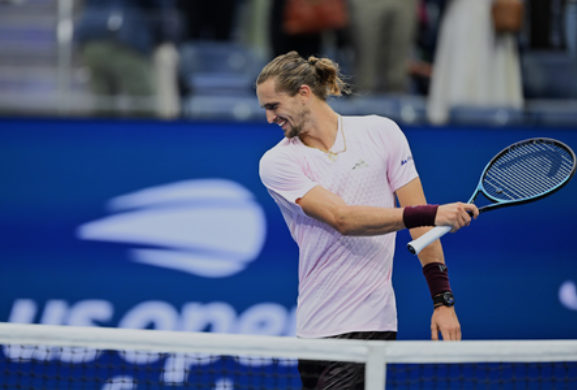

NEW DELHI–German tennis star Alexander Zverev reached the top of the ATP world rankings for the first time Monday, becoming the 30th player in men’s tennis history to achieve the No. 1 position while reflecting on his lifelong battle with Type 1 diabetes and the role his mother played in his success.
The 29-year-old’s rise to the top follows a remarkable 2026 season in which he captured his first two Grand Slam titles, winning the French Open at Roland Garros and the U.S. Open.
At 29 years and six months, Zverev became the second-oldest player to reach the No. 1 ranking for the first time. Only John Newcombe, who achieved the milestone at age 30 in 1974, was older.
Zverev, already an Olympic gold medalist, two-time ATP Finals champion and winner of 26 tour-level titles, has also secured the year-end No. 1 ranking.
In a personal essay published on the ATP website, Zverev discussed the challenges of growing up with Type 1 diabetes, a condition he was diagnosed with at age 4.
Doctors initially warned his family that pursuing a professional sports career would be extremely difficult because of the disease. However, Zverev credited his mother, Irina, with refusing to let the diagnosis limit his ambitions.
His father, Alexander Sr., spent much of Zverev’s childhood traveling with his older brother, Mischa, to junior tennis tournaments, leaving his mother primarily responsible for his early training and medical care.
“When I was born, Mischa was almost 10 years old, and by the time I was old enough to play sports, my father was travelling with him to junior tournaments to help him achieve his dreams. So while everyone supported me, it was mostly my mom and I back home doing everything together. And that is not just related to tennis,” Zverev wrote.
He recalled how his mother responded immediately after learning about his diagnosis.
“When I was four years old, I was diagnosed with Type 1 diabetes. When that happened, my mom said, ‘Okay, he’s still going to be able to play tennis. He’s still going to be able to achieve the dreams that he has’.”
Zverev said managing diabetes from such a young age forced him to develop responsibility and discipline earlier than many other children.
“No matter what obstacle was going to be in my way, she was not going to let anything stop me. I don’t want to say living with Type 1 diabetes helped me in my tennis career, or in life in general. But it definitely made me grow up a bit quicker than I probably would have done without it,” he wrote.
Throughout his childhood, Zverev had to monitor his blood sugar levels and administer insulin injections while balancing school, tennis training and competition.
He continues to manage his diabetes during professional matches, sometimes administering injections while competing.
The German star said his mother shielded him from discouraging conversations with doctors who questioned whether competitive sports would be a realistic career path.
“I think it’s actually more difficult for the parents because it is a shock to walk into a doctor’s office for them to say that their child has diabetes and will have diabetes for the rest of his or her life. The doctors start to tell the parents that different things are not possible for their child and that doing certain activities, like sports, might not be the best life choice. My mom would send me out of the room during those conversations, because she did not want me to hear what was going on.”
According to Zverev, his mother’s determination helped him maintain confidence in his ability to succeed despite the challenges associated with the condition.
“But my mom never accepted those things and would do everything in her power to help me make my dreams come true. Because of that, I never really had any doubt that I could achieve anything, and that was thanks to having a very strong mother by my side. And again, she was my tennis coach until the age of 16, too,” he wrote.
Beyond his achievements on the court, Zverev has established the Alexander Zverev Foundation to support children living with diabetes and help families facing similar challenges.
He said reaching the top of men’s tennis carries particular significance because it demonstrates what people with Type 1 diabetes can accomplish.
Zverev also acknowledged that his ascent to No. 1 came under unusual circumstances because of an injury to fellow tennis star Jannik Sinner.
“It’s a weird circumstance because of Jannik’s injury. This is not the way that you want to reach the top of the sport. Ideally, you would become World No. 1 when everybody is healthy and playing at their best. But now I am here: World No. 1.”
Despite those circumstances, Zverev said his achievement represents something larger than his individual career.
“Most importantly, I feel like me being World No. 1 is extremely important to a large group of people who have the same issues with diabetes. This is not about me.”
He expressed hope that his success would inspire children with diabetes and their families to pursue their ambitions without allowing the condition to define their futures.
“It is great to show everyone out there that they can really achieve their dreams, even with this illness. Yes, with diabetes, you have to grow up faster and take care of yourself a bit better. But everything is possible and you will be able to live a fulfilled life with it. I’m proud as a Type 1 diabetic to show that to families dealing with the disease. And if ever there will be another World No. 1 with diabetes, I would be the happiest person in the world,” Zverev concluded. (Source: IANS)