Zenobia Moochhala, Entrepreneur and Mass. Business Leader, on the Desai Foundation’s Growing Impact in India
For Zenobia Moochhala, the Desai Foundation offers an important example of how community-driven philanthropy can grow into a powerful force for change—and how the next challenge is to scale that impact even further.
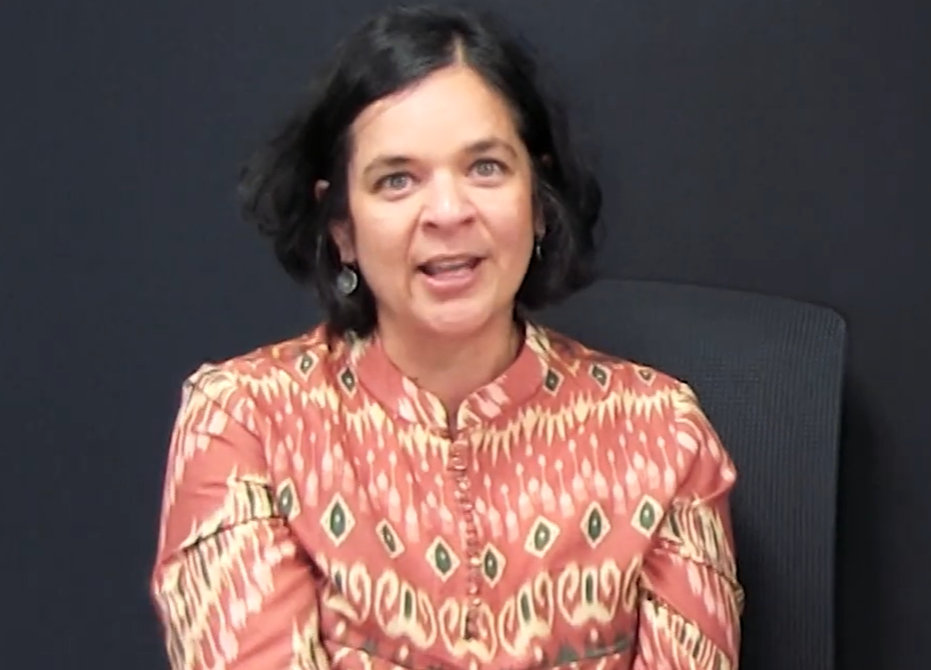

BOSTON–When Zenobia Moochhala discusses the work of the Desai Foundation, she brings to the conversation the perspective of an entrepreneur, business leader and public-sector official who has spent her career thinking about how ideas become organizations, and how organizations can create opportunity at scale.
That perspective is especially relevant as the Desai Foundation prepares for its 12th Annual Lotus Festival on October 10 at Gillette Stadium in Foxboro, Massachusetts. Moochhala will deliver the keynote address at the annual gathering of Indian American leaders, entrepreneurs, philanthropists and members of the Greater Boston and New England community.
To watch her full interview with INDIA New England News, please click here, or on the image below.
But the conversation surrounding the Lotus Festival goes well beyond a single evening of celebration and fundraising. At its center is the work the Desai Foundation is doing in India—and the question of how that work can reach many more women and children without losing the community-based approach that has made it effective.
A focus on women, health and opportunity
The Desai Foundation works with communities across rural India through programs focused on health, livelihood and menstrual equity. The organization says its more than 30 community-driven programs have impacted more than 12 million lives across more than 4,000 communities in eight states.
For Moochhala, the Foundation’s work illustrates the potential of nonprofits to address challenges that are deeply interconnected.
Women’s health, economic opportunity and education are rarely isolated issues. A girl who lacks access to menstrual products or appropriate sanitation, for example, may face barriers to attending school. A woman who gains access to livelihood opportunities can potentially improve not only her own economic circumstances but those of her family and community.
The Desai Foundation’s approach is built around that broader understanding of empowerment.
Among its programs is the Asani Sanitary Napkin Program, which works to improve access to affordable menstrual products while creating opportunities for women to become entrepreneurs and community leaders.
The program is taking on additional significance following a landmark 2026 ruling by India’s Supreme Court recognizing dignified menstrual health as connected to the fundamental right to life under Article 21. The ruling also addressed the importance of menstrual hygiene in ensuring girls can access and participate in education.
The Desai Foundation is expanding its Asani program as schools respond to the new requirements and expectations surrounding menstrual health.
What does it take to scale a nonprofit?
That expansion raises a question that sits at the intersection of Moochhala’s entrepreneurial and philanthropic interests: How do you scale an organization that is already making a difference?
Scaling a nonprofit is fundamentally different from simply making an organization larger.
A program that works in one community may have to be adapted when it moves to another. Local relationships have to be maintained. New partnerships have to be developed. Funding must become more sustainable. Organizations need systems that can support growth while remaining accountable to the people they serve.
Moochhala understands those challenges from her own career.
She was a co-founder of Care.com, helping build the company from an entrepreneurial venture into a global platform that changed how families access care. Today, as Undersecretary of Business Strategies at the Massachusetts Executive Office of Economic Development, she works on business strategy, innovation and economic growth across the Commonwealth.
Her experience has given her a view across the private, public and nonprofit sectors—and an appreciation for the role that collaboration can play in turning promising ideas into lasting institutions.
For nonprofits such as the Desai Foundation, that means thinking not only about the impact of an individual program, but also about the infrastructure required to take that program to a much larger population.
The power of the Indian American community
The Desai Foundation’s growth has also been closely connected to the Indian American community in New England.
The Lotus Festival brings together people from across the region who share an interest in supporting the Foundation’s mission. Entrepreneurs, business leaders, philanthropists and community members come together not only to raise funds, but to build relationships around a common cause.
That community connection can be particularly powerful for a nonprofit working internationally.
The Indian American community can serve as a bridge between the United States and India—bringing financial resources, professional expertise, networks and visibility to organizations working on the ground.
The Lotus Festival, now in its 12th year, has become an annual expression of that connection.
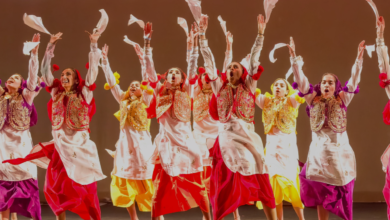
This year’s event will feature a cocktail reception, South Asian dinner, live and silent auctions, stadium experiences, VIP Lighthouse access and performances, including Nihal Singh and Kalyani’s Dance Group.
More than 400 people are expected to attend.
From philanthropy to partnership
Moochhala’s perspective also points toward a broader evolution in philanthropy.
Traditional charitable giving is only one part of the equation. For organizations seeking to grow, partnerships can be equally important.
Businesses can contribute expertise and technology. Government can help create the conditions in which successful programs can expand. Entrepreneurs can bring new approaches to organizational growth. Philanthropists can provide the patient capital that allows nonprofits to experiment, learn and build.
And communities provide something that cannot easily be replicated: knowledge of what people actually need.
That last point is particularly important to the Desai Foundation’s model. Its programs are designed around community engagement rather than simply imposing solutions from outside.
Scaling that model means finding ways to preserve that local connection while building the capacity to serve dramatically more people.
A model with room to grow
The Desai Foundation’s reported reach—more than 12 million lives across thousands of communities—is already substantial. But Moochhala’s interest in the organization reflects a larger question about the future of social impact.
There are many nonprofits with effective ideas. The challenge is turning those ideas into sustainable models that can reach millions of people.
That requires more than funding. It requires leadership, innovation, measurement, partnerships and the ability to learn and adapt.
It also requires a community willing to stay engaged for the long term.
That is what makes the Lotus Festival more than an annual gala. It provides a gathering point for a community that wants to be part of the Foundation’s continuing evolution.
For Moochhala, the Desai Foundation represents the kind of organization where entrepreneurship and philanthropy can meet: identifying a problem, developing a practical solution, building a model around it and then asking how that model can reach many more people.
The work begins with individual women and girls in communities across India.
The larger ambition is to create the systems, partnerships and opportunities that allow their impact to extend far beyond those individual communities.
And that may be the most important question raised by Moochhala’s conversation: not simply how a nonprofit can do more, but how it can scale what works while keeping the people it serves at the center of its mission.