
The Paan Leaf That Took Me Home — A Little Piece of India That You Can Grow in New England
I always thought paan belonged to the tropical world of my childhood. Then I discovered it growing in a Sudbury garden—and suddenly, a little piece of Uttar Pradesh and Bihar was growing thousands of miles from home.
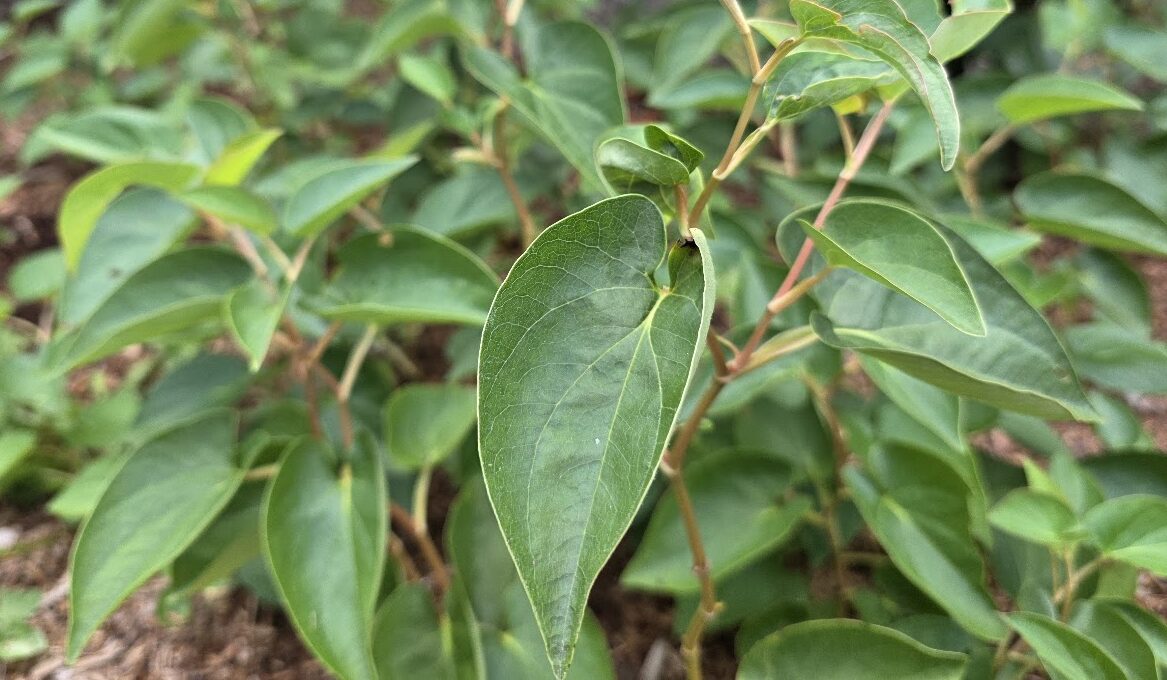

By Upendra Mishra
SUDBURY, MA — There are some plants that are more than plants. They carry memories. They carry people, places, smells, sounds and an entire childhood inside their leaves.
For me, paan is one of those plants.
The very word paan takes me back to the small towns and villages of Uttar Pradesh where I spent my childhood. I have always considered myself one of the least-traveled people in India, but perhaps I didn’t need to travel very far. The world of my childhood was already full of color, sound and stories—and much of it could be found around a little paan shop.
Paan was not just popular around us; it was part of our family life, too. There was almost always a paan set in our home in the village, with everything needed to make a paan ready to go. My father, my stepmother and my aunt were, I would say, literally addicted to paan. When I later moved from the village to Sitapur with my aunt, I acquired an important responsibility: keeping her paan supplies stocked. If the chuna was running low, or the katha, supari or other ingredients were finished, it was my job to run to the store and bring them back. Looking back, it seems like such a small thing, but those errands are part of the texture of my childhood. Paan wasn’t something we occasionally bought—it was simply part of everyday life.
Paan, or betel leaf, is the leaf of Piper betle, a perennial climbing vine in the pepper family, Piperaceae. The plant has a remarkably old history. It is believed to have originated in Southeast Asia and to have been cultivated and spread across tropical Asia for more than two thousand years. Over centuries, it became deeply woven into the social, religious and cultural life of the Indian subcontinent.
But when I think of paan, I don’t first think of botany or history.
I think of that little shop.
A man (sometimes women, too) would sit in a tiny wooden or thatched stall, surrounded by carefully arranged bundles of shiny green paan leaves. In front of him were all the ingredients that went into making a paan: chuna (slaked lime), katha (catechu), chopped supari (areca nut), tobacco for those who wanted it, and often elaichi (cardamom), saunf (fennel), gulkand (rose-petal preserve), coconut, cloves and other fragrant ingredients.
The paanwala’s hands seemed to move almost magically. A leaf would be selected, trimmed, spread open, and transformed in seconds into a little package of flavor, fragrance and tradition.
And there was almost always a radio.
A Bollywood song would be playing somewhere in the background. The sound would mix with the voices of customers, the rustle of paan leaves, bicycle bells, the occasional passing tractor or rickshaw, and the ordinary sounds of a small Indian town.
And then there was the cigarette lighter.
A long piece of rope would hang from the shop, with one end burning like a slow-moving ember. Someone would pull it down, light a cigarette, and let it swing back into place.
Oh, those days!
They seem so ordinary now. Yet looking back, they feel almost magical.
Paan was never just something you ate
Paan was also a language of friendship.
To invite someone for a paan was to invite them to sit down, talk and share a moment. Offering paan to a guest was an expression of hospitality. In many parts of India, it became part of ceremonies, celebrations and religious and social occasions. The leaf itself became a symbol of respect and welcome.
And, of course, there was romance.
Offering paan to a young woman—and having her accept it—could carry a meaning far beyond the leaf itself. In the language of our younger days, it could be a tiny but unmistakable gesture of affection, friendship, even love.
Perhaps that is why paan found its way so naturally into our songs.
An entire generation of folk and Bollywood music used paan as an image of beauty, flirtation, love, longing, mischief and desire.
One of the most memorable examples is Asha Bhosle’s “Paan Khaye Saiyan Hamaro,” from the 1966 film Teesri Kasam. Sung with playful affection and picturized on Waheeda Rehman, the song turns paan into part of a teasing romantic conversation. Even today, hearing it immediately brings back the world of paan shops and rural North India for me.
Then came Amitabh Bachchan and “Khai Ke Paan Banaras Wala” in the 1978 film Don. The song made Banarasi paan, already famous throughout India, part of Bollywood folklore. For many of us, the song wasn’t simply about chewing paan—it was about a certain swagger, a certain earthy North Indian personality, and a whole cultural world.
But there is another paan song that touches me in a very different way.
“Hansi Hansi Panwa Khiyawale Beimaanwa” comes from the great Bhojpuri folk tradition of Bhikhari Thakur, often regarded as one of the most important voices of Bhojpuri folk theater and literature. The song was included in the Bhojpuri film Bidesiya and was sung by Manna Dey.
Here, paan is no longer simply playful or romantic. It becomes part of a story of separation and heartache.
The title itself—roughly, “You made me eat paan while smiling, you faithless one”—has an almost innocent beginning, but the song turns into a lament about a lover who has gone away. That contrast is beautiful and heartbreaking. The smile, the paan, the flirtation—all become memories after the loved one leaves.
That is perhaps the real magic of paan in our culture. It can be playful, romantic, ceremonial, hospitable, mischievous and sorrowful—all at once.
And then I discovered something extraordinary—in Sudbury, MA
For all these years, I had thought of paan as a tropical plant.
Then recently, I met Alka Patel of Sudbury, and she casually told me that she had paan growing in her garden.
I thought I had misunderstood her.
Paan? Here? In Massachusetts?
“You can grow it here,” she told me. “And it keeps coming back every year. It is like mint.”
Like mint?
Now she had my complete attention.
I have grown mint in my garden, and I know how aggressively—and happily—it grows in New England. If paan behaved anything like mint, perhaps I had just discovered something wonderful.
Alka and her husband, Praveen, must have noticed my excitement because they invited me to their home to see the plants. They even offered to give me some to try in my own garden.
When I arrived, Praveen was waiting outside and took me straight to the paan plants.
There they were.
Green. Alive. Growing in an ordinary Massachusetts garden.
I stood there for a moment almost in disbelief.
Then, without thinking twice, I picked a leaf and ate it right off the plant.
It was an oddly emotional moment.
In all my years in India, despite seeing paan everywhere—at shops, markets, weddings and celebrations—I had never eaten a paan leaf directly from the living plant.
And the first time I did it was not in India.
It was in America.
There was something almost poetic about that.
A plant so deeply connected to my childhood, growing thousands of miles away from the place where those childhood memories were formed.
A little piece of India in a Massachusetts garden
After tea, Alka picked a fresh leaf and made me a proper paan, spreading the chuna and katha and adding the other ingredients.
For a few minutes, I wasn’t in Sudbury anymore.
I was back in India.
Back at that little paan shop.
Back with the radio playing an old Hindi song.
Back among the people, bicycles, cigarette and bidi smoke and conversations.
Back in those small towns of Uttar Pradesh and Bihar that seemed so ordinary when I was growing up and now seem impossibly precious.
Before I left, Alka and Praveen gave me several small paan plants to take home.
The entire drive back, I kept thinking about where I would plant them.
I couldn’t wait.
Initially, I thought I would plant them the next day. It was getting late, and I figured they could wait until morning. I put the roots in water and went about my evening.
But the plants looked wilted.
I became nervous.
What if I lost them?
So I went outside.
I dug the holes.
And I planted them that very evening.
Now comes the exciting part.
Will they establish themselves before the first frost?
Will they survive the New England winter?
Will those little green vines return when spring arrives?
I don’t know.
Betel vine generally prefers warm, humid, shady conditions and is much more at home in tropical and subtropical climates than in New England. It is traditionally grown in moist, fertile, well-drained soil and often under controlled shade.
So perhaps what I am attempting in my garden is a little unusual. But that is exactly what makes it exciting.
I am not simply trying to grow another plant.
I am trying to grow a memory.
A little piece of Uttar Pradesh.
A little piece of Bihar.
A little piece of India.
A little piece of those paan shops, radios, friendships, songs and childhood afternoons.
And if those plants come back next spring, I suspect I will be watching them with the same excitement a child feels when something from a beloved old world suddenly appears in a new one.
Maybe someday, sitting in my Massachusetts garden, I will pluck a fresh paan leaf, spread a little chuna and katha on it, add some supari and gulkand, fold it carefully—and take a bite.
And for a moment, New England may disappear.
There will be an old Bollywood song playing somewhere in my head.
And I will be home.
Growing Paan in New England
While visiting Alka and Praveen, I also asked Alka about how she grows paan and recorded a short video on my phone.
If you are curious about how this surprisingly adaptable plant can be grown in Massachusetts, click here or on the image below to watch the brief video.
Who knows?
Perhaps there are more paan gardens hiding in New England than we realize.