Sam Altman Says AI Can Cut Three Months of Startup Work to 17 Minutes
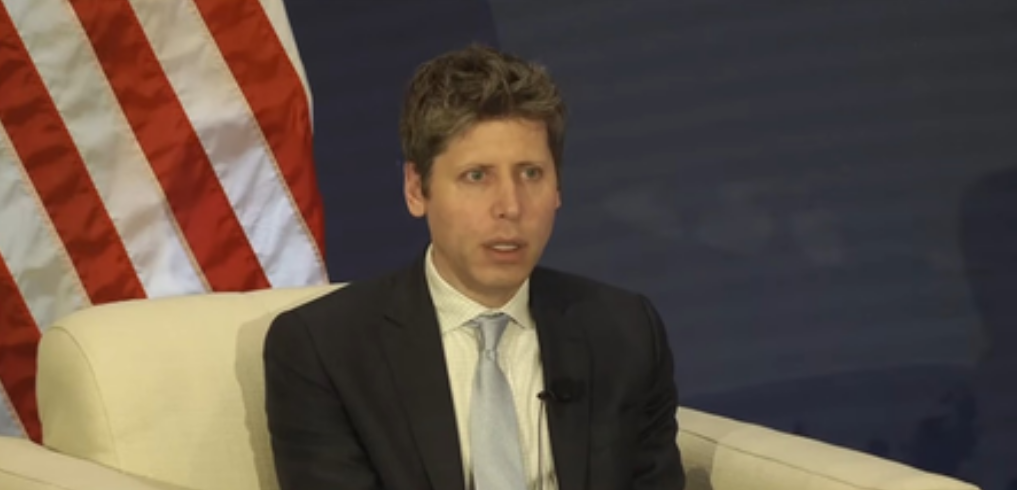

Chapel Hill, North Carolina — Artificial intelligence can now complete in minutes work that once might have taken a startup several months, OpenAI CEO Sam Altman said, predicting that the technology could fuel a major expansion in entrepreneurship and small-business creation.
“The work that we expected a startup to accomplish in three months is now probably doable in, like, 17 minutes with Codex,” Altman said during a fireside chat with U.S. Commerce Secretary Howard Lutnick.
“This is just amazing. The world is not caught up with what this is going to mean,” he added.
Before co-founding OpenAI, Altman served as president of startup accelerator Y Combinator. He said that experience convinced him of the importance of entrepreneurship and the role startups play in developing major technological innovations.
AI, he said, has sharply reduced the time and resources required to turn an idea into a product, test it and gather feedback from customers.
“I think this, for example, will be the greatest boom in entrepreneurship and the creation and development of small businesses the world’s ever seen,” Altman said.
He said promising entrepreneurs have traditionally faced barriers such as limited access to capital, difficulty hiring specialized talent and the complexity of developing technology or managing supply chains.
“If you had a great idea, but you didn’t have the resources or the ability to get enough capital together or hire experts to work on it or to figure out what it’s gonna take to invent new science or manage a complex supply chain, you can do that with AI,” Altman said.
As an example, Altman recalled meeting a laundromat operator who used ChatGPT to create marketing materials, seek guidance on legal contracts and manage vendor relationships.
“He was really the first person I met that had figured out how to use AI to effectively run a business,” Altman said.
The example came shortly after ChatGPT was launched, when AI systems were significantly less capable than they are today, he said.
Business adoption has since accelerated, particularly with the growth of coding agents and AI tools designed for office and professional work.
“In 2025, we saw a real acceleration of this with coding agents and white collar work agents,” Altman said.
He predicted another major shift as long-running AI agents become capable of acting as persistent virtual colleagues that can continuously assist individuals and businesses.
While AI is also expected to transform governments and large corporations, Altman said its ability to give individuals more power to build their own businesses could be especially significant.
“What AI can do for entrepreneurs and for people that want to take an idea and bring it into the world quickly, is really quite amazing,” he said.
Altman also told G20 representatives that countries could take different approaches to AI regulation and decide whether to build their own data centers or obtain computing capacity elsewhere. However, he said every economy would need to adopt AI to remain competitive and support business growth.
OpenAI was announced in late 2015 and began operations in 2016. Altman previously led Y Combinator, the Silicon Valley accelerator known for funding and advising early-stage technology companies. (Source: IANS)