China Accused of Pressuring Nepal Ahead of Tibetan Studies Conference
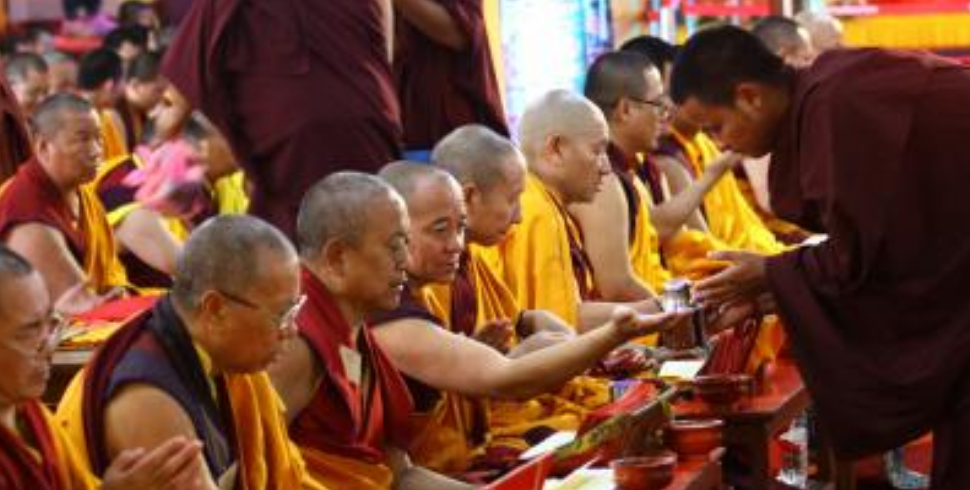

Kathmandu — China has raised concerns with Nepal over an international Tibetan studies conference scheduled to take place in Kathmandu later this month, prompting accusations that Beijing is trying to influence academic discussion beyond its borders.
The 17th Seminar of the International Association for Tibetan Studies is scheduled for Aug. 23-29. The gathering is expected to bring together scholars and researchers focused on Tibetan history, culture, religion and politics.
The International Campaign for Tibet said Chinese officials urged Nepal to prevent conference participants from making statements critical of Beijing or supportive of Tibet. The advocacy group described the intervention as part of a wider effort by China to shape overseas scholarship and suppress views that challenge its policies in Tibet.
According to the group’s report, Chinese Ambassador to Nepal Zhang Maoming raised the issue during a July 21 meeting with Nepalese Foreign Secretary Amrit Bahadur Rai.
A senior Nepalese Foreign Ministry official told The Kathmandu Post that the ambassador expressed concern that some participants might “speak against China and in support of Tibet” and asked Nepalese officials to ensure that such statements were not made.
China did not submit a formal diplomatic protest or demand that the conference be canceled. However, the report said the pressure contributed to a decision by the Dharamshala-based Central Tibetan Administration not to send researchers as an official delegation.
The Tibetan administration reportedly withdrew its official participation to reduce pressure on Nepal and avoid creating difficulties for conference organizers. Individual scholars may still attend independently.
Tencho Gyatso, president of the International Campaign for Tibet, said the dispute reflected a broader attempt by Beijing to combine diplomatic pressure, domestic legislation and state-backed academic research to promote the Chinese government’s position on Tibet.
“The significance of this incident extends well beyond a single academic conference,” Gyatso said. “Beijing is institutionalizing a system in which diplomacy, repressive domestic legislation implemented outside China’s borders, and state-directed academic scholarship reinforce one another.”
The controversy comes shortly after China’s Ethnic Unity and Progress Law took effect. Critics say the law strengthens Beijing’s efforts to promote a unified national identity at the expense of distinct Tibetan language, religion and culture.
Gyatso said the legislation and China’s approach to Tibetan studies were intended to reshape international understanding of Tibet and advance the assimilation of Tibetan communities.
“The new Ethnic Unity and Progress Law, together with China’s efforts to recast Tibetology as a vehicle for ‘forging a strong sense of the Chinese national community,’ is designed to advance the forced assimilation of Tibetans while reshaping international understanding of Tibet,” she said.
The report also raised concerns about the expected participation of delegates from the China Tibetology Research Center, a state-controlled institution, at the independently organized conference.
The International Campaign for Tibet said the center had been tasked by the Chinese Communist Party with promoting Beijing’s official narrative on Tibet and warned that its involvement could further politicize the academic gathering.
Nepal has historically maintained close cultural and religious ties with Tibet, particularly in communities along its northern border. The country is also home to a substantial Tibetan refugee population.
At the same time, Nepal has developed increasingly close economic and diplomatic relations with China and has faced pressure in recent years to restrict political activity by Tibetan exiles.
The advocacy group said the latest dispute was consistent with Beijing’s broader attempts to influence international debate over Tibet and limit platforms for scholars, activists and exiled Tibetan institutions. (Source: IANS)