New England Punjabi Association Celebrates the Timeless Legacy of Punjabi Sufi Poetry and Music
Scholars, poets, and musicians come together in Shrewsbury for an evening exploring the spiritual and literary traditions of Punjab

By Amandeep Singh
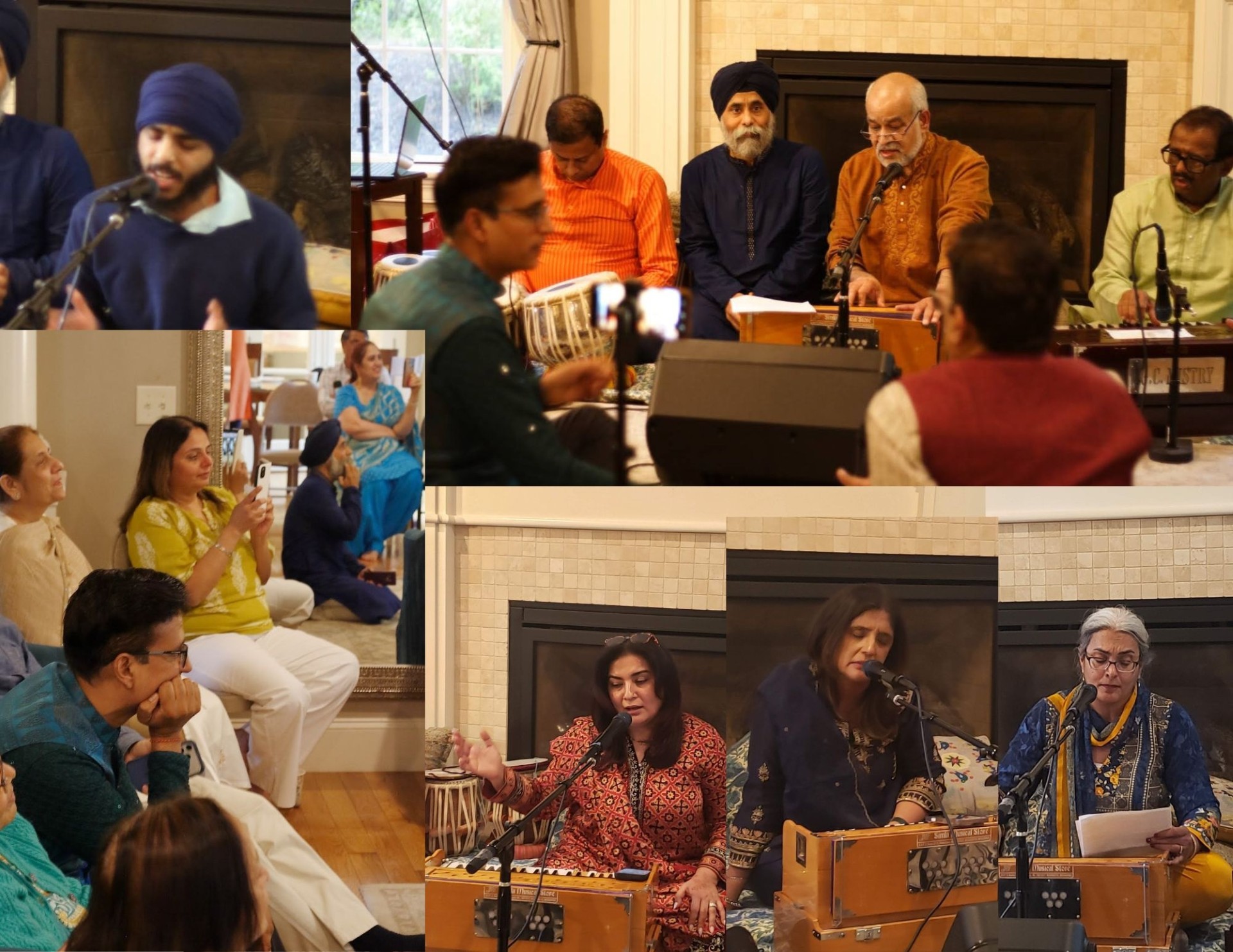
SHREWSBURY, Mass. — As a pleasant spring afternoon faded into the tranquil hues of dusk, the New England Punjabi Association welcomed members of the community to an evening dedicated to the rich tradition of Punjabi Sufi poetry and music. The Kavi Darbar (poetry symposium) and musical program celebrated the enduring spiritual, literary, and cultural legacy of Punjab’s great Sufi poets.
The program opened with a presentation by Roop Jyot Kaur, who introduced the audience to the history and philosophy of Punjabi Sufi poetry. She explained that the word Sufi is derived from the Arabic word for “wool,” referring to the simple woolen garments worn by early Islamic ascetics. Over time, Sufism evolved into a spiritual and mystical tradition that emphasizes union with the Divine through contemplation, self-surrender, and the guidance of a murshad, or spiritual teacher.
Kaur described Punjabi Sufi poetry as both profound and accessible. Rejecting religious fanaticism and social divisions, Sufi saints expressed their teachings in the language of ordinary people, using familiar symbols and poetic forms such as slokas and kafis. Their writings transformed human love into ishq-e-haqiqi, or divine love, a message that resonated across communities.
She noted that Punjabi Sufi poetry remains one of the defining pillars of medieval Punjabi literature because of its universal message of equality, compassion, and spiritual freedom. Quoting Bulleh Shah, she highlighted verses that reject religious labels and celebrate humanity above all else.
The program also featured a presentation by Harpreet Singh, a Harvard scholar specializing in South Asian traditions and languages. He discussed Punjabi’s unique role as a shared language of spiritual expression. Unlike many parts of South Asia, where vernacular languages were often promoted through state institutions, Punjab’s literary tradition was shaped by religious communities. Vaishnavas, Jogis, Sufis, and Sikh Gurus all embraced Punjabi to communicate their teachings, making it a powerful medium for both spiritual and literary expression.
The poetry recital featured Roop Jyot Kaur, Harpreet Singh, Prof. Subhash Chandra, and Pritpal Singh Mirzapuri, who presented works by renowned Sufi poets including Sheikh Farid, Shah Hussain, Sultan Bahu, Bulleh Shah, and Mian Muhammad Bakhsh, alongside selections from their own original compositions.
The evening concluded with a musical performance led by acclaimed music educator and All India Radio artist Prof. M. Rama Rao and his students—Amandeep Singh, Harman Deep Singh, Naresh Agarwal, Kamal Chadha, Krishna Bhaskaran, Girish Satpute, and Ammara Nawaz Khan. Accompanied on tabla by Shri Rajesh Pai, the ensemble performed Sufi songs, kafis, qawwalis, and ghazals, bringing the timeless poetry to life and earning an enthusiastic response from the audience.
Blending scholarship, poetry, and music, the program offered attendees a deeper appreciation of Punjabi Sufi traditions and their enduring message of love, unity, humility, and shared humanity.