
BOSTON — For Naresh Agarwal, art has never been confined to galleries. It has lived in memory, travel, culture—and now, quite literally, on people’s desks.
In an effort to make his work more accessible, Agarwal has transformed a selection of his paintings into a desk calendar, a format he believes can quietly integrate art into daily life.
“I was thinking about how I can share my paintings to be in people’s homes,” he says. Inspired by Raja Ravi Verma, who democratized art in the 19th century through affordable prints of Hindu deities, Agarwal saw the calendar as a modern parallel.
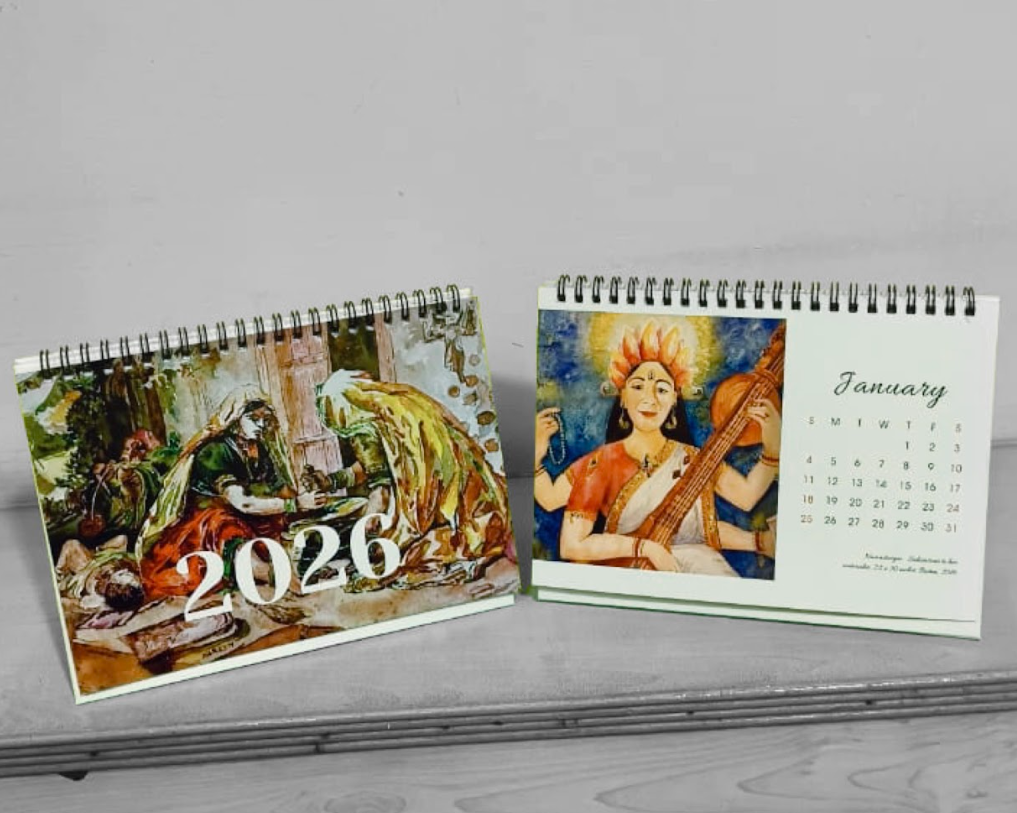 “A desk calendar would be a good way to make it happen,” he explains. “That way, the physical versions would remain with people for at least a year.” Today, that idea has taken shape, with his calendars reaching homes across India, Singapore, the United Kingdom, and the United States.
A Year-Long Cultural Narrative
The calendar is more than a collection of images—it is a curated narrative of Indian culture, philosophy, and lived experience told across 12 months. The works, created between 1997 and 2022, span watercolor, oil, and acrylic, and range in size from intimate 9×12-inch compositions to larger 2×3-foot canvases.
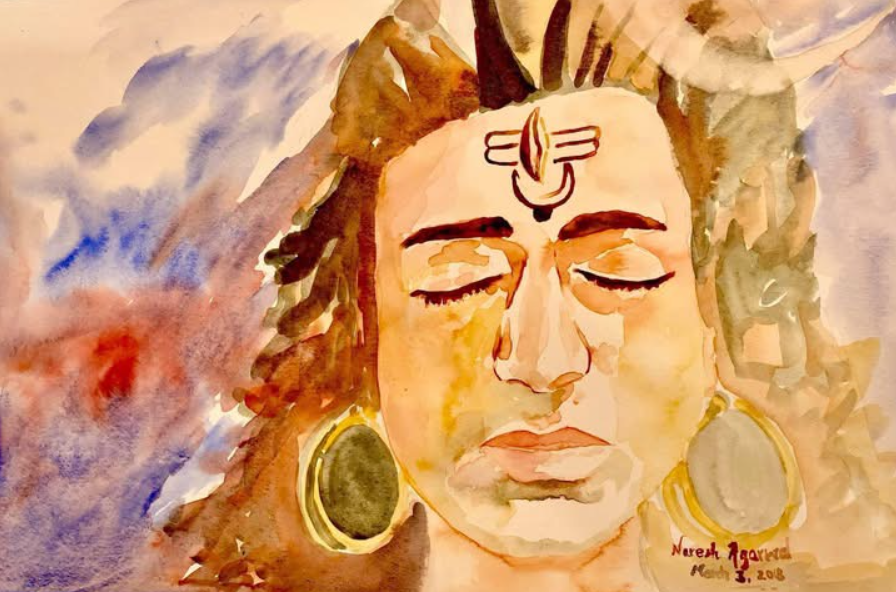 Each painting is paired with a month in a way that reflects seasonal rhythms, festivals, or symbolic meaning. January opens with a luminous depiction of Goddess Saraswati, the embodiment of knowledge and the arts, while February turns inward with Lord Shiva, inspired by the philosophical verses of Nirvana Shatakam by Adi Shankara.
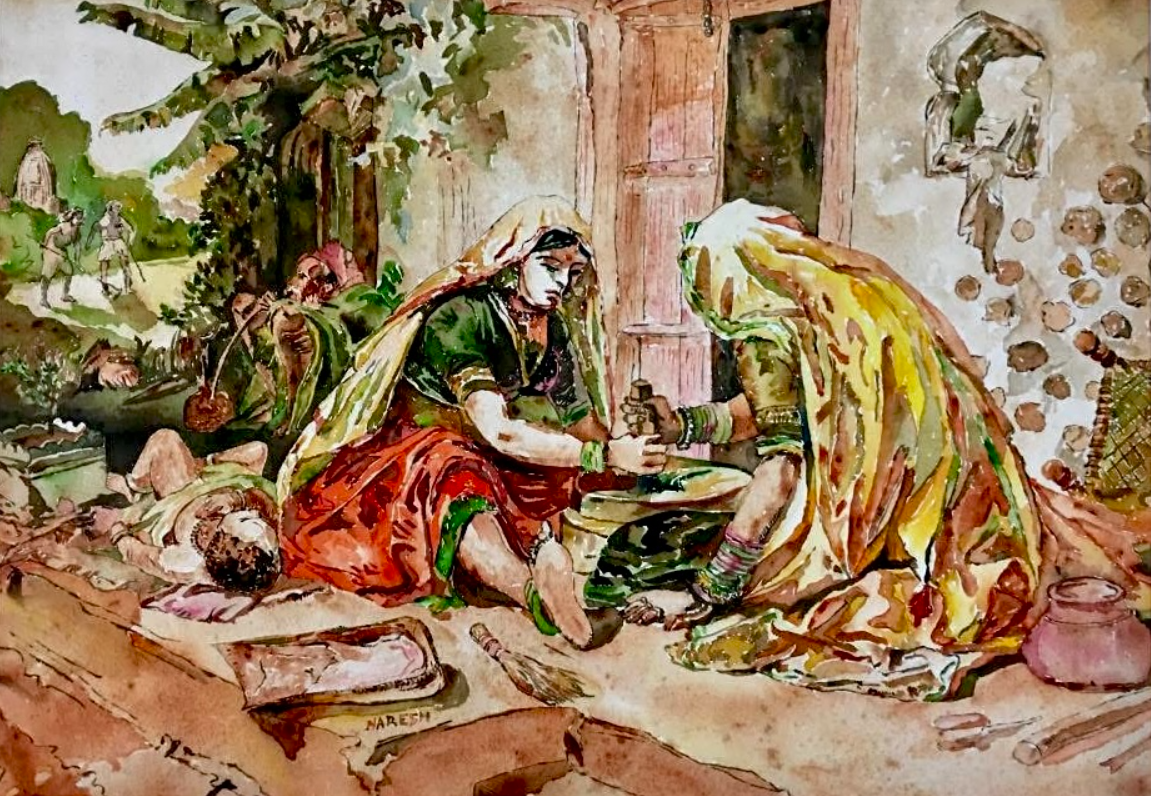
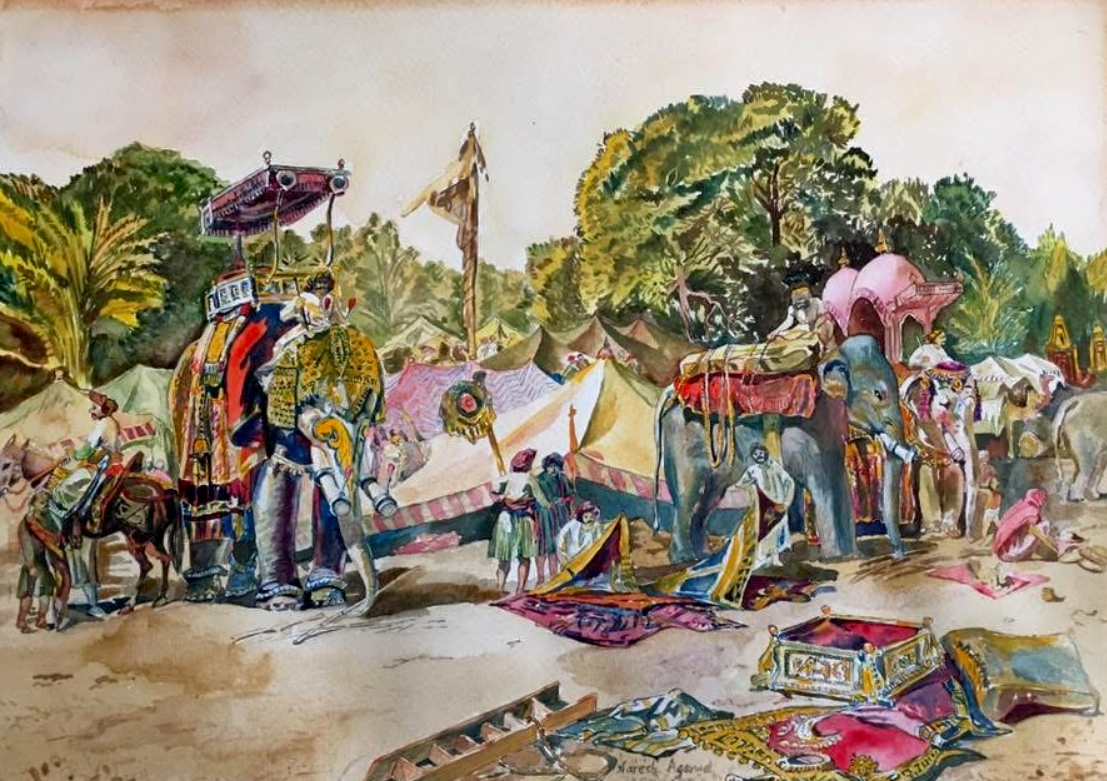
 Some paintings draw from literary and historical influences. Agarwal references the work of William Simpson, a 19th-century chronicler of British India, and the poetry of Kabir, whose reflections on life’s impermanence resonate in one of the calendar’s more contemplative scenes.
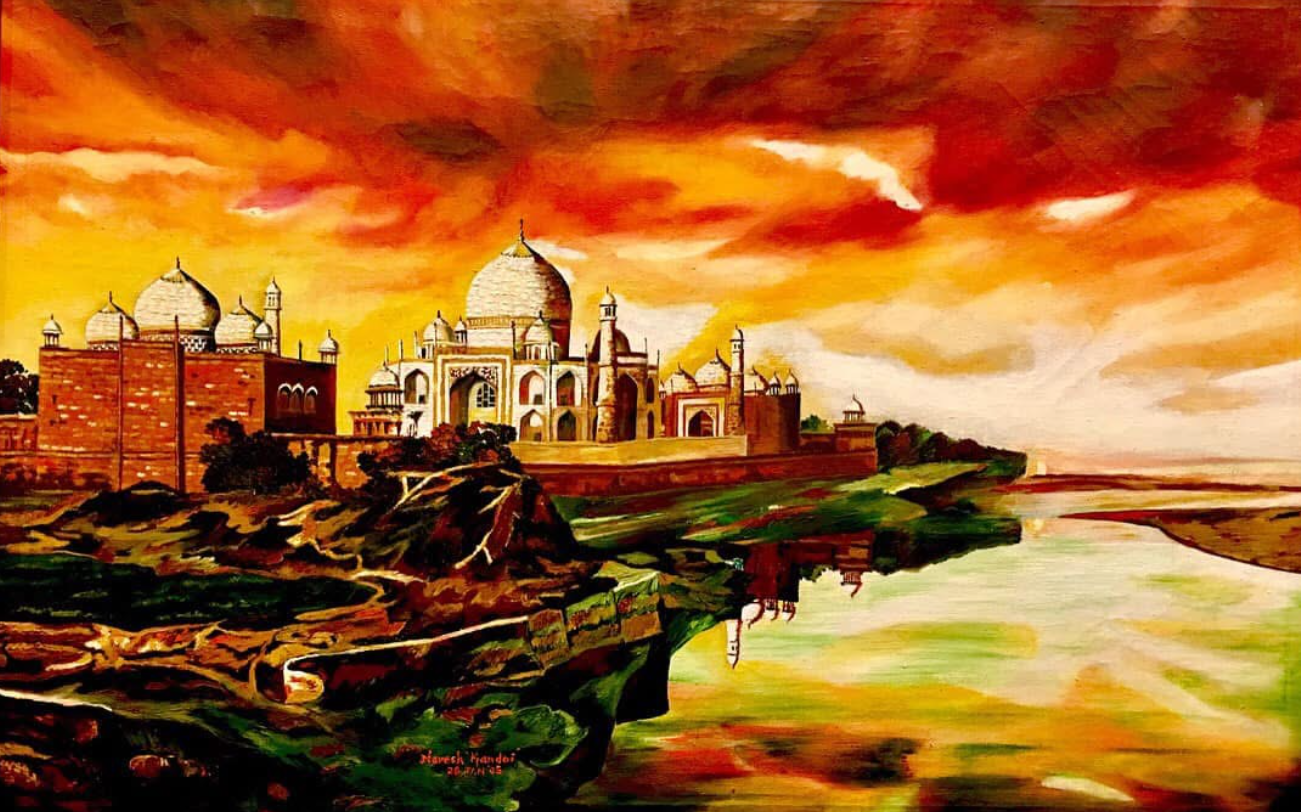
Acrylic and watercolor blend seamlessly across the months. A serene portrait of Gautama Buddha anchors May, while June revisits Agarwal’s childhood in Sikkim through prayer wheels at Enchey Monastery. July’s vibrant composition celebrates Lord Jagannatha and the chariot festival, while August’s “Tiranga – A Taj called India” uses the colors of the Indian flag to reinterpret the iconic Taj Mahal.
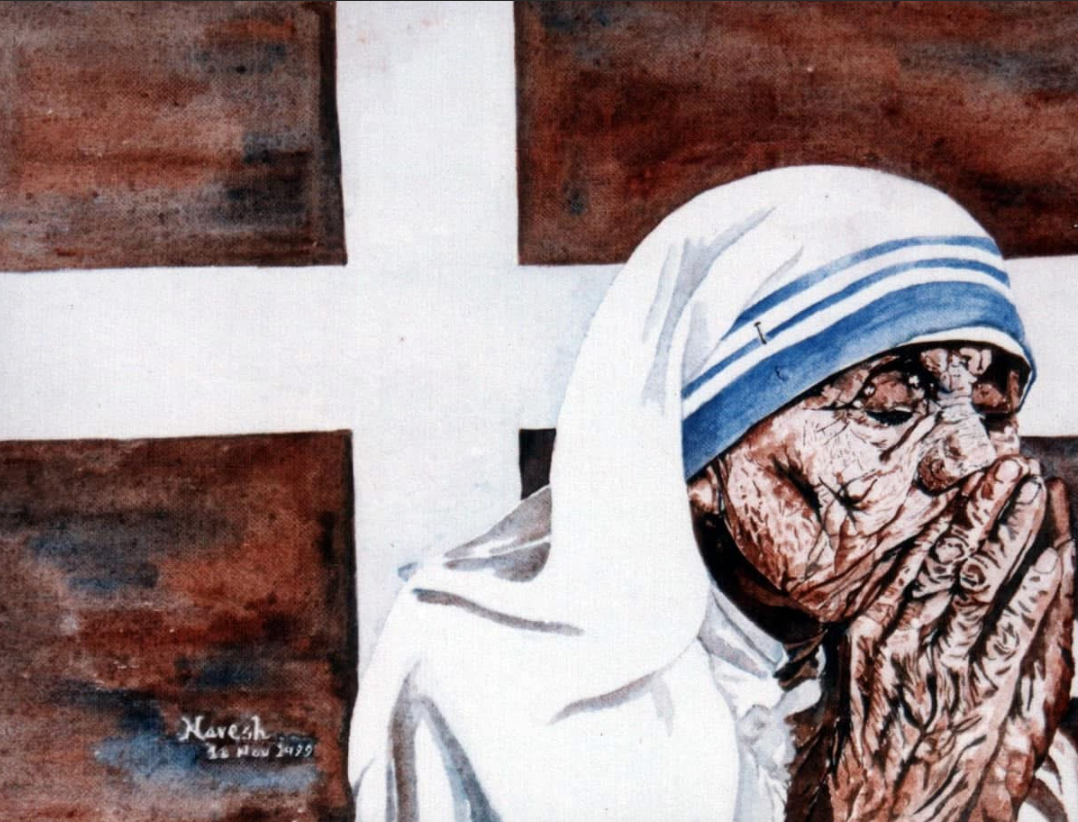
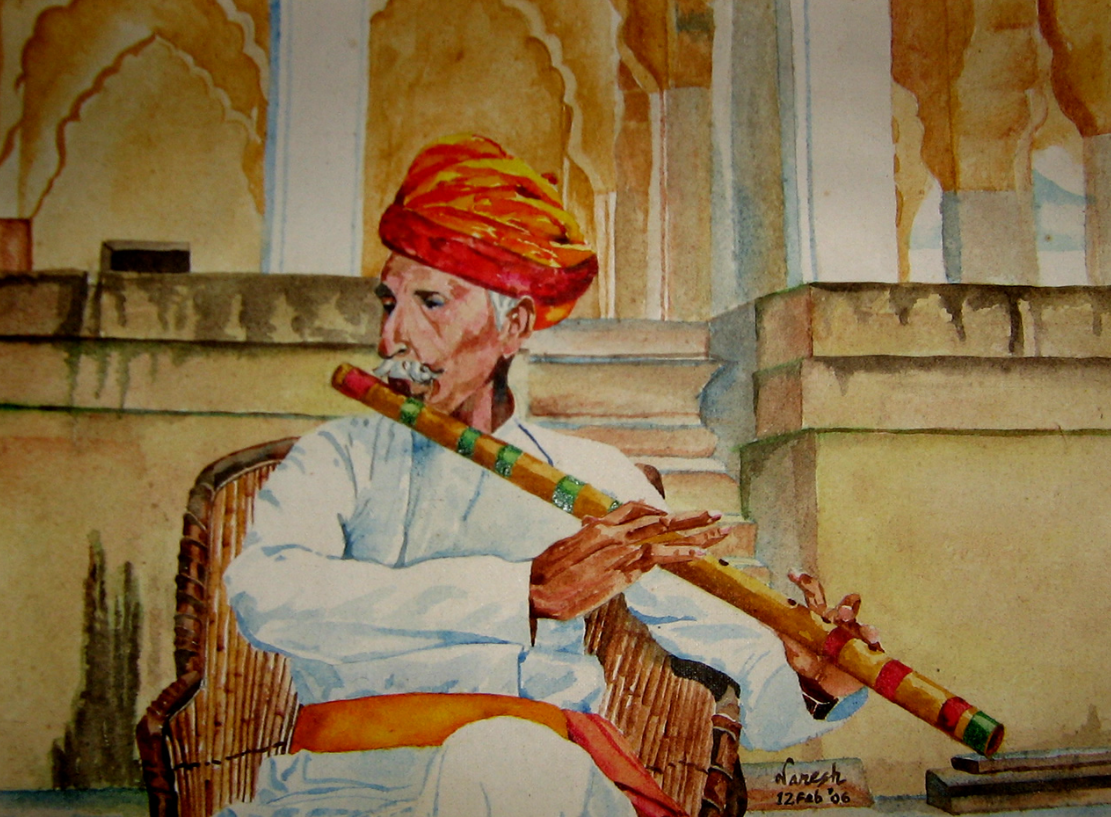 By September, the viewer is transported to Rajasthan through a portrait of a folk musician, followed by an imaginative October scene where Mahatma Gandhi walks through the forests of Sikkim. November returns to the quiet beauty of Changu Lake, and December concludes with a contemplative image of Mother Teresa, inspired by the timeless Prayer of Saint Francis.
A Journey Across Geographies
What makes the collection especially compelling is that it mirrors Agarwal’s own journey across continents. Born and raised in Gangtok, Sikkim, he later spent nearly 14 years in Singapore before settling in Massachusetts, where he has lived and worked for over a decade.
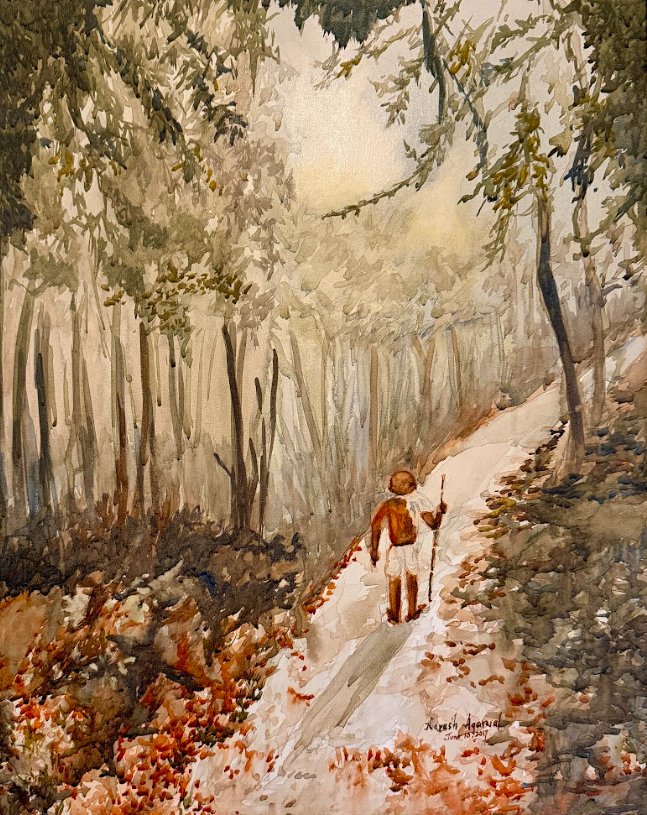 That movement is embedded in the art itself. One painting began in Sikkim and was completed in Singapore. Four were created during his years in Southeast Asia, while seven were painted in the United States. Together, they form a visual map of migration, memory, and identity.
A Self-Taught Artist, A Lifelong Learner
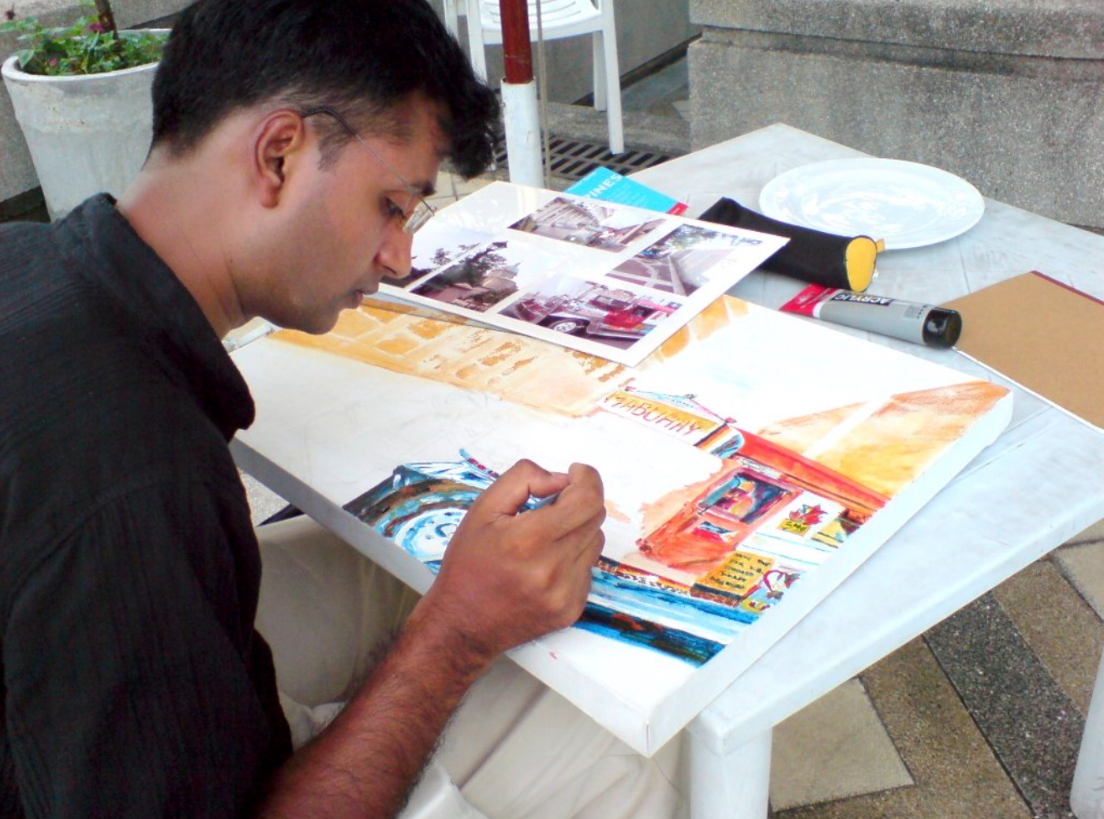
Agarwal’s artistic journey began early—at the age of six—when his sister taught him how to draw a lotus flower. From there, he moved on to sketching Hindu deities, carefully copying images until he developed his own style.
For much of his life, he had no formal training in art. Instead, he learned through observation, experimentation, and persistence. A pivotal moment came during his school years in Gangtok, when a teacher encouraged him to approach painting as a process rather than a single sitting.
In recent years, Agarwal has deepened his practice through structured learning, taking extensive online courses and workshops with contemporary Indian artists. From intensive watercolor programs to portrait and figurative studies, his training reflects a commitment to continuous growth—even after decades of painting.
Art as Synthesis
At the heart of Agarwal’s work is a philosophy of synthesis—the idea that art can reconcile differences rather than reinforce divisions. His subjects range from Indian spirituality and rural life to landscapes in Massachusetts and Sikkim, often blending influences that might otherwise seem distant.
 “I try to reconcile apparent contradictions,” he has said of his approach, emphasizing a worldview that resists labels and stereotypes.
This perspective is evident in his choice of themes, where religious imagery coexists with everyday life, and historical references intersect with personal memory.
Bringing Art Home
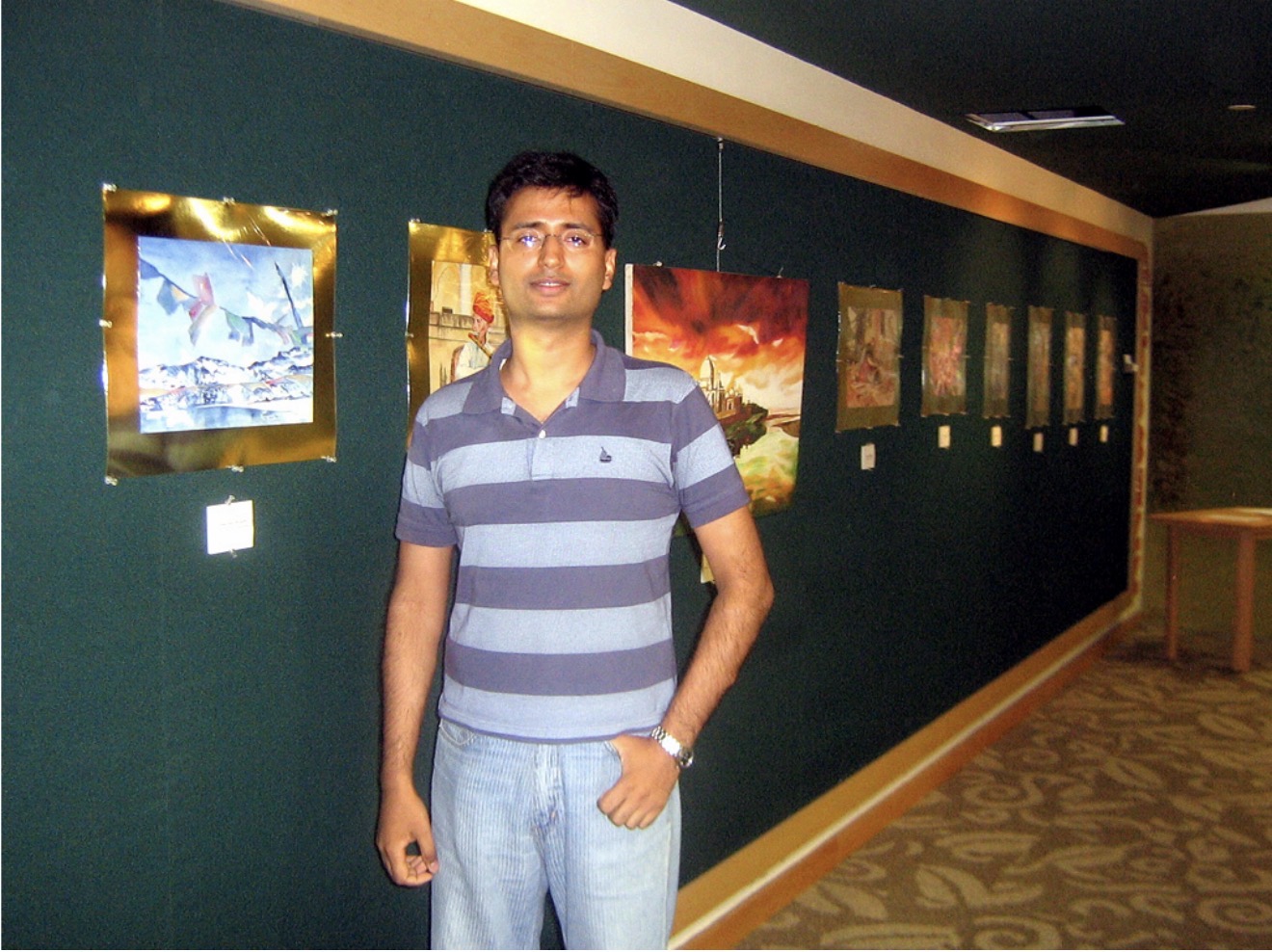
While Agarwal’s paintings have appeared in exhibitions, publications, and even television features—including a charity-focused art program in the Philippines—the calendar represents a different kind of ambition.
It is not about exclusivity or prestige, but accessibility.
 By placing his work in a format that people engage with daily, Agarwal is reimagining how art is experienced—not as something distant or occasional, but as a quiet, constant presence.
In doing so, he follows in the footsteps of Raja Ravi Verma, bringing art out of elite spaces and into the rhythms of everyday life.
For Agarwal, the goal is simple yet profound: to create moments of reflection, connection, and beauty—one month at a time.