U.S. Religious Freedom Watchdog Urges Pakistan to Be Redesignated as “Country of Particular Concern”

ISLAMABAD — A U.S. government advisory body has urged Washington to redesignate Pakistan as a “Country of Particular Concern” over what it described as ongoing and severe violations of religious freedom.
In its latest annual report, the United States Commission on International Religious Freedom said conditions in Pakistan continued to deteriorate in 2025, citing strict enforcement of blasphemy laws, mob violence against minorities, and forced conversions as key concerns.
The commission, an independent watchdog that advises the U.S. President, Secretary of State and Congress on global religious freedom issues, said Pakistan’s government has continued to enforce blasphemy laws that affect people across different faith communities, particularly minorities.
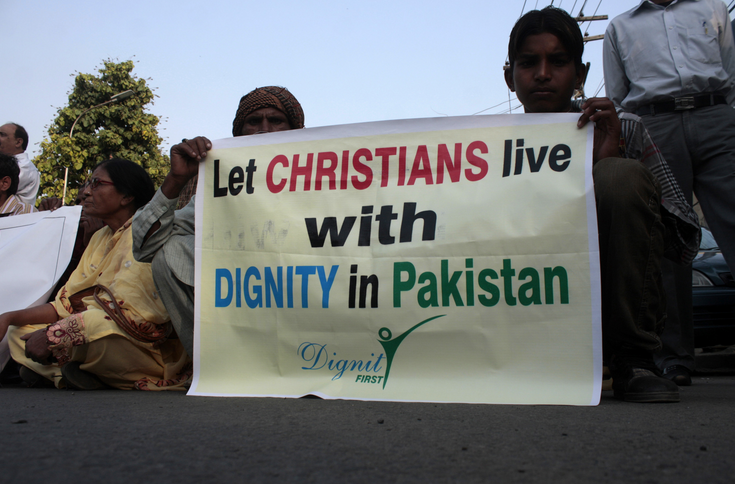
“The government continued to enforce its strict blasphemy law, impacting people of all faiths, including religious minorities. Increasing vigilante attacks and mob violence targeting religious minorities, specifically Ahmadiyya Muslims and Christians, contributed to an intensified climate of fear and intolerance,” the report said.
According to the report, Pakistani authorities continued to apply blasphemy laws that carry the death penalty for those accused of insulting Islam. In January 2025, four individuals were sentenced to death for allegedly posting blasphemous material on social media.
That same month, a Christian man identified as Farhan Masih, who was described as mentally ill, was imprisoned on blasphemy and terrorism charges. Although he was later acquitted, Masih reportedly could not return to his village due to fears for his safety.
In February, a sessions court sentenced another man to death after a member of the Islamist political group Tehreek-e-Labbaik Pakistan accused him of insulting religious sentiments. The following month, the Lahore High Court removed the appeal hearing of Junaid Hafeez — a lecturer sentenced to death for blasphemy in 2019 — from its case list. Hafeez has been held in solitary confinement since 2014 and his appeal has remained pending since 2020.
The report also highlighted controversy surrounding legislation aimed at curbing child marriage and forced conversions of underage girls. Pakistan’s National Assembly last year passed the Islamabad Capital Territory Child Marriage Restraint Bill, which allows prison sentences of up to seven years for individuals who facilitate or coerce a child into marriage.
However, Pakistan’s Council of Islamic Ideology opposed the bill, declaring it un-Islamic because it did not align with religious injunctions. Religious leaders and organizations also criticized the measure and called for protests against it.
The commission said violence against religious minorities continued in several parts of the country. In March 2025, a Muslim man allegedly attacked a Christian coworker, Waqas Masih, by slitting his throat after accusing him of blasphemy for touching an Islamic textbook with what he described as “unclean hands.”
Days later, a Hindu man identified as Nadeem Naath was shot and killed after reportedly refusing to convert to Islam. In another incident in September, gunmen attacked Christian pastor Kamran Naz as he traveled to Islamabad to lead a church service. The pastor had previously received death threats and had been accused of proselytizing among Afghan refugees.
The report also cited continuing allegations of forced religious conversions involving Hindu and Christian girls in the provinces of Punjab and Sindh.
In addition, the commission said the Pakistani government continued efforts in 2025 to deport thousands of Afghan refugees, including members of religious minorities such as Hazara Shi’a Muslims, who face persecution under Taliban rule in Afghanistan.
The U.S. State Department last designated Pakistan as a Country of Particular Concern under the International Religious Freedom Act on Dec. 29, 2023, citing severe violations of religious freedom.
According to the commission’s report, any presidential action tied to that designation will expire at the end of 2025 unless it is renewed by law.
Along with Pakistan, the commission recommended that the United States redesignate 12 other countries as Countries of Particular Concern, including Burma, China, Cuba, Eritrea, Iran, Nicaragua, Nigeria, North Korea, Russia, Saudi Arabia, Tajikistan and Turkmenistan. (Source: IANS)