India Positions Itself as a Connector Between Europe and West Asia
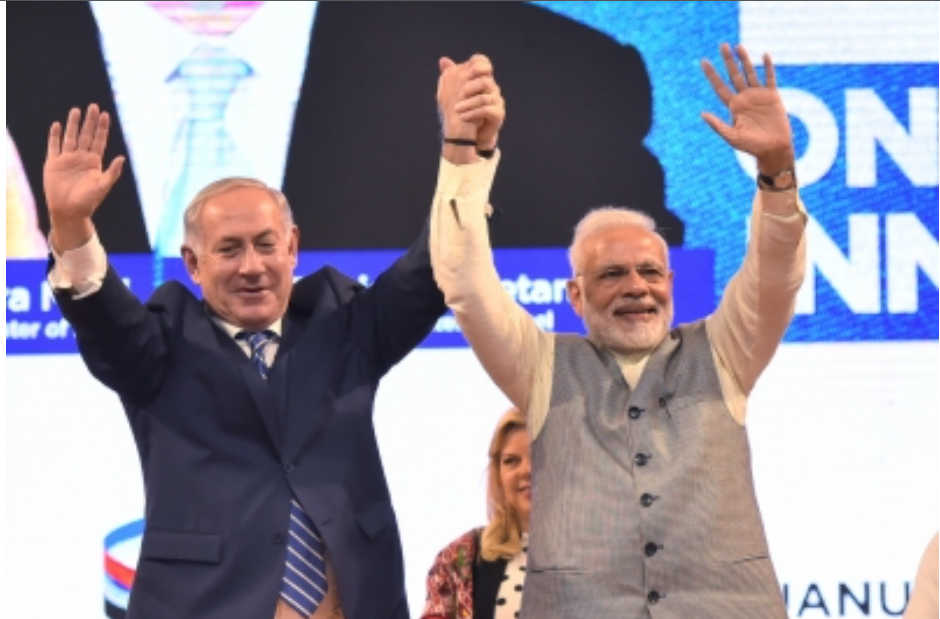

Tel Aviv— Prime Minister Narendra Modi’s expected visit to Israel in February is being viewed less as a ceremonial bilateral engagement and more as a strategic signal of India’s broader geopolitical approach, according to a report published on Saturday. The visit reflects New Delhi’s intent to extend the momentum of its growing engagement with Europe into West Asia, linking security, trade, and technology across regions rather than treating them as separate spheres.
“The European Union and India did something quietly consequential in late January,” wrote Sergio Restelli, an Italian political adviser, author, and geopolitical expert, in The Times of Israel. “Alongside the long-awaited EU–India Free Trade Agreement, they signed their first-ever Security and Defence Partnership. This was not bureaucratic housekeeping. It was a strategic statement: Europe and India no longer see trade, security, technology, and geopolitics as separate files. They now travel together.”
Restelli noted that, from Jerusalem’s perspective, the development adds particular significance to Prime Minister Modi’s expected visit to Israel. “The visit is not just about bilateral ties. It is about how India is positioning itself as a connector between Europe and West Asia at a moment of profound strategic flux,” he wrote.
The report observed that EU–India relations were long described as “underperforming,” a diplomatic term often used to denote unrealized potential. Linking a free trade agreement with a security and defence partnership, however, marks a decisive shift, with economic and strategic interests now deliberately intertwined.
According to Restelli, the defence partnership spans areas including maritime security, cyber threats, counterterrorism, protection of critical infrastructure, space, and defence industry cooperation. “This breadth is revealing,” he wrote. “Brussels and New Delhi are acknowledging that prosperity today depends on stability across sea lanes, digital networks, and supply chains—and that these cannot be safeguarded by economic agreements alone.”
The report further noted that this evolving framework has implications for Israel, as it reshapes the strategic context in which India operates. “India is no longer just a large market or a balancing power in Asia; it is emerging as a pillar in a wider architecture linking Europe, the Indo-Pacific, and West Asia,” Restelli said.
Even independently of broader regional dynamics, Prime Minister Modi’s visit to Israel would carry significance, the report added. Under his leadership, India–Israel relations have shifted from discreet cooperation to an open strategic partnership, particularly in defence, technology, agriculture, and innovation.
“From Brussels to Jerusalem, the message is consistent,” the report concluded. “India is no longer simply balancing between poles of power. It is actively shaping the connective tissue between them—and that, for Israel, is an opportunity worth close attention.” (Source: IANS)