IIT Bombay Study Reveals How TB Bacteria Reinforce Their Outer Coating to Survive Antibiotics
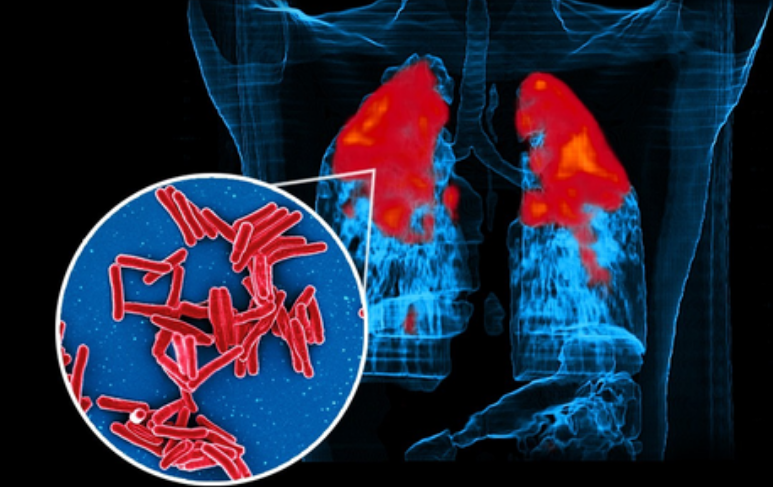

NEW DELHI — A new study from the Indian Institute of Technology (IIT) Bombay has shed light on how Mycobacterium tuberculosis — the bacterium that causes Tuberculosis (TB), the world’s deadliest infectious disease — survives antibiotic treatment by altering its outer lipid membrane. The findings help explain why TB remains difficult to eradicate even with effective drugs and vaccination programs.
Despite decades of medical advances, TB continues to claim millions of lives. In 2024, 10.7 million people worldwide developed the disease, and 1.23 million died from it. India, carrying one of the heaviest burdens globally, reported more than 2.71 million cases that year.
The study, published in the journal Chemical Science, found that the bacteria’s resilience stems from significant changes in the structure of their membrane — a protective barrier made primarily of fats, or lipids. Researchers grew TB bacteria under two conditions: an active, fast-dividing phase resembling an active infection, and a dormant state mimicking latent infections that can persist silently in the body for years.
When exposed to four common TB drugs — rifabutin, moxifloxacin, amikacin, and clarithromycin — dormant bacteria showed dramatically greater tolerance. The concentration of medication needed to stop half of the bacterial growth was two to ten times higher in dormant cells than in active ones.
“The same drug that worked well in the early stage of the disease would now be needed at a much higher concentration to kill the dormant or persistent TB cells,” said Prof. Shobhna Kapoor of IIT-B’s Department of Chemistry. She noted that this drug tolerance did not stem from genetic mutations, which typically drive antibiotic resistance.
Instead, researchers identified more than 270 distinct lipid molecules in the bacteria’s membranes. Active bacteria had loose, fluid membranes, while dormant bacteria developed rigid, tightly packed structures — effectively forming a tougher shield.
“People have studied TB from the protein point of view for decades,” said Kapoor. “But lipids were long seen as passive components. We now know they actively help the bacteria survive and resist drugs.”
One of the study’s key findings showed that rifabutin penetrated active cells easily but struggled to pass through the fortified outer membrane of dormant bacteria. “The rigid outer layer becomes the main barrier. It is the bacterium’s first and strongest line of defence,” Kapoor explained.
The research suggests that weakening this outer membrane could dramatically improve the effectiveness of existing TB drugs. “Even old drugs can work better if combined with a molecule that loosens the outer membrane,” Kapoor said. Such an approach, she added, could restore bacterial sensitivity to antibiotics without giving them the chance to develop permanent genetic resistance.
The study opens new avenues for TB treatment strategies by targeting the bacterial membrane — a long-overlooked but critical component of drug tolerance. (Source: IANS)