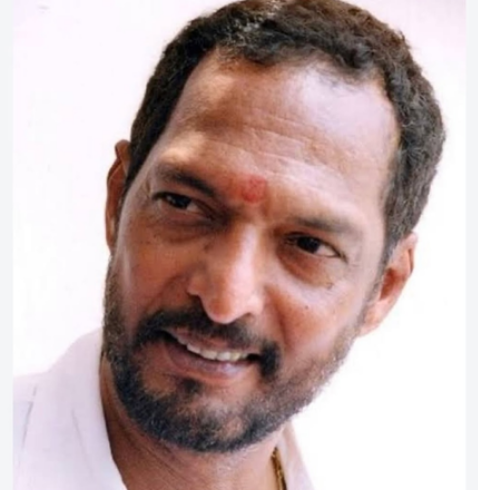

Mumbai — Veteran actor Nana Patekar, celebrated for his commanding screen presence, powerful dialogue delivery and memorable performances in Hindi and Marathi cinema, died Thursday, October 8, at the age of 75.
Patekar reportedly suffered a cardiac arrest at his residence in Dona Paula, Goa, during the early morning hours. He was found unconscious and rushed to Manipal Hospital, where doctors attempted to revive him through cardiopulmonary resuscitation. Despite their efforts, he was pronounced dead.
Born Vishwanath Patekar on January 1, 1951, in Murud-Janjira, Maharashtra, the actor built a distinguished career spanning nearly five decades, becoming one of Indian cinema’s most recognizable performers.
Known for his distinctive voice, intense expressions and ability to portray emotionally complex characters, Patekar established himself as a versatile actor whose work crossed the boundaries of mainstream Bollywood, independent cinema and Marathi theater.
He studied at Mumbai’s Sir J.J. School of Art and began his acting journey in theater before entering films. He made his Hindi film debut with “Gaman” in 1978, followed by his Marathi debut in “Sinhasan” in 1979.
His early Marathi films included “Bhalu,” “Raghu Maina” and “Savitri,” establishing his connection with regional cinema even as his career expanded into Hindi films.
Patekar gained widespread recognition with N. Chandra’s “Ankush” in 1986, portraying a character shaped by the frustrations and struggles of ordinary people.
He subsequently appeared in films including “Pratighaat,” “Mohre,” “Andhaa Yudh” and Mira Nair’s internationally acclaimed “Salaam Bombay!”
A major breakthrough came with Vidhu Vinod Chopra’s “Parinda” in 1989, in which Patekar portrayed the ruthless crime boss Anna. The performance earned him the National Film Award for Best Supporting Actor and established his reputation for portraying intimidating and psychologically complex characters.
Throughout the 1990s, he delivered memorable performances in films such as “Agni Sakshi,” “Khamoshi: The Musical,” “Raju Ban Gaya Gentleman,” “Angaar,” “Tirangaa,” “Ghulam-E-Mustafa,” “Yeshwant” and “Kohram.”
His portrayal of Mumbai Police encounter specialist Sadhu Agashe in Shimit Amin’s 2004 crime drama “Ab Tak Chhappan” became another defining role. The performance showcased his ability to convey intensity through restrained expressions and understated dialogue.
Patekar continued to demonstrate his range in films including “Apaharan,” “Taxi No. 9211,” “Raajneeti,” “The Attacks of 26/11” and “Kaala.”
Although best known for serious dramatic roles, he also became a popular comedic performer through his portrayal of gangster Uday Shetty in the 2007 hit “Welcome.”
His chemistry with Anil Kapoor and distinctive comic timing helped turn the character into one of the film’s most recognizable elements, introducing his work to a new generation of moviegoers.
Despite his success in Hindi cinema, Patekar maintained a strong connection with Marathi films and theater throughout his career.
His Marathi film credits included “Pak Pak Pakaak,” “Deool,” “Dr. Prakash Baba Amte: The Real Hero,” “Natsamrat,” “Aapla Manus” and “Ole Aale.”
His performance in the 2016 Marathi drama “Natsamrat,” adapted from V. V. Shirwadkar’s celebrated play, was widely regarded as one of his finest later-career achievements.
In the film, he portrayed Ganpat Belwalkar, a retired stage actor struggling with aging, strained family relationships and the loss of his identity after leaving the theater. The role drew heavily on Patekar’s theatrical experience and emotional range.
Another notable Marathi performance came in “Dr. Prakash Baba Amte: The Real Hero,” in which he portrayed the physician and social activist known for his humanitarian work.
Beyond acting, Patekar explored filmmaking as a director, making his directorial debut with the 1991 film “Prahaar: The Final Attack,” a military drama centered on an Indian Army commando and the demands of military discipline.
His contributions to cinema earned him numerous honors, including three National Film Awards. In 2013, he received the Padma Shri, India’s fourth-highest civilian award, recognizing his achievements in the arts.
Outside the film industry, Patekar was involved in charitable activities, particularly initiatives supporting farmers and drought-affected communities in Maharashtra.
The actor generally maintained a private personal life despite his public prominence. He married actress Neelakanti Patekar in 1978, and the couple had two sons, Durvasa and Malhar. Their elder son, Durvasa, died in early childhood following an illness.
His younger son, Malhar Patekar, pursued work behind the scenes in the film industry.
Patekar’s death marks the end of a career that spanned generations of Indian filmmaking, from socially conscious dramas and crime thrillers to popular comedies and acclaimed Marathi productions.
His body of work leaves a lasting legacy in Indian cinema, particularly through characters remembered for their emotional intensity, individuality and powerful screen presence. (Source: IANS)