FBI Director Kash Patel Faces Democratic Criticism for Skipping Congressional Security Hearing
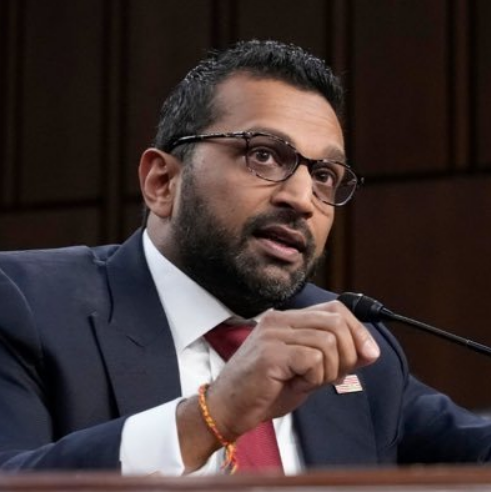

WASHINGTON–FBI Director Kash Patel faced criticism from House Democrats Wednesday after declining to testify at an annual congressional hearing examining threats to the United States, raising concerns about transparency and the bureau’s cooperation with congressional oversight.
Rep. Bennie Thompson, the ranking Democrat on the House Homeland Security Committee, criticized Patel for missing the hearing for the second consecutive year, arguing that his absence prevented lawmakers from adequately examining the FBI’s national security operations.
“Director Patel’s absence for a second consecutive year limits the Committee’s ability to conduct effective oversight at this hearing,” Thompson said in his opening statement.
Thompson noted that FBI Directors appointed by both Republican and Democratic administrations had appeared before the committee for more than a decade to discuss national security threats.
FBI Deputy Director Christopher Raia attended the hearing in Patel’s place, joining Homeland Security Secretary Markwayne Mullin and Director of National Intelligence Jay Clayton.
Thompson accused the FBI leadership of failing to respond adequately to congressional inquiries, saying committee Democrats had sent Patel six oversight letters over the past 18 months without receiving substantive answers.
The letters sought information about reductions in FBI counterintelligence operations and investigations involving government corruption and domestic terrorism.
Thompson also criticized the FBI and Justice Department for failing to provide a requested briefing on President Donald Trump’s National Security Presidential Memorandum-7, which addresses domestic terrorism and organized political violence.
According to Thompson, an FBI counterterrorism official told lawmakers during a classified briefing in July that additional information would be provided “soon”.
However, committee staff followed up more than a dozen times without securing the briefing.
Thompson said he subsequently wrote to Patel and Attorney General Todd Blanche last month seeking answers.
“If there is nothing illegal or improper about what the agencies are doing, then there should be no problem being forthcoming with the Committee and the public,” Thompson said.
Although Raia did not address Patel’s absence or the complaints about unanswered correspondence in his prepared testimony, he defended the FBI’s counterterrorism and counterintelligence operations.
Raia said the bureau had established a joint mission center involving personnel from 10 federal agencies to combat domestic terrorism and organized political violence under the presidential memorandum.
According to his testimony, the initiative has resulted in more than 200 arrests and over 250 indictments or judicial complaints.
Raia also warned that foreign intelligence operations targeting the United States were becoming increasingly aggressive, particularly those associated with China, Russia and Iran.
He identified Chinese economic espionage as a significant concern, saying the FBI had active investigations across all 55 of its field offices.
The bureau is working to protect sensitive American technologies, including semiconductors, biotechnology, quantum computing and advanced artificial intelligence, from foreign intelligence threats.
Raia reported that the FBI made 101 counterintelligence-related arrests during fiscal 2026, representing a 26 percent increase from the previous year.
Homeland Security Secretary Mullin also highlighted growing cybersecurity threats, particularly from Iranian government-linked hackers and cybercriminal groups sympathetic to Iran.
In his prepared testimony, Mullin said such groups had increasingly targeted American transportation, healthcare, water, energy and financial services networks since February.
He noted that previous cyberattacks associated with these actors had generally caused limited, localized disruptions.
However, Mullin warned that inadequate cybersecurity protections could expose essential infrastructure and public services to more serious threats.
His written testimony did not directly attribute recent service outages to Iranian cyber operations.
The hearing highlighted continuing disagreements between congressional Democrats and the Trump administration over access to information about national security activities and the FBI’s operations.
Thompson said Democrats planned to increase their oversight efforts beginning in January and would continue demanding outstanding documents and responses from administration officials.
“Accountability is coming,” he said. (Source: IANS)