US-India Relationship Faces ‘Political Standstill,’ Policy Expert Warns Ahead of Congressional Hearing
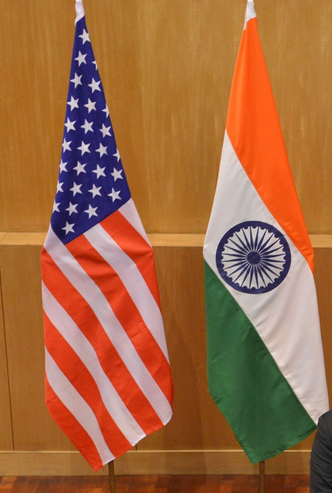

WASHINGTON, D.C. — The United States and India risk stalling more than two decades of strategic progress unless they urgently address rising political frictions over tariffs and Washington’s renewed outreach to Pakistan, policy expert Dhruva Jaishankar warned in written testimony submitted to the House Foreign Affairs Committee ahead of a key hearing set for Wednesday.
Jaishankar, Executive Director of the Observer Research Foundation America, told lawmakers that the bilateral partnership — strengthened consistently through bipartisan support in both countries — now faces “a political standstill” driven largely by trade disputes and U.S. engagement with Pakistan’s military leadership. He cautioned that the relationship is losing momentum at a time when both nations face China’s expanding military and economic footprint, as well as instability across the Indo-Pacific and Middle East.
He noted that U.S.-India cooperation has historically rested on “mutually-beneficial economic opportunities in both countries” and “strategic coordination, particularly in the Indo-Pacific amid China’s rise and growing assertiveness, and, more recently, in stabilizing the Middle East.” This foundation, he wrote, is now under strain.
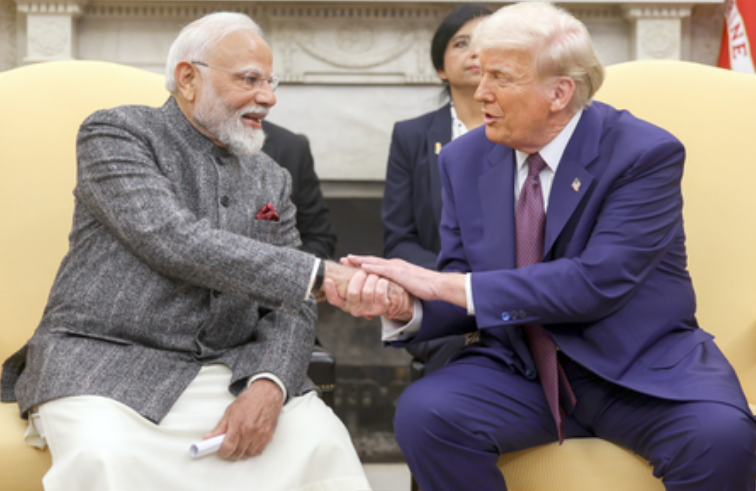
According to the testimony submitted Monday, several key priorities are jeopardized, including “the ambitious bilateral agenda outlined by President Trump and Prime Minister Modi in February 2025” and broader strategic cooperation spanning the Quad, the Middle East, and global governance forums.
Jaishankar’s statement outlines nearly three decades of progress in the bilateral relationship, from the lifting of U.S. sanctions in 1999 to the landmark 2008 civil nuclear agreement, expanded defense interoperability, the revival of the Quad, and new cooperation in areas such as space, critical minerals, and artificial intelligence.
He identified China’s increasingly assertive military posture as the primary driver of strategic alignment between Washington and New Delhi. He referenced incursions along the disputed India-China border, including the deadly 2020 Galwan Valley clashes, China’s rapid naval buildup, and its expanding network of dual-use ports across the Indo-Pacific. “China’s military capabilities now rival those of the United States,” he wrote, emphasizing that India has intensified maritime patrols since 2017 and deepened security cooperation with its partners, including through the Quad’s Indo-Pacific Maritime Domain Awareness initiative.
Turning to recent disputes, Jaishankar said ties were shaken by U.S. outreach to Pakistan following India’s retaliatory strikes after an April terrorist attack. He described Pakistan’s longstanding support for terrorist proxies as a continuing challenge for regional stability, writing that “Pakistan’s continued support for terrorism – and its contributions to conflict and instability in the broader region – still constitute a major political and security challenge.”
Trade tensions were another central concern. Jaishankar said U.S. tariffs imposed after the collapse of talks on a Bilateral Trade Agreement are now “among the highest on any country” and pose a threat to exporters and workers on both sides. If left unresolved, he warned, these duties will increasingly be viewed in India as “an act of political hostility.”
Despite the strains, he noted that cooperation has advanced this year in several areas, including a new 10-year Defense Framework Agreement, significant defence sales, expanded joint military exercises, NASA-supported human spaceflight initiatives, the launch of the jointly developed NISAR satellite, and India’s $1.3 billion LNG import deal with the United States.
Jaishankar concluded that the partnership retains enormous potential across four pillars — trade, energy, technology, and defense — highlighting major opportunities in artificial intelligence, semiconductor supply chains, critical minerals, and defence co-production under the U.S.-India TRUST initiative. (Source: IANS)