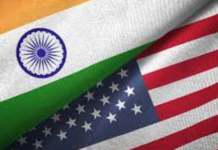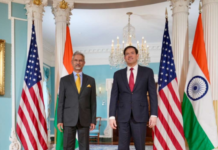



WASHINGTON — The United States has described India as the anchor of South Asia and the western Indo-Pacific as the Trump administration outlined an “America First” strategy centered on trade deals, defense cooperation, and targeted investment across the region.
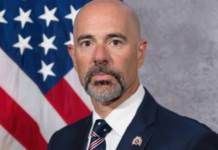
In written testimony submitted to the House Foreign Affairs Committee’s Subcommittee on South and Central Asia, Assistant Secretary of State for South and Central Asia Paul Kapur said President Donald Trump’s National Security Strategy makes clear that Washington “must put America first” through active engagement with strategically vital regions.
Kapur said the approach has advanced U.S. economic and security interests while strengthening partnerships across South Asia, which he described as “vitally important” to global stability. He noted that India alone accounts for more than one billion people and occupies a subcontinental landmass of major strategic consequence.
He warned that the emergence of a hostile power dominating South Asia could exert coercive leverage over the global economy, stressing that the United States must work to keep the region free and open.
“India, with its size, location, and commitment to a free and open region, anchors South Asia and, more broadly, the western half of the Indo-Pacific,” Kapur said.
He pointed to expanding U.S.-India engagement, including frequent high-level diplomatic contacts and growing cooperation in defense, technology, and energy. He cited the renewed 10-year U.S.-India Defense Framework Agreement, the TRUST initiative, and India’s purchases of U.S. products ranging from drones to liquefied natural gas.
Kapur also highlighted recent trade developments, saying President Trump and Prime Minister Narendra Modi reached an agreement last week on what he described as a historic trade framework. He added that the administration had also signed a trade deal with Bangladesh, opening access for U.S. exporters to a market of 175 million people.
Beyond trade, Kapur outlined three core pillars of U.S. strategic-capacity building in the region: defense cooperation, targeted investment, and diplomacy.
He described Pakistan as another important partner, saying Washington is working with Islamabad to develop its critical mineral resources by combining U.S. government seed financing with private-sector expertise. He also pointed to expanded cooperation in energy, agriculture, and counterterrorism.
Kapur said countries including Bangladesh, Nepal, the Maldives, Sri Lanka, and Bhutan hold outsized strategic importance because of their locations, but are also vulnerable to coercive pressures. He warned of the risks posed by debt-driven influence strategies in the region.
Urging bipartisan support, Kapur called on lawmakers to work together to strengthen strategic capacity in South Asia, saying such efforts would help regional partners while making the United States safer, stronger, and more prosperous.
South Asia continues to play a central role in Washington’s broader Indo-Pacific strategy, particularly as the United States seeks to counter China’s expanding economic and security presence in the region. India has emerged as a key partner in that effort through closer defense coordination, multilateral engagement, and expanding trade ties. (Source: IANS)