Success with a Purpose: Lessons from a Conversation with Subu Kota


By Mona Chopra
(Editor’s note: Mona Chopra is President of Vidya Bharati New England.)
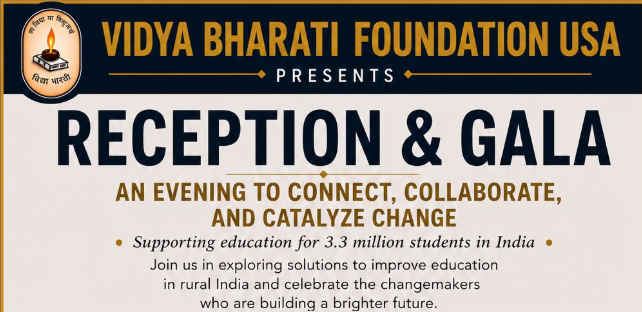
BOSTON–On July 12, 2026, Vidya Bharati New England will have the privilege of welcoming Subu Kota as a special guest at our Annual Gala at the Boston Marriott in Burlington.

For many of us, Kota is known as a successful entrepreneur, community leader, philanthropist, and long-time supporter of Vidya Bharati and other charitable organization. Yet, during a recent conversation with him, I discovered that his greatest legacy may not be measured by the businesses he built, but by the lives he continues to influence.
What struck me most about Kota was not the scale of his accomplishments, but the simplicity with which he speaks about them. His life story reflects an unwavering belief in possibility—a conviction that challenges are meant to be solved and opportunities are meant to be created.
That philosophy has guided him throughout an extraordinary entrepreneurial journey. In 1988, he founded The Boston Group and transformed it into a global IT consulting and digital transformation company. Along the way, he ventured into real estate, at one point owning 180 apartments, and even introduced what was then the Boston area’s first upscale Indian restaurant, Pondicherry. Each venture reflected his willingness to take risks, learn quickly, and adapt to changing circumstances.
Yet what makes his story compelling is not simply business success. It is his willingness to redefine success itself.
At a stage when many entrepreneurs might have continued expanding their portfolios, Kota made a deliberate choice to step back, selling several assets to spend more time with family.
Later, he returned to the worlds of technology outsourcing and biotechnology with the same energy and vision that had marked his earlier ventures. Listening to him, I was reminded that achievement is not a straight line. It is often a series of thoughtful decisions about what matters most at different stages of life.
Our conversation soon turned to philanthropy, a subject about which Kota speaks with particular passion. His contributions have supported a wide range of organizations, from the YMCA to the India Society of Worcester and numerous educational, cultural, and community initiatives. Yet he rejects the notion that philanthropy is reserved for those with extraordinary wealth.
“Whether you have excess money or not, everyone can help,” he told me. “Start sharing your knowledge. You may think you have nothing to give, but think. You can always add value to people’s lives. We all have a moral responsibility to give back.”
Those words stayed with me long after our conversation ended.
In a world where success is often defined by accumulation—more wealth, more recognition, more influence—Kota offers a refreshing alternative. He reminds us that our greatest contribution may not be what we possess, but what we share. Time, experience, mentorship, wisdom, encouragement—these are resources available to almost everyone.
Perhaps that is why he has become such an influential mentor to younger entrepreneurs and professionals. Kota laughingly describes himself as a “GPS for life,” helping others navigate challenges he has already faced. Behind the humor lies a serious commitment to guiding the next generation. He sees mentorship not as an obligation but as a responsibility that comes with experience.
As President of Vidya Bharati New England, I find this message deeply aligned with our mission. Education is not merely the transfer of knowledge; it is the cultivation of values. It is about inspiring individuals to use their talents in service of something larger than themselves. Dr. Kota’s life exemplifies that principle.
His journey demonstrates that business excellence and social responsibility are not competing goals. In fact, they are most powerful when they reinforce one another. Entrepreneurship can create wealth, but purpose gives that wealth meaning. Leadership can build organizations, but service builds communities.
As we prepare to welcome Subu Kota to our Gala on July 12, I hope our guests will see more than a successful entrepreneur. I hope they will see a model of what it means to live a life of impact—one that bridges innovation with compassion, ambition with humility, and achievement with service.
In the end, Kota’s story is not simply about building businesses. It is about building people. It is about recognizing that the true measure of success lies not in what we accumulate for ourselves, but in what we contribute to others.
That may be his most important lesson of all.