PM Modi Criticises ‘Hindu Rate of Growth’ Label, Calls It a Colonial-Era Attempt to Blame India’s Culture for Slow Progress
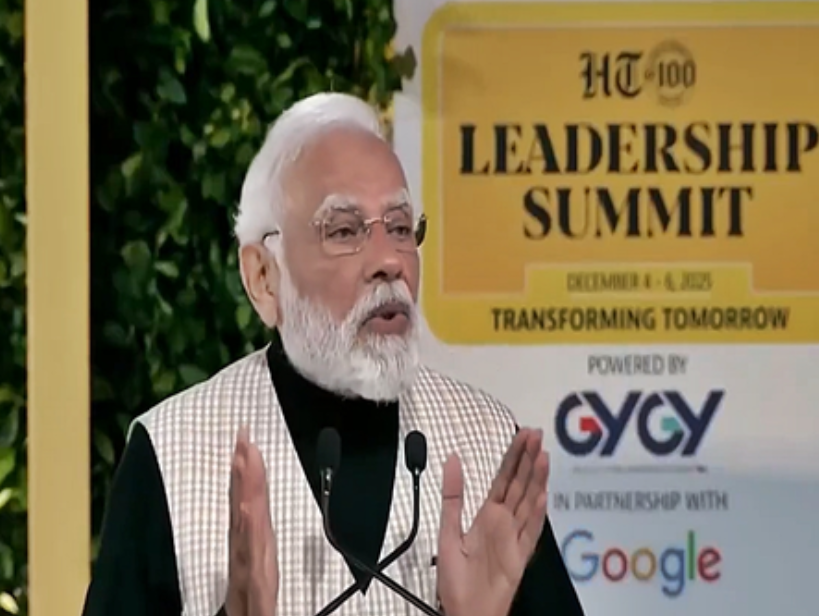

New Delhi— Prime Minister Narendra Modi, speaking at the 23rd Hindustan Times Leadership Summit, sharply criticised the historical use of the term “Hindu rate of growth,” calling it an attempt to attribute India’s past economic underperformance to its culture and civilisational identity.
The phrase, coined in the 1970s, was used to describe India’s annual growth rate of about 2–3 percent during earlier decades. Modi argued that the label cast an entire society as inherently unproductive and poor, and reflected a deeper colonial mindset.
“The entire country was given the tag of unproductivity, poverty. There were attempts to prove that the reason for the slow progress of India is Hindu sabhyata, Hindu culture,” he said. He added that India must move away from narratives that undermine its traditions and perpetuate what he described as a “slave mentality” inherited from colonial rule.
The Prime Minister also criticised what he characterised as past governments’ lack of trust in citizens. He pointed to older requirements for official attestations on basic documents—procedures he said conveyed an assumption that people could not be trusted.
“Our government broke that way of working. A citizen’s self-attested document is enough to prove its authenticity,” Modi said, presenting the administrative reform as part of a broader shift toward trust-based governance.
Throughout his address, Modi linked themes of governance, economic confidence and cultural identity, arguing that India must define its economic path on its own terms rather than through frameworks imposed in earlier eras. He maintained that simplifying procedures and trusting citizens would help strengthen India’s growth trajectory, while embracing cultural confidence would support a more self-assured national outlook. (Source: IANS)