Outstanding Women of 2026: Ekta Jain — Preserving Language and Culture Through Dance and Devotion


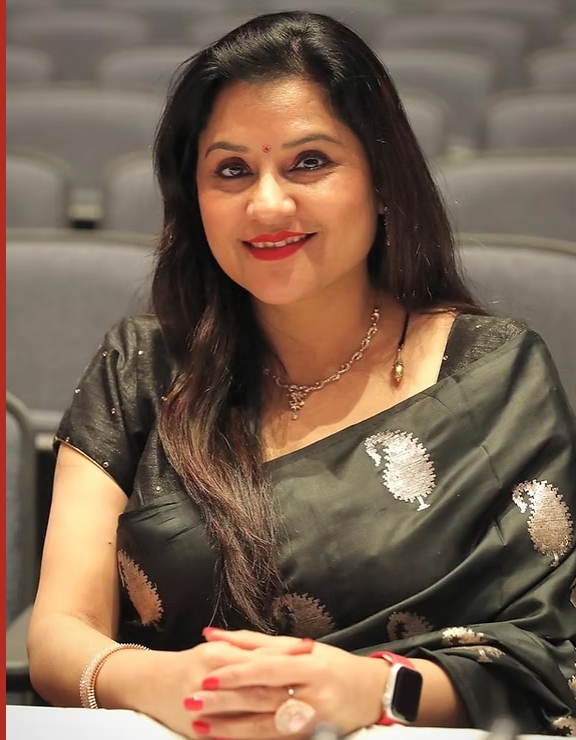
BOSTON — For Ekta Jain, dance is not simply choreography set to music. It is storytelling with intention, discipline rooted in tradition, and a bridge connecting generations to language and culture.
As Founder and Director of Ekta Dance Academy and Co-Chair of Baal Yuva Vibhag, the youth educational department of Hindi Manch, Jain has spent more than two decades shaping artistic journeys while strengthening cultural identity within the Indian diaspora.
 Trained in Kathak under the Jaipur Gharana tradition, along with Bollywood, Salsa, and Hip-Hop, Jain founded her academy in 2005 with a vision: to create a space where classical Indian dance could coexist with contemporary forms, and where students of all ages could find confidence through performance. Since then, about 3,000 students—ranging in age from four to 70—have trained under her guidance. Many have gone on to perform nationally and internationally, some appearing on television and major Indian platforms, while others have become instructors themselves.
Yet Jain measures impact less by accolades and more by transformation. She speaks often of watching students rediscover joy, carve out “me time” from busy lives, and step onto stage with newfound confidence. “I don’t think of w
hat I do as work,” she says. “For me, it is pure passion.”
Her commitment extends beyond the studio. Through her leadership role at Hindi Manch, Jain mentors children in language, anchoring, and stage presence, helping them build fluency and pride in Hindi while developing public-speaking skills. She is equally devoted to seniors, conducting dance workshops and participating in outreach initiatives that bring movement and connection to older adults.
Grounded in respect, compassion, and patience—values she credits to her upbringing—Jain views art as service. Whether choreographing mythology-based storytelling, presenting folk traditions, or supporting women-centered theatrical productions, she sees her work as part of a larger mission: preserving heritage while empowering individuals.
In recognition of her contributions to the community and culture, Jain has been named one of INDIA New England News’ Outstanding Women of 2026. She will be honored at the 23rd Annual Women of the Year Awards Gala on March 14 at the Burlington Marriott Hotel in Burlington, MA, an evening expected to bring together approximately 400 community leaders and changemakers.

Below, Jain reflects on her journey, inspirations, and the principles that continue to guide her.
INDIA New England News: How would you describe the work you do in your own words—and what part of it gives you the greatest sense of meaning or joy?
Ekta Jain: I have always believed that dance is not just movement—it is emotion, storytelling, and purpose. I try to bring something unique into every performance I create. Whether it’s a meaningful message, a creative twist, or a life lesson woven into the choreography, every piece has depth behind it.
I don’t think of what I do as ‘work.’ For me, it is pure passion. Ekta Dance Academy has students from 4 years old to 70 years old, and the greatest joy comes from watching them rediscover their love for dance. They get their ‘me time,’ step away from daily stress, and gain the confidence to express themselves on stage. Seeing their smiles, their pride, and their transformation into empowered individuals—that is the most rewarding part of my journey.
INE: Is there a cause, charity, or community initiative close to your heart?
EJ: I am Indian, and I am Indian by heart. Even living thousands of miles away, I remain deeply connected to my culture and mother tongue. That is why my work with Hindi Manch, especially Bal Yuva Manch, is very close to my heart. Their mission to promote and preserve Hindi language and culture across America resonates deeply with me.
Through my role as Co-Chair of the youth department, I help children connect with Hindi in playful, engaging ways—through storytelling, anchoring, cultural performances, and stage presence training. I want them to feel proud of their roots.
I am also passionate about supporting seniors. Respecting and caring for elders is a core Indian value. Through my involvement with Volunteering For Seniors and other community groups, I conduct dance workshops and participate in outreach programs that bring joy and movement into their lives. Giving back to the community in whatever way I can is very important to me.
INE: Outside of your professional life, what activities or interests help you recharge and stay grounded?
EJ: Dance is my passion, so I engage with it anytime. Beyond that, I love acting. Inspired by my father’s involvement in theatre, I’ve had the opportunity to perform in plays with SETU, which continues to inspire me creatively.
I also love writing short stories and hope one day to direct them into plays or short films. Spending time in nature, listening to music, and reflecting helps me stay grounded. Most importantly, spending quality time with my family brings me balance and reminds me of what truly matters.
INE: Looking back, what impact are you most proud of making?
EJ: When I look back at my 20-year teaching journey and over 3,000 students, what fills me with pride is the lasting impact on their lives. Some have performed on television and major Indian shows, some have become teachers themselves, and others have carried their passion for dance into college and beyond.
Beyond individual achievements, I am proud that through folk dances, classical forms like Kathak, mythology-based storytelling, and colorful cultural presentations, I have helped keep Indian culture alive in our community. Even if my contribution feels small, knowing I’ve helped people stay connected to their roots gives me immense fulfillment.
INE: What is a skill or strength people may not immediately associate with you, but one that has shaped your journey?
EJ: I believe compassion is one of my greatest strengths. I try not to judge people quickly. Everyone reacts based on their experiences and struggles. Because I interact with hundreds of people—students, parents, community members—I strive to understand their perspectives first.
I also strongly believe that everything happens for good. Even during challenging times, I trust that something better lies ahead. This mindset keeps me persistent and motivated.
INE: Is there a book that has influenced how you think, lead, or live?
EJ: I read often, but instead of one specific book, I believe people around us are our greatest teachers. I observe deeply—learning from situations, emotions, community experiences, films, and conversations. These real-life influences shape me far more than any single book.
INE: Are there words or ideas you return to during challenging moments?
EJ: I always remind myself: ‘Do your work with love and sincerity, and everything else will fall into place.’ That grounding thought carries me through busy schedules and moments of doubt.
And as I mentioned earlier, I truly believe everything happens for good. That belief keeps me calm and hopeful, even in difficult times.
INE: Who has inspired you most?
EJ: I cannot name just one person. My inspiration comes from the collective strength of the people around me—my parents, my mother-in-law, my husband, my daughters, my students, and my community.
What inspires me most is resilience—how people bounce back from challenges and keep moving forward. Observing their determination and quiet strength motivates me every day.
INE: What core value or principle do you consciously try to live by?
EJ: Respect. For me, respect is everything—respect for art, for differing opinions, for nature, for community, and for family. It is a value my parents instilled in me, and it keeps me grounded.
Along with respect, I believe in helping others whenever possible. Even small acts of kindness can make a difference.
INE: If you could spend time in conversation with one person—past or present—who would it be?
EJ: From the past, I would choose Pandit Birju Maharaj. He was an ocean of knowledge in Kathak, and even a fraction of his wisdom would be invaluable.
From the present, I would choose Sudha Chandran. Her story, especially portrayed in Nache Mayuri, is deeply inspiring. Despite losing a leg, she continued to pursue dance with resilience and grace. I would love to learn how she maintained such strength and devotion to her art.
INE: What is one lesson life has taught you that you wish you had learned earlier?
EJ: Patience. Earlier in life, I wanted everything to go exactly my way. Over time, I learned that life rarely unfolds as planned. Embracing patience has transformed how I approach challenges—both personally and professionally.
INE: How do you define success at this stage of your life?
EJ: Success is relative. I feel successful as a mother when my children are happy, as a daughter when my parents are content, as a wife when my husband is happy, and as a teacher when my students grow into confident individuals.
I don’t measure success as one grand achievement. I find success in every moment. Above all, I hope to be remembered as a good human being and a true friend. To me, that is the truest form of success.
INE: What advice would you offer to young women aspiring to make a difference in their own way?
EJ: Be consistent. No matter how many challenges come your way, do not give up. And do something unique. Every woman has a special quality—discover it and nurture it.
Stay consistent, stay unique, and trust that your moment will come.