Jharkhand High Court Revives Mystery of Scientist J.C. Bose’s Safe Sealed for Nearly 89 Years
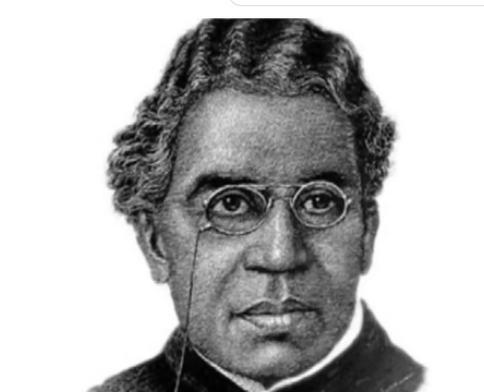

RANCHI–A nearly 89-year-old mystery surrounding a locked safe belonging to renowned Indian scientist Jagadish Chandra Bose has attracted renewed attention after the Jharkhand High Court initiated proceedings to examine the matter.
The safe, which has reportedly remained unopened since Bose’s death in November 1937, is located at his former residence in Giridih district, raising questions about whether it contains valuable scientific documents, unpublished research or other historically significant materials.
The Jharkhand High Court took notice of the issue on its own initiative and registered it as a public interest litigation following a media report highlighting the long-standing mystery.
On Wednesday, a bench headed by Justice Rongon Mukhopadhyay directed the state’s Tourism Secretary and the Giridih Deputy Commissioner to respond to the matter.
The iron safe is housed at Shanti Bhavan in the Barganda neighborhood of Giridih, where Bose spent his final years and died on November 23, 1937.
Its contents have remained unknown for decades, generating speculation among historians, scientists and researchers about the possibility of discovering previously unseen materials connected to Bose’s scientific achievements.
Some believe the safe could contain original manuscripts, unpublished research papers, personal correspondence or documents offering new insights into his pioneering experiments.
Born in 1858 in Mymensingh, now part of Bangladesh, Bose became internationally recognized for his contributions to physics, biology and the scientific understanding of plant responses.
He maintained a close connection with Giridih, which was part of the Bengal Presidency during his lifetime.
The area’s forests and abundant vegetation provided an environment suited to his research into plant physiology, an area in which he made significant contributions.
Bose spent considerable time in Giridih conducting scientific investigations and later devoted his final years to research and reflection at his residence.
The government acquired the property in 1987 as part of efforts to preserve his scientific legacy.
It was subsequently renamed the Jagadish Chandra Bose Memorial Science Building and formally inaugurated on February 28, 1997, by A.R. Kidwai, who was then the Governor of Bihar.
Located near Jhanda Maidan, the memorial contains photographs of Bose, records of honors he received and models of scientific instruments associated with his work.
Among the exhibits are models of his microwave detector and the crescograph, an instrument he developed to measure plant growth and demonstrate how plants respond to external stimuli.
Despite the historical importance of the residence and its exhibits, preservation efforts have remained limited, prompting concerns about the long-term protection of materials associated with the scientist.
The sealed safe has been a particular source of curiosity, with previous efforts to examine its contents failing to move forward.
The High Court’s intervention has renewed hopes that authorities will take steps to determine what lies inside the safe while addressing broader concerns about preserving Bose’s legacy.
For historians and researchers, opening the safe could potentially reveal documents that have remained inaccessible for nearly nine decades.
However, whether it contains significant scientific material or personal belongings will remain unknown until authorities undertake a formal examination. (Source: IANS)