Indian Scientists Find Thermal Shocks Could Aid Controlled Drug Delivery

New Delhi — Researchers at the Raman Research Institute have found that sudden changes in temperature can temporarily make tightly packed materials flow, a finding that could have implications for controlled drug delivery.
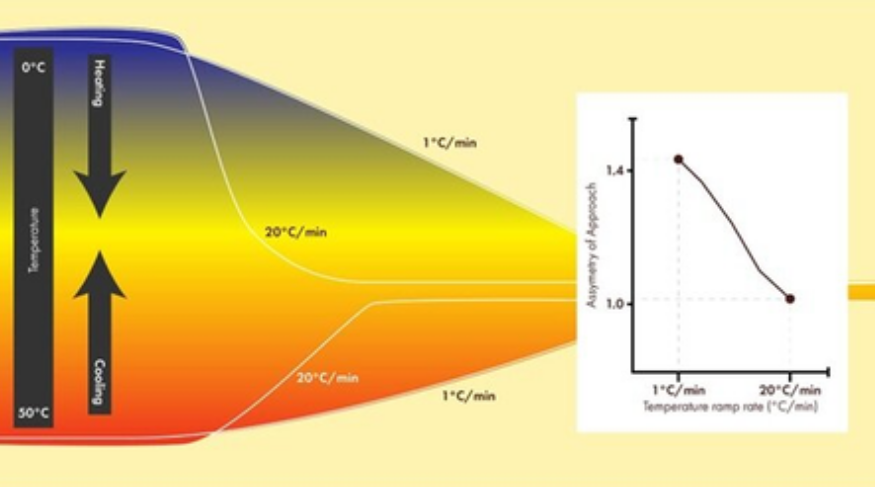
The scientists used microgel particles to simulate glassy, jammed materials and found that rapid heating can trigger particle rearrangements, briefly pushing the system into a liquid-like state and erasing some of its structural memory.
The Raman Research Institute is an autonomous institute under India’s Department of Science and Technology. The study was published in the Journal of Colloid and Interface Science.
Glassy materials behave mechanically like solids even though their internal structures share characteristics with liquids. They can also retain memory of how they were previously heated, cooled or otherwise disturbed.
For the experiments, first author Sonali Kawale, a Ph.D. student at the institute, used densely packed microgel particles. Microgels can absorb several hundred times their weight in water and are also used in products such as diapers and sanitary napkins.
The particles were synthesized, ground into a fine powder, suspended in water, stirred for 24 hours, sonicated for 15 minutes and refrigerated at 4 degrees Celsius to maintain stability.
Researchers found that the suspension followed a different structural path when it was heated to a target temperature of 20 degrees Celsius than when it was cooled to the same temperature.
The difference showed that the material’s behavior depended not only on its starting and ending temperatures, but also on the path it took to reach them.
The researchers said understanding how thermal shocks influence the recovery and rearrangement of jammed materials could eventually help in the development of targeted and controlled drug-release systems, potentially reducing unwanted side effects.
The team plans to study how jammed systems respond to mechanical shocks and compare those effects with the response produced by sudden temperature changes. (Source: IANS)