Indian Americans Welcome Supreme Court Birthright Citizenship Ruling
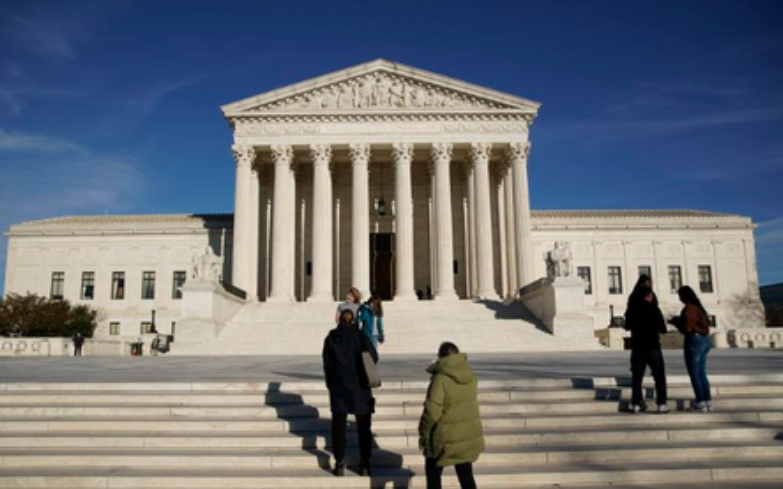

Washington– Indian American lawmakers and community leaders welcomed the U.S. Supreme Court’s decision reaffirming birthright citizenship, calling it a victory for the Constitution, immigrant families and the American Dream.
The ruling reinforced the constitutional guarantee that nearly anyone born in the United States is an American citizen, regardless of their parents’ immigration status.
Rep. Raja Krishnamoorthi said the decision reaffirmed “a fundamental constitutional principle: every child born in the United States is an American citizen.”
“Since its ratification in the wake of the Civil War, the Fourteenth Amendment has enshrined the principles of equal citizenship and equal protection under the law, including its guarantee of birthright citizenship,” he said. “The Supreme Court’s decision makes clear that those constitutional rights cannot be rewritten by executive order because the Constitution, not the President, governs the rights of the American people.”
Rep. Suhas Subramanyam of Virginia welcomed the court’s rejection of President Donald Trump’s executive order seeking to restrict birthright citizenship.
“I’m glad the courts recognised that President Trump’s birthright citizenship executive order was a blatant and unconstitutional attempt to strip citizenship from children of immigrants all across the country,” he said.
“These immigrants are folks who have served our country in so many ways and contributed to the success of our economy. And make no mistake: they are American.”
Subramanyam said lawmakers would “continue to push for long overdue, commonsense immigration reform and fight this administration’s blatant immigration overreach.”
Rep. Pramila Jayapal said the ruling confirmed that the Constitution cannot be changed through executive action.
“Donald Trump is not a king, and he cannot, with the stroke of a pen, change our Constitution,” she said. “Today’s ruling rightly reaffirms that if you are born in America, you are American, plain and simple.”
Jayapal said she hoped the judgment would “settle this issue once in for all” and urged the administration to stop issuing executive orders that were “clearly illegal, anti-immigrant and traumatising to Americans across the country.”
Rep. Shri Thanedar of Michigan called the decision “a major win for civil rights and the rule of law.”
“The Supreme Court did what the Constitution requires: it affirmed that people born in the United States are American citizens,” Thanedar said, adding that the ruling was “a reminder of how fragile our rights can be.”
The Foundation for India and Indian Diaspora Studies said the decision was particularly significant for Indian Americans.
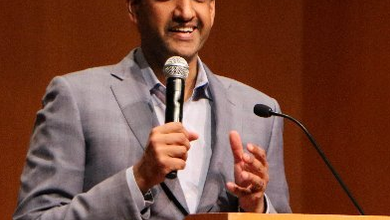
“Birthright citizenship has been a cornerstone of realizing the American Dream for immigrants,” FIIDS President Khanderao Kand said, adding that the ruling would allow “millions of families” to face the future with greater certainty.
Kand said the decision was especially important for “the nearly 5.2 million Indian Americans—including more than 1.2 million individuals waiting in the employment-based green card backlog and over 400,000 Indian H-1B professionals who contribute to America’s innovation, competitiveness, and economic growth.”
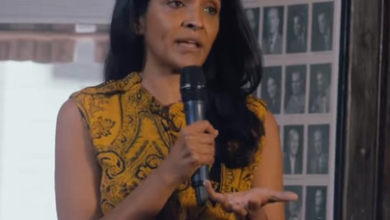
Indian American leader Bhavini Patel called the ruling “a beautiful celebration and acknowledgement of the power of the US Constitution.”
“It recognises that if you were born in the United States of America, you are an American,” Patel said.
She said the ruling recognized “the beauty of this country” and reaffirmed that “the fabric of this country is built on its diversity.” Patel added that the decision showed “the American Constitution is alive in its Well.”
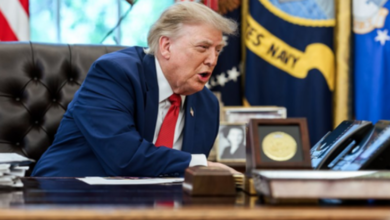
Trump responded on social media by writing: “I would like to congratulate President Xi, and the Great Country of China, on their massive Birthright Citizenship WIN!”
Birthright citizenship has been protected by the Citizenship Clause of the 14th Amendment since its ratification in 1868 following the Civil War.
The issue is particularly significant for Indian Americans because hundreds of thousands of Indian professionals work in the United States on H-1B visas, while more than 1 million Indians are waiting for employment-based green cards. (Source: IANS)