
AAHOA Presses Congress to Pass American Franchise Act as House Prepares Vote
The Asian American Hotel Owners Association is urging lawmakers to approve legislation that would narrow when hotel brands can be held responsible for workers at independently owned properties.
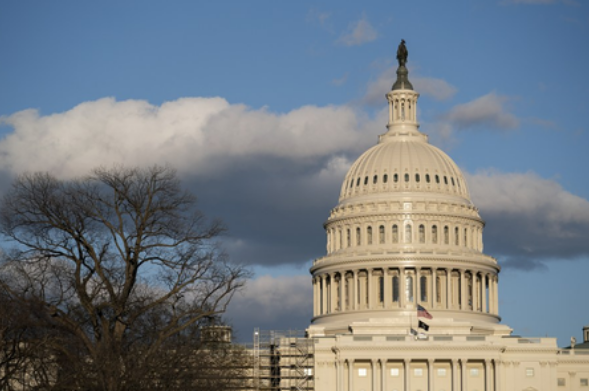

WASHINGTON— The Asian American Hotel Owners Association (AAHOA), representing thousands of Indian-American hotel and motel owners across the United States, is urging Congress to pass the American Franchise Act, a bill that would limit when franchisors can be held jointly responsible for employment practices at independently operated businesses.
The legislation is expected to come before the House of Representatives next week, with Republican leaders scheduling it for consideration on Tuesday, Dec. 1, or later in the week. The House Rules Committee is scheduled to consider on Monday how the measure would be brought to the floor.
AAHOA was among more than 100 business groups that wrote to House Speaker Mike Johnson and Majority Leader Steve Scalise on Nov. 12, urging lawmakers to hold a floor vote and enact the legislation before the end of the year. The groups also called for the bill to be attached to must-pass legislation if necessary.
The American Franchise Act would establish a narrower standard for determining when a company that licenses its brand to an independent business operator can be held responsible for that operator’s employees under the National Labor Relations Act and the Fair Labor Standards Act.
Under the proposed legislation, a franchisor would need to possess and exercise substantial, direct and immediate control over at least one essential condition of employment, such as wages, working hours, hiring or discipline. The control would have to have a regular or continuous effect on employment conditions. Isolated or minimal intervention would not be sufficient.
AAHOA and other industry groups argue that the legislation would provide greater clarity about the responsibilities of franchisors and independent business owners, particularly in industries such as hospitality, where thousands of hotels operate under nationally recognized brands but are owned and managed by local entrepreneurs.
The association has been actively lobbying lawmakers on Capitol Hill and through visits to member-owned hotels.
At an advocacy conference in Washington in September, AAHOA members held hundreds of meetings with lawmakers and congressional staff, with support for the Senate version of the franchise legislation among the association’s priorities.
In October, AAHOA said members in South Florida raised the bill during hotel visits with Republican Representatives Mike Haridopolos in Melbourne and Greg Steube in Sarasota. The visits were arranged by Meghna Patel, the association’s regional director. Haridopolos toured a hotel owned by AAHOA member Dipak Patidar.
According to the International Franchise Association, the bill had 158 co-sponsors in the House. Oklahoma Republican Kevin Hern introduced the legislation last year, and California Democratic Congressman Ami Bera, an Indian-American lawmaker, was among its original co-sponsors.
The House Education and Workforce Committee advanced the measure in July and filed its report in September. The Senate companion bill, S. 3525, was introduced by Kansas Republican Roger Marshall and referred to the Senate Health, Education, Labor and Pensions Committee.
The legislation has drawn opposition from labor organizations, which argue that franchisors can influence employment conditions even when they do not directly hire or supervise workers.
In a letter to lawmakers, the AFL-CIO and allied groups, including hospitality union UNITE HERE, argued that franchise brands can shape working conditions through contractual requirements and mandated technology systems.
The labor groups said the bill could make it more difficult for workers to bargain with companies that influence their employment conditions and could weaken enforcement of workplace protections.
AAHOA traces its origins to Indian immigrants who organized in the U.S. lodging industry in response to discrimination. The association says its approximately 20,000 members collectively own 60 percent of hotels in the United States.
More than 60 percent of hotel and motel rooms in the country are owned and operated by Indian Americans, according to the report.
The House vote could prove significant for the hotel industry, where franchise arrangements allow independent owners to operate properties under established brands while maintaining local ownership and management. (Source: IANS)