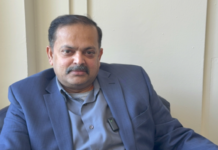

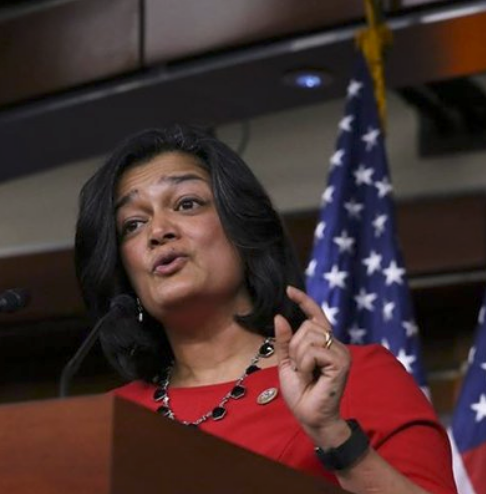

WASHINGTON, D.C. — Two prominent Indian American lawmakers, Rep. Ami Bera and Rep. Pramila Jayapal, delivered forceful and substantive remarks during a House Foreign Affairs Subcommittee on South and Central Asia hearing on the U.S.–India strategic partnership, calling for a more stable, values-driven and innovation-focused foundation for bilateral ties.
Bera, a California Democrat and one of the longest-serving Indian American members of Congress, emphasized the deep bipartisan backing for the relationship. “We recently introduced a resolution, a sense of Congress that was bipartisan, 24 members, talking about three decades of strategy going back to President Clinton to President Bush to President Obama to President Trump’s first term to President Biden,” he told the panel. The message, he said, is clear: the United States and India “both want… an atmosphere of security, peace, prosperity.”
Drawing from a recent visit to India, Bera said he observed a growing strategic convergence. He recounted conversations with government officials, business leaders and military officers, concluding that “India understands their long-term interests.” While New Delhi must “coexist with China,” he argued, Indian leaders increasingly see “a lot of their long-term interests lie with the West… the United States (and) Europe.” He added that India is “welcoming… multinational companies investing,” reinforcing its role in secure supply chains.
On defense cooperation, Bera highlighted expanding maritime collaboration and urged more joint training. He said his visit to the Western Naval Command revealed that “the maritime partnership between the United States and India is extremely strong right now,” with both sides eager to pursue more joint exercises to protect freedom of navigation across a strategically contested region.
Bera also addressed mobility and talent flow, criticizing the administration’s $100,000 H-1B fee as harmful to American innovation. “We need this talent,” he said, calling for a new visa category enabling two-way scientific exchange between India and the United States — essential, he noted, for work in AI, biotechnology, health security and advanced manufacturing.
Rep. Pramila Jayapal, the first Indian American woman elected to Congress, offered a personal perspective rooted in her own immigrant experience. “I’m very proud of my roots in India, my birth country,” she said, noting that her mother still resides there. As the only member of Congress to have lived in the U.S. on both a student visa and an H-1B visa, she warned that restrictive immigration policies are hurting families, businesses and the bilateral relationship.
Jayapal said she has heard from Indian American entrepreneurs that tariff escalation is threatening survival. A fifth-generation company in her district, she noted, described recent tariff hikes as “the greatest threat to their business in over 120 years.” She called the administration’s cumulative 50 percent tariff burden on many Indian goods economically shortsighted and strategically counterproductive.
She also raised concerns about rising “anti-Indian hate” in the United States and highlighted the essential contributions of Indian Americans, calling them “extremely important to our economy, an integral part of our society… running major Fortune 500 companies as well as startups and leading cutting-edge research to save lives.”
On broader geopolitics, Jayapal questioned whether punitive measures could push India toward alternative blocs. Witness Sameer Lalwani acknowledged that tariff disparities “can push India closer” to BRICS and the SCO — a development Jayapal argued would work against U.S. strategic interests.
Together, Bera and Jayapal outlined a dual mandate: strengthening defense and technology cooperation while safeguarding democratic values, scientific mobility, economic openness and people-to-people trust. Their remarks underscored that a durable, future-oriented U.S.–India partnership must be built not only on shared strategic goals but also on the lived experiences and aspirations of millions of Indian Americans who serve as a “living bridge” between the two nations. (Source: IANS)