
IIT Delhi and AIIMS Develop Swallowable Device to Sample Bacteria From the Small Intestine

NEW DELHI — Researchers at the Indian Institute of Technology Delhi, in collaboration with the All India Institute of Medical Sciences, have developed a swallowable device capable of collecting microbial samples directly from the small intestine, a breakthrough that could significantly advance the study of the human gut microbiome.
The newly developed device, roughly the size of a grain of rice, is designed to overcome long-standing challenges in studying bacteria that reside in the upper gastrointestinal tract. While nearly half of the cells in the human body are microbial and play a critical role in digestion, immunity, and even mood regulation, accessing these microbes has traditionally required invasive procedures or indirect methods such as stool analysis.
Existing techniques like endoscopy or ileostomy are invasive, while stool samples often fail to accurately reflect microbial activity in the small intestine. The new ingestible device offers a minimally invasive alternative.
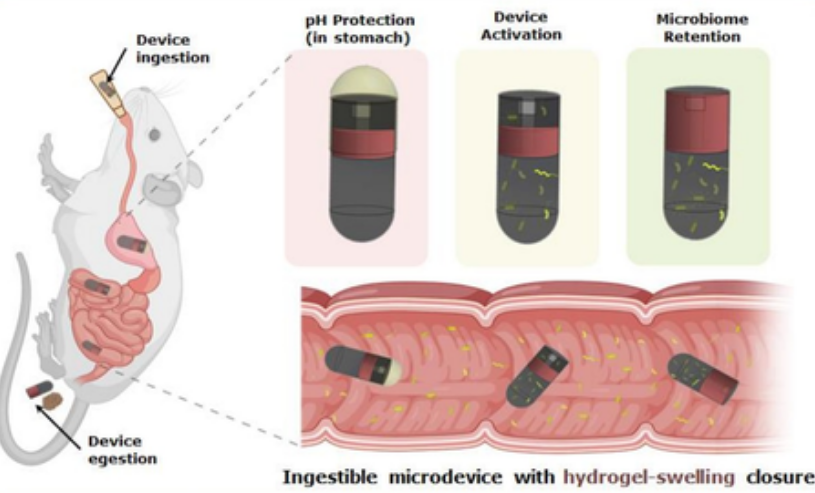
According to the researchers, the pill remains sealed while in the stomach and opens only after reaching the small intestine, where it collects bacterial samples before resealing to protect them as it passes through the digestive system. The study was conducted with support from the Indian Council of Medical Research.
“To say there is a hidden universe of living microbes in our body is no exaggeration but a scientific reality — we call it the human microbiome,” said Prof. Sarvesh Kumar Srivastava, principal investigator at IIT Delhi’s Medical Microdevices and Medicine Laboratory. “Just as we send rovers to explore outer space, we need miniaturized devices to explore the inner space of the human body.”
Srivastava said the prototype can autonomously collect microbes from specific regions of the upper gastrointestinal tract, enabling species-level identification and analysis of additional biomarkers.
The device uses an enteric-coated gelatin capsule designed to withstand the highly acidic environment of the stomach. The coating dissolves at the higher pH levels found in the intestine, allowing intestinal fluid to enter through a specialized inlet connected to internal activation and sampling chambers.
The gut-sampling technology, described in the journal Small, was validated in animal models. Researchers reported that the device successfully collected samples without causing tissue injury or inflammation.
“The small intestine plays a crucial role in health and disease,” said Dr. Samagra Agarwal of AIIMS New Delhi’s Department of Gastroenterology and Human Nutrition Unit, a co-senior author of the study. “Understanding the microbes and chemicals present there could be key to early disease detection, monitoring chronic conditions, and developing more targeted treatments.”
The research team said they plan to further develop the platform and move toward clinical use in India, pending regulatory approvals. (Source: IANS)