Henri Kagan, Kenso Soai Win 2026 Nobel Prize in Chemistry
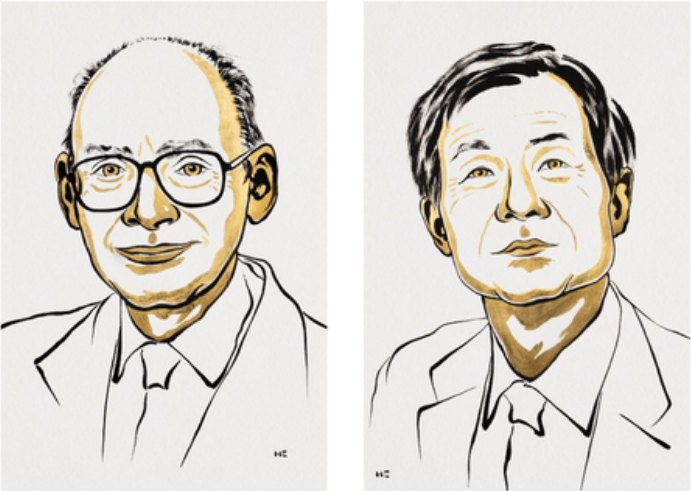

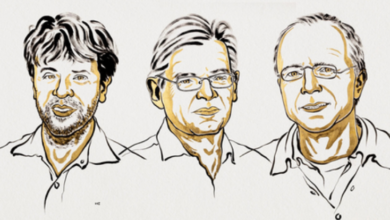
New Delhi — French chemist Henri B. Kagan and Japanese chemist Kenso Soai have won the 2026 Nobel Prize in Chemistry for discoveries that helped explain how nature can favor one mirror-image form of a molecule over another.
The Royal Swedish Academy of Sciences awarded the prize Wednesday “for the discovery of non-linear effects and autocatalysis in asymmetric organic synthesis.” Their work addressed a century-old question involving homochirality, the tendency of biological systems to favor one molecular “handedness.”
Many molecules, including amino acids, can exist in two forms that are mirror images of each other. Although the two forms are chemically similar, living organisms overwhelmingly use only one of them.
For decades, scientists sought to understand how such molecular selectivity could emerge naturally.
Kagan and Soai demonstrated ways chemical reactions can become strongly biased toward one mirror-image form, helping explain how homochirality can arise.
“Henri Kagan and Kenso Soai have provided a solution to a chemical mystery that is over a century old: how homochirality can emerge spontaneously. The chemical reactions they have developed are spectacular,” Heiner Linke, chair of the Nobel Committee for Chemistry, said.
Kagan made a major breakthrough in the 1980s through his work on non-linear effects in asymmetric synthesis, showing that relatively small imbalances could produce much larger effects in the resulting molecules.
Soai later demonstrated asymmetric autocatalysis, in which a reaction product can help catalyze its own formation and amplify an initial imbalance between two mirror-image forms.
The discoveries have had broad implications for chemistry, including pharmaceutical development, where producing the correct molecular form can be crucial to a drug’s effectiveness and safety.
The two scientists will share the 12 million Swedish kronor Nobel Prize equally.
Kagan was born in 1930 in Boulogne-Billancourt, France, and received his doctorate from the Collège de France in 1960. He is Professor Emeritus at the former Université Paris-Sud.
Soai was born in 1950 in Hiroshima, Japan, received his doctorate from the University of Tokyo in 1979 and is Professor Emeritus at Tokyo University of Science. (Source: IANS)