Europe Faces Extreme Heat as WHO Warns of Health Emergency
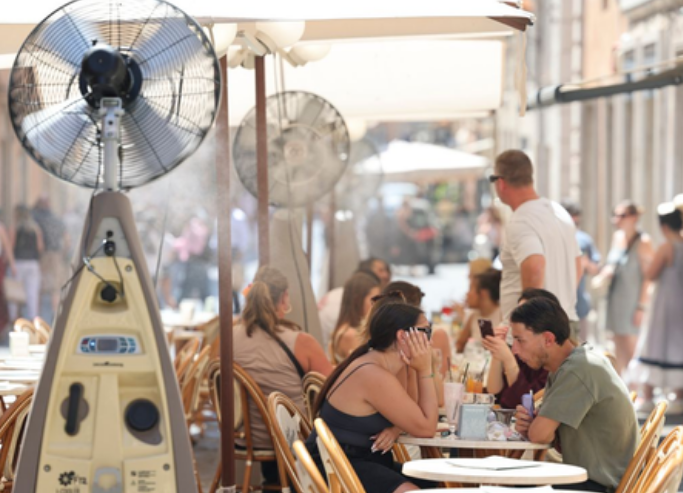

Rome — An extreme heat wave is gripping Europe, prompting widespread alerts, school closures and disruptions at major tourist sites as the World Health Organization warned that rising temperatures have become a public health emergency.
Italy is expected to place 16 cities under its highest heat alert Wednesday as temperatures and humidity continue to rise, according to Italian news agency Adnkronos.
France on Tuesday recorded its hottest day since national measurements began in 1947. The country’s national thermal index reached 29.6 degrees Celsius at 3 p.m., surpassing the previous record of 29.4 degrees recorded on July 25, 2019, and during the historic 2003 heat wave.
Meteo-France warned that conditions could worsen in the coming hours.
French authorities have recorded 40 drowning deaths since June 18 as people sought relief from the heat, with many young people among the victims.
The Eiffel Tower closed early Tuesday because of the extreme temperatures, while the Louvre Museum also shortened its operating hours.
Spain is facing similarly severe conditions. The Aemet weather agency issued a red alert for Andalusia, where temperatures were forecast to reach 44 degrees Celsius. Warnings were also issued for Cantabria and the Basque Country, where temperatures could reach 40 degrees.
In the United Kingdom, the Met Office issued a rare red warning for central and southern England, with temperatures forecast to reach 40 degrees. Several schools suspended classes because of the heat.
“Heat is no longer just a meteorological issue. It’s a health emergency,” WHO Regional Director for Europe Hans Kluge said.
“Rising temperatures are already putting human lives at risk and putting health systems under pressure across the WHO European Region,” he wrote in a post on X while sharing an interview with BBC News.
“Our region – Kluge insists – is the fastest warming in the world. In the last 4 years alone, heat has caused over 200,000 deaths, while heat-related mortality has increased by 30 per cent in the last 20 years.”
Kluge said many heat-related deaths could be prevented through early warnings, improved access to water and shade, cooler urban environments and better preparation by health systems.
But heat-related deaths “are not inevitable – emphasises the WHO Europe director – We know how to protect people: timely warning communities, making cities cooler, ensuring access to water and shade, monitoring people most at risk, and preparing health systems before temperatures peak. These are the practical steps recommended in the new Guidelines for Heat and Health Action Plans, published by WHO Europe.”
Italy is expected to face increasingly widespread and humid conditions Wednesday, including “super tropical nights,” when minimum temperatures remain above 25 degrees Celsius.
The 16 cities placed under the highest level-three alert are Ancona, Bologna, Bolzano, Brescia, Florence, Frosinone, Latina, Milan, Perugia, Pescara, Rieti, Rome, Turin, Venice, Verona and Viterbo.
The highest alert level indicates emergency conditions that could negatively affect healthy and active people, as well as vulnerable groups such as older adults, young children and people with chronic illnesses.
Forecasters said the heat is unlikely to ease soon. After the Cerberus high-pressure system, another African anticyclone known as Charon is expected to strengthen over Europe.
The system could become one of the most intense and persistent June anticyclones ever observed across at least half of the continent. (Source: IANS)