‘Dark Prince’ Tarique Rahman Faces Stern Test as Bangladesh’s Next Prime Minister
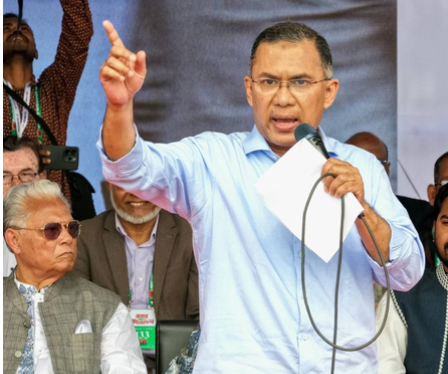

New Delhi— With the recent electoral landslide handing the Bangladesh Nationalist Party (BNP) a commanding majority, its chairman Tarique Rahman now stands on the cusp of becoming Bangladesh’s next Prime Minister. But the man once dubbed the “Dark Prince” for his low-profile style faces a long and complex road ahead.
Rahman’s political persona has long been shaped by distance and discretion. The eldest son of former President Ziaur Rahman and former Prime Minister Khaleda Zia, he rose through BNP ranks in the 1990s and early 2000s, earning a reputation as a powerful behind-the-scenes strategist rather than a mass orator.
His years in exile in London — nearly 17 years marked by legal battles and political controversy — only deepened that mystique. Supporters maintain that the criminal charges and convictions he faced were politically motivated, while critics argue they point to corruption and abuse of power. Either way, those cases remain a sensitive element of his public profile as he prepares to assume office.
In recent months, Rahman has stepped more visibly into the spotlight. Video clips circulating on social media show him urging supporters not to chant his name excessively, correcting enthusiastic party workers, and insisting on discipline within BNP ranks. In one widely shared moment, his motorcade reportedly stopped at a traffic signal despite being waved through — a symbolic gesture that supporters interpret as humility and adherence to rules.
Now 60, Rahman returns to frontline politics following BNP’s sweeping victory in the 13th parliamentary election. But electoral success brings immediate and formidable challenges.
Consolidating Power at Home
Rahman must quickly transform a decisive mandate into stable governance. Political consolidation will require balancing competing factions within the BNP, many of which operated independently during his years abroad. Forming a capable cabinet and signalling inclusive governance will be essential to calming public anxieties and preventing renewed polarization.
Law and order remains a pressing concern. The unrest of 2024 left deep scars, including attacks on members of the Bangladesh Awami League and incidents of violence against minority communities. The turmoil also reportedly demoralized sections of the police force. Restoring institutional trust will be critical for the new administration.
While voters may have rejected overt Islamist dominance in policymaking, conservative religious groups continue to exert pressure, particularly on issues of gender rights and religious equality.
Economic and Diplomatic Balancing Act
Economically, Bangladesh faces mounting strain. Inflation and unemployment have eroded public patience, while the garment and textile sector — the backbone of the country’s exports — faces rising competition and global uncertainties. Though a recent trade deal with the United States offers potential relief, recovery remains fragile. The health sector, already stretched, has also felt the impact of reduced foreign assistance, including the withdrawal of USAID support.
On the diplomatic front, Rahman must recalibrate relations carefully. Rebuilding pragmatic ties with India will be an urgent priority, especially amid sensitivities over political figures in exile and regional alignments. At the same time, Dhaka will face competing expectations from Pakistan and China, particularly following the interim government led by Muhammad Yunus, which had signalled warmer outreach to Islamabad and Beijing.
Navigating these geopolitical currents without alienating key partners will test Rahman’s political acumen.
From Shadows to Spotlight
For years, Tarique Rahman operated largely from the shadows, shaping party strategy from afar. Now, as he prepares to assume the nation’s highest office, the sobriquet “Dark Prince” may no longer apply. The spotlight will be unrelenting.
Whether he emerges as a unifying national leader or presides over renewed division will depend on his ability to translate electoral momentum into inclusive governance, economic stability, and restored public trust.
The mandate is clear. The path forward, however, promises to be anything but easy. (Source: IANS)