
By Shekhar Shastri
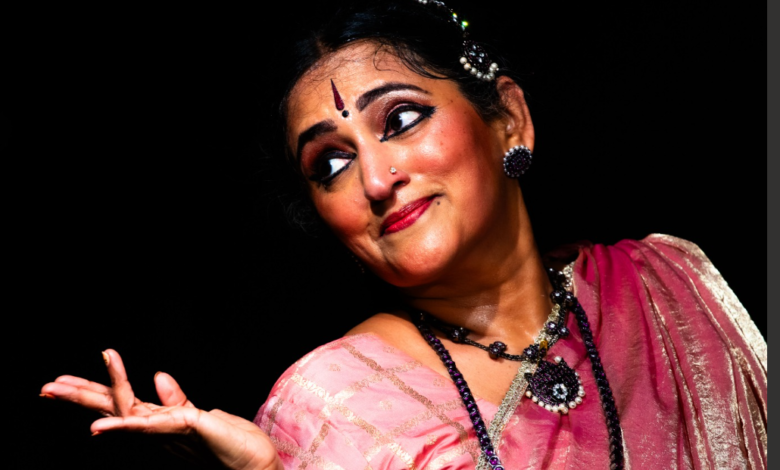
BOSTON–On the opening evening of Natya Samaagam at the Boston Center for the Arts Plaza Black Box, Pallavi Nagesha offered a work of unusual inward force. Her presentation, Carving the Breath of Stone, was not a conventional Bharatanatyam recital, though its architecture quietly echoed the classical sequence, beginning with Pushpanjali and arriving ultimately at Thillana. Instead, it unfolded as a chamber-like, content-driven meditation on poetry, sculpture, embodiment, and presence, drawing its inspiration from the Kannada poet D. V. Gundappa (DVG) and the famed shilabalike of the 12th-century Chennakeshava Temple in Belur, Karnataka.
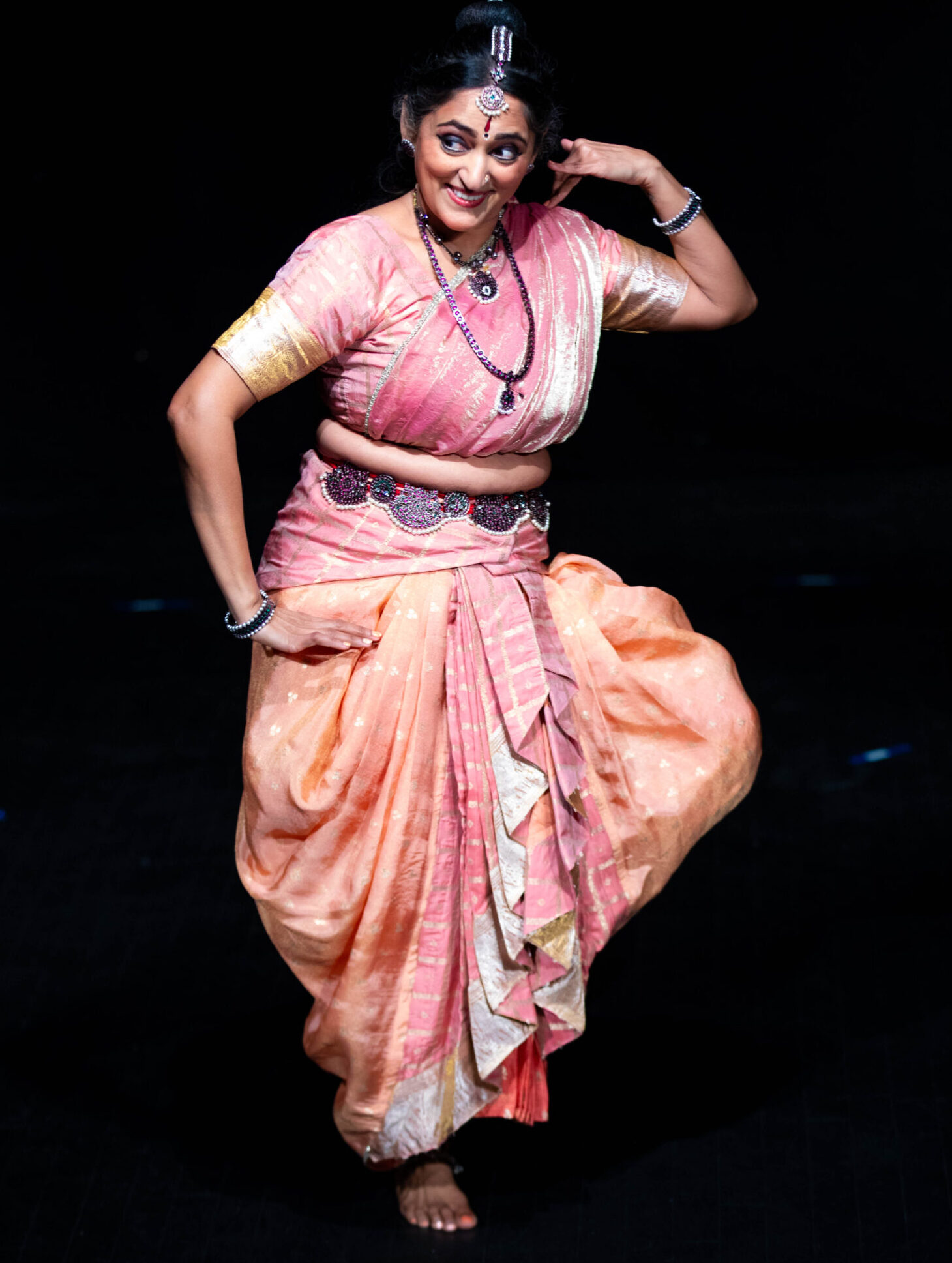 Performed in an intimate black-box setting, with the audience seated in near-total darkness and barely visible to one another, the work heightened attention by stripping away distraction. There was no traditional raised stage separating performer from viewer; that absence itself became part of the experience. The setting, sparse yet charged, functioned as a heightened form of āhāryābhinaya: environment not as decoration, but as a compositional force. In that darkened space, every shift of gaze, every pause, every vibration of stillness drew the eye toward the performer alone.
The conceptual premise was both elegant and fertile. DVG’s Antahpura Geete imagines the temple’s carved maidens not as inert stone figures but as presences suffused with feeling, grace, memory, and devotion. Nagesha’s performance extended that poetic intuition into dance. As her introduction suggests, the central question was simple and arresting: can stone feel? Her answer did not come as argument, but as enactment. Through movement, narration, recorded music, and silence, the work sought to “un-carve” the sculpted figure, not into spectacle, but into awareness.
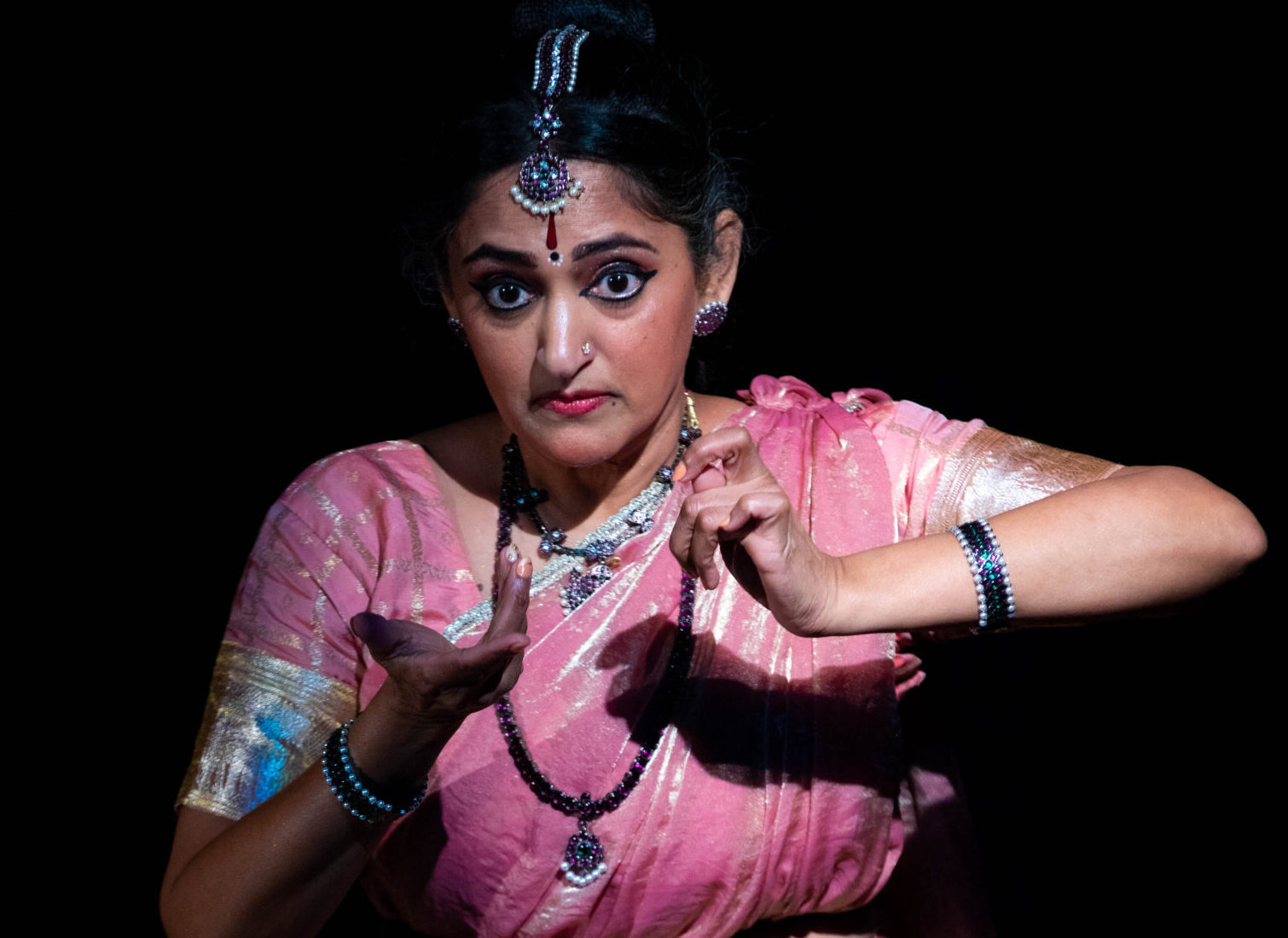 One of the most striking features of the evening was its restraint. Although the work retained a classical backbone and was unmistakably grounded in Bharatanatyam, the vigorous kinetic display often associated with the form was deliberately kept to a minimum. Movement was distilled. Energy was concentrated. The performance relied less on expansive rhythmic propulsion than on an exacting economy of gesture and attention. That choice proved crucial: it allowed the body to function not as an instrument of display but as a site of revelation.
In this respect, the performance invited a reading through the lens of the Nāṭyaśāstra, especially through the interplay of the four modes of abhinaya. Vāchikābhinaya was present not only through the kavya of DVG, but through narration and the carefully curated recorded score, which replaced live musicians while preserving the layered presence of poetry, song, rhythm, and sonic atmosphere. Āṅgikābhinaya operated with unusual subtlety. Rather than foregrounding large-bodied virtuosity, Nagesha gave particular primacy to the eyes and face, allowing minute inflections to carry disproportionate expressive weight. Sāttvikābhinaya, the most elusive of the four, emerged in the work’s effort to invoke interior presence rather than merely represent emotion. And āhārya, as noted, was powerfully reimagined through lighting, darkness, spatial intimacy, and the near-erasure of conventional stage apparatus.
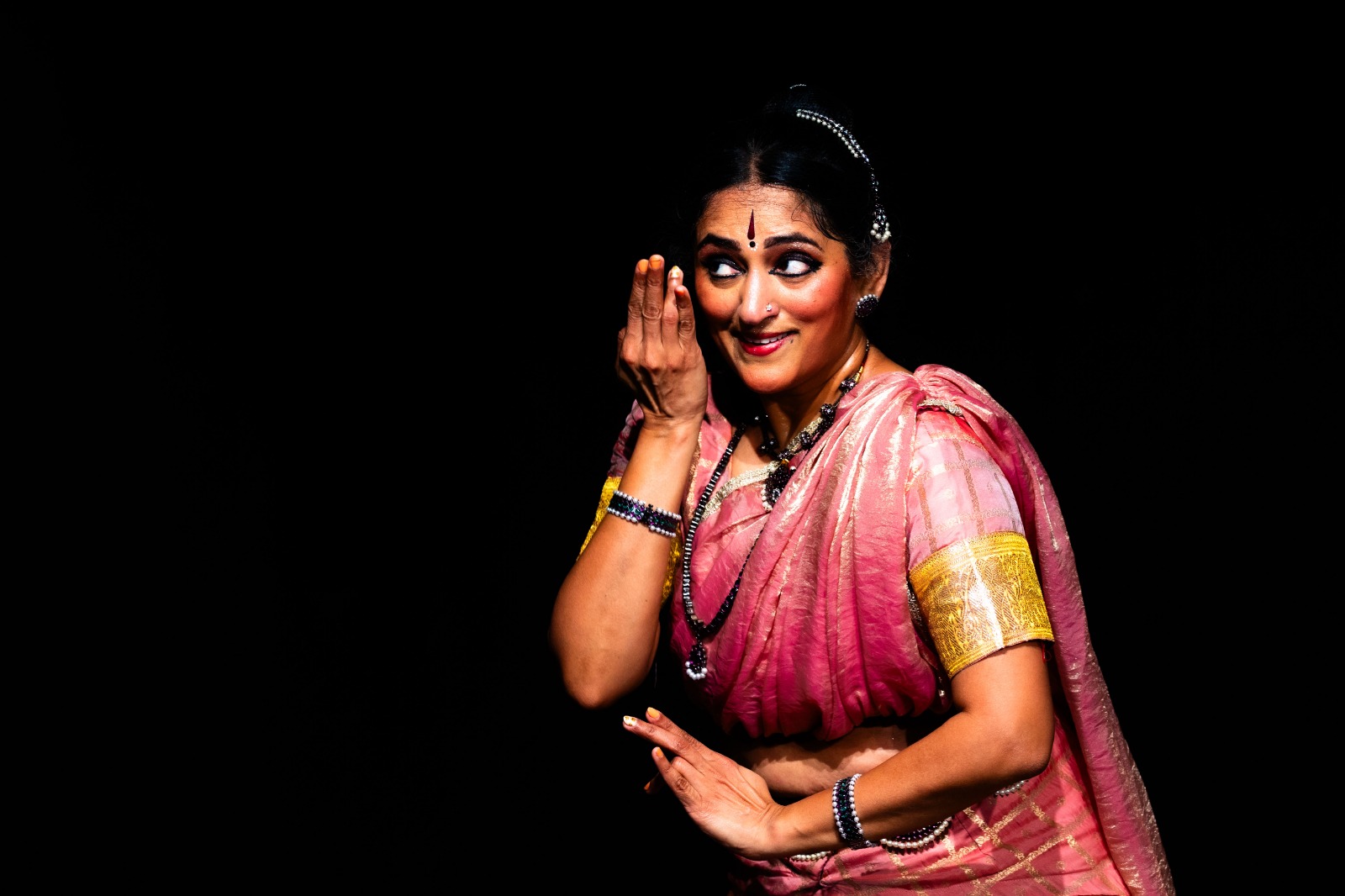 The program’s four-part arc, “The Four Waves of Becoming,” gave the evening both formal coherence and metaphysical contour: from primal vibration, to emotional awakening, to sacred exhilaration, and finally return to source. The opening Pushpanjali established not merely an invocation, but a threshold moment: stone beginning to tremble into life. From there the work moved through a series of poetic encounters—the maiden whispering to the parrot, the introspective turn of mirrored self-recognition, the intensification of joy, the casting off of ornament, and the final absorption into nāda, the sound-current that leads the seeker back to the divine. The concluding Thillana did not read as a triumphant burst of virtuosic closure so much as a final gathering of all planes—body, sound, heart, and life—before return.
This emphasis on return, rather than climax, was one of the evening’s deepest strengths. Nagesha did not reduce the temple maidens to icons of feminine beauty or frozen decorative grace. She treated them instead as thresholds between matter and sentience, ornament and surrender, form and inward awakening. The result was a work less about animation in the superficial sense than about attunement—an attentional exploration of essence led by the dancer.
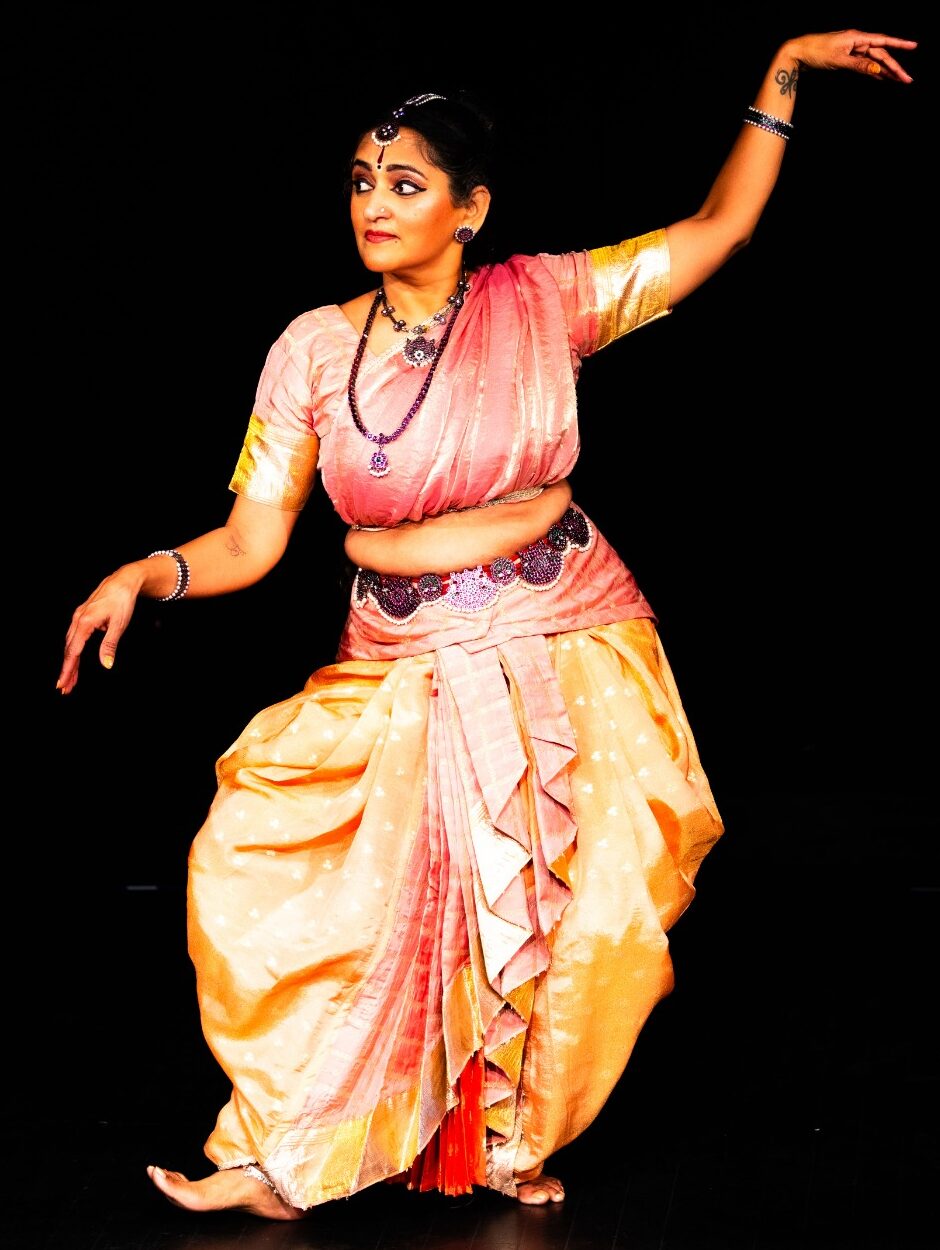 The work’s artistic lineage also mattered. Nagesha’s “content-first” approach drew upon the choreography of Guru Padmini Ravi, along with a specialized movement vocabulary shaped by Deśi-Mārga Aḍavu and Karaṇa-informed training associated with Nirupama Rajendra. Yet what reached the audience was not scholarship on display, but scholarship metabolized into experience. One sensed throughout that poetry, sculpture, music, philosophy, and movement had been brought into genuine dialogue.
What remained after the performance was not merely admiration, but a peculiar stillness. In many dance presentations, stillness serves as punctuation between more active passages. Here, stillness had ontological weight. It carried the memory of stone. It held latency, devotion, listening. When movement emerged from it, movement felt earned.
As the opening presentation of Natya Samaagam, Carving the Breath of Stone set a high standard. It demonstrated that classical Indian dance, in the hands of an artist of depth, can still function not simply as recital tradition or cultural preservation, but as a serious mode of inquiry. Pallavi Nagesha offered Boston audiences a work of rare concentration and refinement—one in which the dancer did not merely portray an ancient world, but entered it so fully that, for an evening, stone itself seemed to breathe.
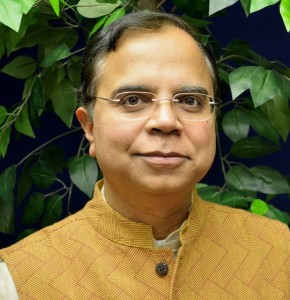
(Shekhar Shastri is a poet, musician, and a scholar of Sanskrit aesthetics – Nāṭyaśāstra.)