White House Reports Progress in India-U.S. Trade Talks as Piyush Goyal Says Agreement Nears Completion
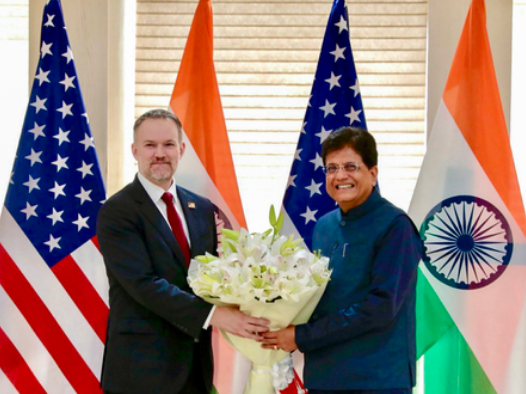

WASHINGTON– The White House has described ongoing trade negotiations with India as productive, signaling progress toward a bilateral agreement as Indian Commerce and Industry Minister Piyush Goyal said the two countries had completed most of their discussions and were working to finalize the remaining details.
The Trump administration said negotiations were continuing as Washington and New Delhi sought to conclude a trade agreement aimed at strengthening economic ties between the two countries.
“Representatives of the Trump administration continue to engage in productive talks with Indian officials to secure a historic trade deal that puts Americans and America First,” White House spokesman Matthew Middleton said.
Middleton also emphasized the relationship between President Donald Trump and Indian Prime Minister Narendra Modi, suggesting that both leaders remained committed to expanding cooperation.
“President Trump and Prime Minister Modi have a close personal relationship, and both leaders remain committed to lifting bilateral ties to new levels,” Middleton said.
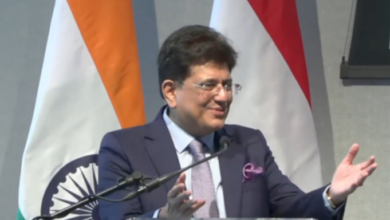
The White House comments followed remarks by Goyal at the India-Netherlands Business Forum in The Hague on Monday, where he indicated that negotiations had entered their final stages.
“We have concluded most of the discussions and are fine-tuning the agreement,” Goyal said.
Goyal is visiting Germany and the Netherlands with an Indian business delegation as part of efforts to strengthen commercial relationships with European partners.
During his remarks, he also highlighted India’s expanding international trade relationships, noting that the country had concluded nine free trade agreements over the past four and a half years.
India and the United States announced a framework for the first phase of a bilateral trade agreement in February, marking an important step toward resolving longstanding trade disputes.
Under the framework announced February 7, Washington reduced tariffs on Indian goods to 18% from 50%.
However, subsequent changes in U.S. tariff policy, including developments following a Supreme Court ruling on tariffs, prompted additional negotiations between the two countries.
Trade officials from Washington and New Delhi have held several rounds of discussions in recent weeks to resolve outstanding issues.
Goyal met U.S. Trade Representative Jamieson Greer on the sidelines of the G20 Trade Ministerial meeting in Milwaukee on October 1.
The discussions continued when an Indian delegation led by Commerce Secretary Rajesh Agrawal visited Washington for meetings with U.S. officials from October 15 to 17.
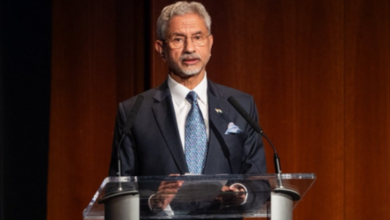
The progress was also acknowledged by Secretary of State Marco Rubio during his visit to Mumbai on October 20.
Speaking to reporters, Rubio indicated that the two countries were approaching an agreement, with only a limited number of unresolved issues remaining.
“We’re very, very close. I would say we’re about as close as you can be without (inaudible) agreement. I think there’s a small number of items to wrap up, so I think that will happen shortly,” Rubio said.
Rubio clarified that while the State Department does not directly negotiate trade agreements, it remains closely involved in broader diplomatic discussions surrounding the negotiations.
“Obviously the State Department doesn’t negotiate trade agreements, but we are very much involved in what’s happening,” he said.
The negotiations have attracted considerable attention from businesses and policymakers in both countries because of their potential impact on tariffs, exports and investment.
Washington has been pressing India to increase purchases of American energy and technology products, while Indian exporters have sought greater access to the U.S. market and relief from tariffs.
As part of its broader trade commitments, India has expressed its intention to purchase $500 billion worth of American products over five years.
The proposed purchases include energy products, aircraft and aircraft components, precious metals, technology products and coking coal.
The commitments could substantially expand commercial ties between the two countries and provide opportunities for American manufacturers and exporters.
The United States remains India’s largest trading partner, making the outcome of the negotiations particularly significant for businesses on both sides.
Although neither government has announced a final agreement or a signing date, the latest statements from the White House and Indian officials indicate that negotiations have advanced considerably, with both sides focused on resolving the remaining differences. (Source: IANS)