Chai With Manju: Governor Maura Healey on Achievements, Healthcare, Second-Term Priorities and a Message to Indian Americans
In an exclusive conversation with Dr. Manju Sheth on Chai With Manju, the Massachusetts governor reflects on her administration’s accomplishments, outlines her priorities for the next term, discusses healthcare affordability and telehealth, and reaffirms her commitment to a welcoming Massachusetts where Indian Americans and immigrants can thrive.
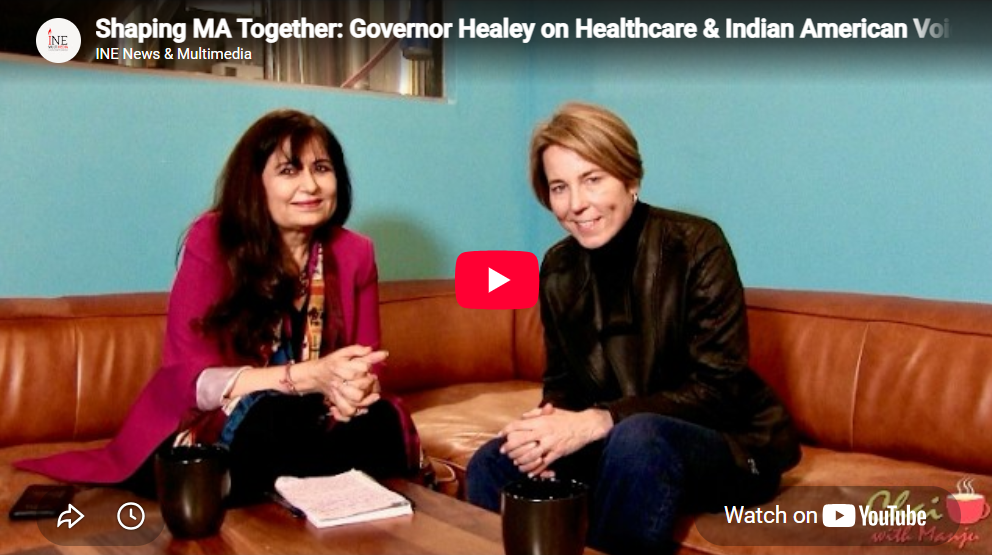

WALTHAM, MA–Massachusetts Governor Maura Healey says she loves her job, despite its challenges, because she believes in the people of the Commonwealth and the work of building a better future for them.
In this edition of Chai With Manju, Healey sits down with host Dr. Manju Sheth for a wide-ranging conversation about her administration’s record, the challenges facing Massachusetts families, and her vision for the state’s future. With housing, healthcare and affordability among residents’ key concerns, Healey discusses what she considers her administration’s most meaningful accomplishments and what she hopes to achieve in a second term.
The interview also features a particularly personal exchange about the Indian-American community. Healey recognizes its contributions to Massachusetts and affirms her commitment to a state where people from diverse backgrounds and countries feel welcome, respected and able to participate fully in civic life.
To watch the full interview, please click here, or on the image below.
Asked by Dr. Sheth to identify the three accomplishments she is most proud of, Healey points to housing, free community college and investments in essential public services, particularly transportation and education.
Addressing Massachusetts’ housing shortage, Healey describes efforts to change permitting and zoning rules, allow accessory dwelling units, and convert offices and former mills into housing. She says these initiatives have helped put 100,000 homes into the development pipeline.
She also highlights free community college, describing it as a transformative opportunity for residents seeking education and career advancement without the burden of tuition.
Her third major area of accomplishment is investment in what she calls the basics: public transportation, education and workforce preparation. Healey discusses improvements to the MBTA, the expansion of commuter rail service and plans to develop East-West Rail across Massachusetts. She also points to literacy programs, high-dosage tutoring and expanded vocational education opportunities designed to prepare students for careers in advanced manufacturing, robotics and other growing industries.
Healey further emphasizes her administration’s tax cuts, saying she is the first Massachusetts governor in 20 years to cut taxes. The measures, she says, are intended to put money back into the pockets of residents and families.
Healthcare emerges as one of the most significant themes of the interview, particularly when Healey discusses telehealth and access to primary care.
She reflects on Massachusetts’ 2023 health legislation, which continued telehealth access after the pandemic, including services delivered over the phone. Healey says she regularly hears from seniors and people living with chronic illnesses who depend on these services, especially when leaving home is difficult.
Recalling how telehealth helped people access care during a snowstorm, she describes the policy as an accomplishment that has had a profound personal impact on her.
Healey also stresses the need to expand primary care capacity across the state. This includes increasing access to physicians, physician assistants, nurse practitioners and nurses, while strengthening mental healthcare services.
Her comments underscore a broader challenge for Massachusetts: ensuring that healthcare is not only high quality but also accessible and affordable for people at different stages of life and with different medical needs.
For Indian-American families, including seniors, caregivers and professionals working in healthcare and technology, the discussion highlights how public policy and technology can work together to improve access to essential services.
A Direct Message to Indian Americans
One of the interview’s most memorable moments comes when Dr. Sheth raises a question on behalf of the Indian-American community. She explains that many Indian-American families are deeply invested in Massachusetts’ future, with children born and raised in the state who know it as their only home. She asks how the community can become more involved in public service and civic life and feel that it has a meaningful place in shaping the Commonwealth.
Healey responds with an unequivocal expression of appreciation and support.
“We are so lucky to have such a strong and vibrant Indian community in Massachusetts,” she says, adding, “As governor, I will always have your back. I will always support you.”
She connects the community’s contributions to Massachusetts’ strengths in education, healthcare and innovation, pointing to Indian immigrants who came to study at the state’s colleges and universities, built careers and established families here.
Healey emphasizes that Indian Americans should feel welcome and respected, including in their freedom to practice their chosen religion. She says Massachusetts embraces people from around the world and benefits from the contributions they make.
Contrasting that message with the climate created by federal immigration policies, Healey argues that making people feel unwelcome is not representative of Massachusetts’ values. She reiterates her commitment to supporting people from different backgrounds and ensuring that they can contribute to the state’s future.
For viewers in the Indian-American community, her response addresses a central question raised in the interview: how can families who have made Massachusetts their home participate more fully in its civic and public life?
The exchange moves beyond recognition of professional and economic achievements to address belonging, religious freedom, representation and the importance of being treated as an integral part of the community.
When Dr. Sheth asks Healey about her three priorities for the next term, the governor outlines an agenda focused on continuing to build housing, investing in education and preparing Massachusetts for the rapid development of artificial intelligence.
Housing remains a central concern. Healey says she wants to continue expanding the supply of homes to address the state’s longstanding shortage and affordability challenges.
Education is another priority, but her vision extends beyond traditional academic preparation. Healey wants high school graduates to leave school with financial literacy, an understanding of AI and the core skills needed to succeed, whether they choose college, vocational training, a career or military service.
She also discusses the opportunities and risks associated with artificial intelligence. In Massachusetts, she notes, AI is already helping companies pursue medical discoveries, develop treatments and address challenges in healthcare and climate science.
At the same time, Healey acknowledges concerns about the technology’s potential effects on employment and society. She says the next governor will need to help protect workers and ensure that technological advances benefit people.
Her focus on education, workforce development and innovation reflects the importance of preparing the next generation for an economy that is changing rapidly.
Healey also speaks about protecting children from harmful social media influences and ensuring that Massachusetts continues to support scientific research and retain talented researchers amid changes in federal funding and policy.
Leadership shaped by family, teamwork and public service
The interview also offers a glimpse into the experiences Healey says have shaped her leadership.
Asked about her greatest strength, she reflects on growing up as the oldest of five siblings. After her parents separated when she was young, her mother raised the children as a single parent. Healey recalls learning early about responsibility, helping others and contributing to the family.
Her experiences in sports, including captaining teams, taught her the importance of teamwork and leadership. She also credits her mother, a school nurse, with instilling in her the importance of looking out for vulnerable people and standing up for those who are bullied or overlooked.
Those lessons, Healey suggests, continue to influence how she approaches public service. She describes the importance of listening to different perspectives, making informed decisions and focusing on the people who depend on government to protect their rights and provide essential services.
She acknowledges that politics can be difficult, particularly in an environment shaped by intense public scrutiny and social media. Yet she says these challenges strengthen her commitment to healthcare, housing, education and protecting people’s rights.
Healey was elected governor in 2022, becoming the first woman elected to the office in Massachusetts history and the first openly lesbian governor elected in the United States. Before becoming governor, she served two terms as Massachusetts attorney general, focusing on issues including healthcare costs, the opioid epidemic, climate change and student loan debt.
A Harvard College graduate, she captained the university’s basketball team before playing professional basketball in Europe for two years.
Throughout the conversation, Healey returns to the idea that Massachusetts must continue to create opportunities while addressing the everyday challenges its residents face.
She points to the state’s educational institutions, healthcare system, innovation economy and quality of life as important strengths, while acknowledging the continuing pressures of housing, healthcare and energy costs.
For Indian Americans, her message is that their contributions matter and that they should feel welcome to participate in the state’s future. For Massachusetts residents more broadly, the interview offers insight into how Healey views her administration’s achievements and the work ahead.
As she makes her case for another term, the conversation with Dr. Sheth provides a personal look at the priorities, experiences and commitments that Healey says guide her leadership.