
India Relatively Insulated from Rising US Yields, Focus Must Be on Sustaining Growth: Economists
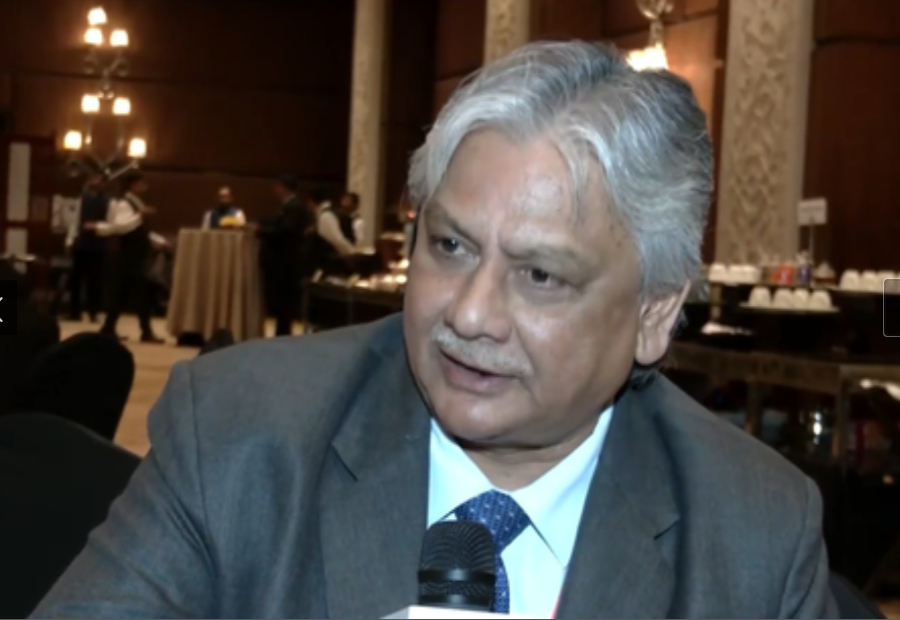

NEW DELHI— India is relatively insulated from the impact of rising US bond yields because most of its government securities are held domestically, while the country’s longer-term economic challenge will be to sustain growth through continued reforms amid global uncertainties, economists and experts said on Saturday.
Speaking to IANS on the sidelines of the 5th Kautilya Economic Conclave in New Delhi, former Reserve Bank of India Deputy Governor and economist Michael Debabrata Patra said the direct impact of higher US bond yields on India’s debt market remains limited.
“Not really, because only 3 per cent of India’s stock of government bonds is held by foreigners. It is mostly domestically held,” Patra said when asked about the impact of rising US yields on emerging markets such as India.
He said a broader global trend of rising bond yields could influence investor sentiment and have some spillover effects, but India-specific factors remain the main drivers of domestic bond yields.
“There is a sympathetic factor that when bond yields are rising everywhere in the world, they tend to reflect that. But India-specific factors are driving Indian bond yields. It’s not so much the US,” he said.
Patra was also asked about External Affairs Minister S. Jaishankar’s warning of a possible global food crisis amid fertiliser shortages and continuing geopolitical conflicts.
He said supply disruptions linked to the war in Ukraine and conflicts in West Asia could create bottlenecks, but India was taking steps to diversify its sources of fertiliser imports.
“The war in Ukraine and in West Asia are creating supply bottlenecks, but I believe that while the shortages may be temporary, over the longer run, India will widely diversify its sources and import markets and manage the situation,” Patra said.
Meanwhile, economist and former NITI Aayog Vice Chairman Arvind Virmani said India should move away from product-specific subsidies and rely more on direct support mechanisms.
“Reducing subsidies is a good thing. Subsidies should be given directly. Subsidies are an inefficient way of providing support because they distort the market,” Virmani told IANS.
He described such a shift as part of a broader move toward an economic framework with fewer market-distorting subsidies and more targeted forms of support.
On India’s growth prospects, Virmani said the central challenge was not necessarily to keep accelerating growth indefinitely, but to sustain a higher growth rate over time.
“The history of growth tells you that you cannot keep raising it continuously. You undertake reforms, push growth to a higher level and then the challenge is sustaining that rate,” he said.
Virmani pointed to global disruptions, including the Ukraine war, as examples of external shocks that can affect economic performance and complicate policymaking.
The comments come amid continuing global uncertainty over interest rates, bond yields, geopolitical tensions and commodity supply chains. For India, the economists’ observations highlight the role of domestic financial conditions, structural reforms and supply diversification in navigating external pressures while maintaining economic growth. (Source: IANS)