Rubio’s India Visit Seen as Signal of U.S. Strategic Focus on Indo-Pacific
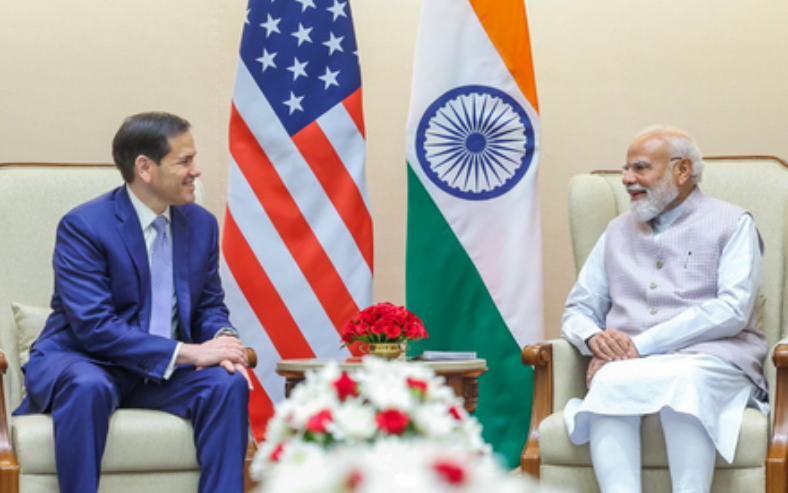

WASHINGTON — U.S. Secretary of State Marco Rubio’s four-day visit to India signaled a renewed strategic push by Washington to deepen Quad cooperation and reassure New Delhi that the Indo-Pacific remains a priority for the Trump administration, analysts and business leaders said.
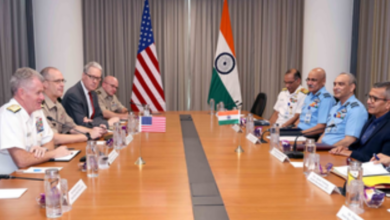
Rubio’s first visit to India as secretary of state included meetings with Prime Minister Narendra Modi, External Affairs Minister S. Jaishankar and National Security Adviser Ajit Doval. He also participated in the Quad Foreign Ministers’ Meeting.
Dr. Vivek Lall, chief executive of General Atomics Global Corporation, called the trip “a very timely visit.”
“I think it’s an outstanding opportunity to see both countries again in strategic dialogue and laying out a strategic vision,” Lall told IANS.
Lall said the India-U.S. relationship had reached “an inflection point,” citing growing defense cooperation, foundational agreements and military-to-military exercises.
“The relationship is very strategic,” Lall said, adding that there is significant room for further cooperation in defense and space.
Lall said the Quad, which includes Australia, India, Japan and the United States, appeared to be regaining momentum.
“The fact that we have that impetus back into the Quad and with some really specific deliverables that the Quad has assumed over the years, I think that’ll again get a lot of impetus and focus,” he said.
He said a “common operating picture,” surveillance and security cooperation remain important parts of the Quad partnership.
Mukesh Aghi, president and CEO of the US India Strategic and Partnership Forum, said Rubio’s visit highlighted the growing importance of the Indo-Pacific in Washington’s geopolitical planning.
“Secretary Rubio’s visit to India for the Quad Foreign Ministers’ Meeting underscores the growing strategic convergence in the Indo-Pacific as a key region for the administration’s geopolitical priorities,” Aghi told IANS.
“Important to remember, that his first engagement as Secretary of State, was a convening of the Quad Foreign Minister’s meetings,” he added.
Aghi said the Quad is moving beyond diplomatic symbolism into deeper strategic and economic coordination.
“As the Quad deepens cooperation on maritime security, critical minerals, energy, resilient supply chains, and emerging technologies, the US-India partnership remains central to advancing a free, open, and prosperous Indo-Pacific,” he said.
Aghi said initiatives such as the “Quad Critical Minerals Initiative Framework” and the “Indo-Pacific Energy Security Initiative” could create new opportunities for private-sector integration and more resilient supply chains.
“The Indo-Pacific Maritime Surveillance Collaboration underscores the economic and strategic stability of the region and upholds the sacrosanctity of a rules-based international order,” he said.
Aparna Pande, senior fellow at the Hudson Institute, described the visit as important “both symbolically and substantively.”
“For India, the visit by one of the seniormost cabinet members of the second Trump administration, and a long-time champion of India-US ties, demonstrates that India remains strategically important to the US,” she told IANS.
Pande also pointed to the significance of India hosting the Quad Foreign Ministers’ Meeting.
“India hosting the first Quad Foreign Ministers summit – outside of the US – makes for great optics,” she said.
Pande said Rubio’s goal was to reassure India that the Indo-Pacific remains central to American strategy, even as Washington faces competing crises elsewhere.
U.S. Ambassador to India Sergio Gor, who accompanied Rubio during the trip, described the meetings as “productive” in a post on X. He said the delegation traveled through Kolkata, New Delhi, Agra and Jaipur before concluding the visit with “a highly successful Quad meeting.”
The Quad has become a central pillar of Indo-Pacific diplomacy in recent years. India-U.S. defense and technology ties have also expanded through joint military exercises, semiconductor cooperation, critical minerals initiatives and growing collaboration in emerging technologies. (Source: IANS)