President Trump delays threat to strike Iran power sites, cites ‘productive’ talks
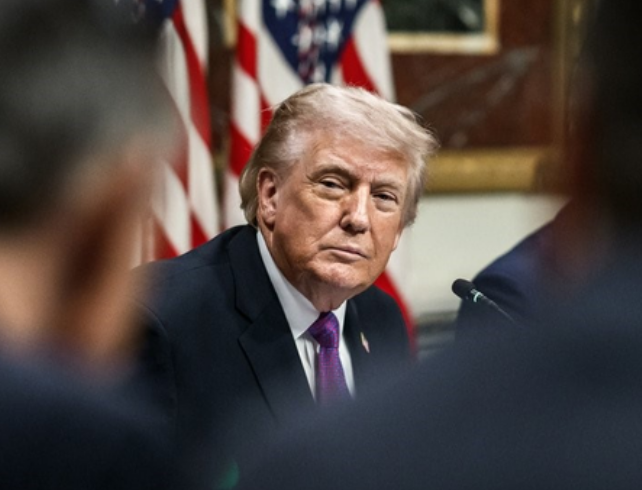

New York, March 23 — US President Donald Trump has stepped back from his earlier threat to target Iran’s power infrastructure, saying Washington and Tehran are engaged in “very good and productive” discussions, while extending his deadline for potential military action by five days.
In a post on Truth Social, Trump said the two sides had held constructive conversations over the past two days aimed at a “complete and total resolution” of hostilities in the Middle East. He added that any future action would depend on the outcome of ongoing engagements, though he did not specify the channels or participants involved.
Iran has yet to officially respond to Trump’s claims of negotiations. Earlier, Tehran had rejected the idea of a ceasefire.
Over the weekend, Trump had warned that the US could “obliterate” Iran’s electricity system within 48 hours if it did not reopen the Strait of Hormuz — a move that would have significantly escalated the conflict. Iran had countered that it would shut the strait entirely and retaliate against energy infrastructure in Gulf countries if its own grid were attacked.
The situation remains tense, with the closure of the strategically vital waterway — through which roughly 20 per cent of global energy supplies pass — triggering a sharp rise in oil prices and rattling global markets.
Trump’s shift in tone comes amid signs that the conflict may be proving more complex than initially anticipated. After earlier projecting a swift campaign targeting Iran’s leadership and military infrastructure, the US is now facing a prolonged standoff, including retaliatory strikes affecting its regional allies and a broader energy crisis.
Uncertainty also surrounds Iran’s leadership following reports of the killing of Supreme Leader Ali Khamenei. His successor, Mojtaba Khamenei, has not appeared publicly and is reportedly injured, though details remain unclear.
With US midterm elections approaching, Trump appears to be seeking a diplomatic off-ramp to prevent further escalation. He recently indicated interest in “winding down” military operations in the region, notably without reiterating earlier calls for regime change.
Israel, however, has not signalled any willingness to de-escalate. Its military chief, Eyal Zamir, said the country was “at the midway point” of its campaign and would continue operations.
Meanwhile, the conflict has seen worrying developments on the ground. Iranian missile strikes have reportedly penetrated Israel’s Iron Dome, hitting areas near Dimona, a site associated with Israel’s nuclear facilities.
Trump said his decision to delay potential strikes was based on the “tone and tenor” of ongoing discussions, which are expected to continue through the week. He also acknowledged the broader geopolitical risks, including possible Iranian retaliation against Gulf nations.
In response to surging oil prices, the US has taken the unusual step of easing some sanctions on Iranian oil exports, even amid the conflict, to stabilise global energy markets.
At the same time, Trump has urged other nations reliant on the Strait of Hormuz to take responsibility for securing the route, suggesting it should ultimately be “guarded and policed” by those who depend on it most.
Iran has reportedly allowed some shipments — including those bound for countries like India and China — while threatening to block others.
Efforts to safeguard the crucial passage are now underway. Mark Rutte said members of NATO, along with partners such as South Korea, Australia, Japan, the UAE and Bahrain, are exploring options to ensure the security of the strait.
The coming days are likely to be critical as diplomatic efforts continue alongside an increasingly fragile security situation in the region. (Source: IANS)