A Closer Look at the 18th LearnQuest Music Festival: Festival Chair Shashank Nene on Artists and Programming
In a video interview, the Festival Chair shares insights on featured artists, curated programming, and what audiences can expect in April.
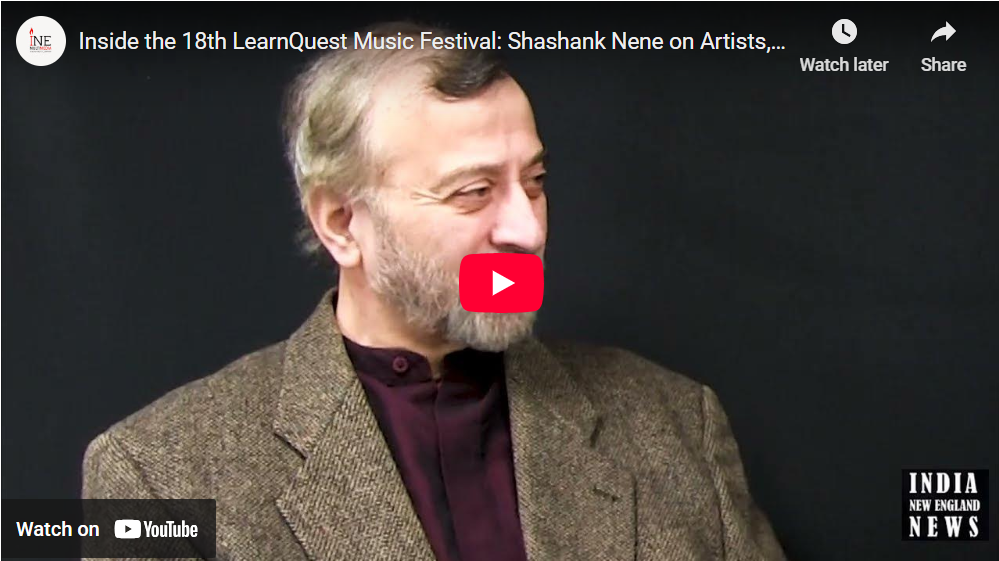

BOSTON— With the 18th Annual LearnQuest Music Festival set for April 3–5, 2026, Festival Chair Shashank Nene offers a closer look at this year’s event in an accompanying video interview—sharing insights into the programming, featured artists, and what audiences can expect across the three-day celebration of Indian classical music.
The festival opens on Friday, April 3, at the Thomas Tull Concert Hall at MIT, followed by full-day performances on April 4 and 5 at Regis College in Weston, Massachusetts. The format brings together an opening evening concert with an immersive weekend experience that spans both Hindustani and Carnatic traditions.
To watch the full interview, please click here.
A Curated Musical Journey
In the interview, Nene describes this year’s festival as a carefully curated journey designed to balance depth, variety, and accessibility. Audiences can expect performances by leading artists alongside emerging talent, as well as thoughtfully structured sets that highlight both vocal and instrumental traditions.
The LearnQuest Music Festival remains one of the few platforms in the United States where the two major streams of Indian classical music are presented side by side.
Hindustani classical music, representing North India, is known for its improvisational style, expressive ragas, and intricate rhythmic interplay, often featuring instruments such as sitar, sarod, bansuri, and tabla.
Carnatic classical music, from South India, emphasizes composed forms alongside improvisation, with complex rhythmic frameworks and performances typically including violin, veena, mridangam, and kanjira.
Nene notes that this dual focus allows audiences to experience both contrast and continuity within India’s classical traditions—something that defines the festival’s identity.
Spotlight on Artists and Collaborations
A key highlight discussed in the interview is the diversity of this year’s artist lineup. While specific performances span a range of styles and generations, the programming is designed to create meaningful connections—between artists, between traditions, and with the audience.
In addition to solo recitals, attendees can expect collaborative performances and ensemble presentations that reflect both tradition and innovation.
The interview also touches on the practical side of attending the festival. With events hosted at MIT in Cambridge and Regis College in Weston, organizers have focused on creating a seamless experience for audiences traveling across the Greater Boston area.
From scheduling to venue selection, the goal is to ensure that attendees can fully engage with the music in comfortable, acoustically rich settings.
A Continuing Cultural Gathering
Beyond the stage, Nene emphasizes the role of the festival as a meeting ground for the community—bringing together students, teachers, artists, and listeners in a shared cultural space.
Organized by LearnQuest Academy of Music, the festival continues to serve as a cornerstone event for Indian classical music in New England, drawing audiences from across the region and beyond.
Watch the full video interview with Festival Chair Shashank Nene for an inside look at this year’s lineup, programming highlights, and the vision behind the 2026 LearnQuest Music Festival.