
AI-Enabled Digital Stethoscopes Could Help Close Tuberculosis Screening Gaps, Study Finds
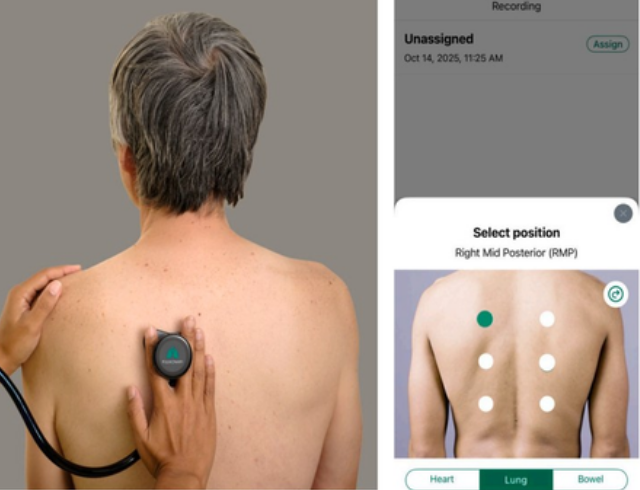

NEW DELHI, India — Artificial intelligence-powered digital stethoscopes could play a significant role in closing critical gaps in tuberculosis screening, particularly in underserved and hard-to-reach regions, according to a new study.
In a commentary published in the journal Med, global health experts said that combining traditional stethoscopes with digital technology and AI offers a promising alternative to existing screening methods that often struggle with under-detection, high costs, and unequal access.
The authors noted that AI-enabled digital stethoscopes have shown encouraging accuracy in detecting lung and cardiovascular abnormalities, with early studies also indicating potential for identifying tuberculosis. They stressed that further training and validation in diverse, high-burden settings would be essential to fully assess the technology’s effectiveness.
Despite advances in diagnostics, an estimated 2.7 million tuberculosis cases worldwide were missed by current screening programs, according to the World Health Organization. Researchers said routine symptom-based screening often fails to identify individuals with asymptomatic or subclinical TB.
While the WHO has recently endorsed AI-driven computer-aided detection software and ultra-portable radiography for TB screening, experts noted that high operating costs and the need for specialized equipment limit their use. These challenges are especially pronounced in primary care settings and among pregnant women, where radiation exposure is a concern.
Researchers said AI has broader screening potential beyond radiograph-based detection. One emerging application involves analyzing acoustic biomarkers, allowing AI systems to identify subtle or inaudible sounds associated with disease. This includes interpreting cough patterns and lung auscultation to detect abnormal breath sounds.
Studies conducted in high TB-burden countries such as India, Peru, South Africa, Uganda, and Vietnam suggest that AI-assisted auscultation could serve as an effective screening and triage tool.
The researchers said AI-enabled digital stethoscopes may eventually offer a practical alternative to imaging-based approaches, helping expand access to TB screening in populations with limited access to radiography.
They added that the technology’s scalability, low cost, and person-centered design could make it a valuable tool in accelerating TB case detection and advancing global efforts to reduce the disease’s burden. (Source: IANS)