India’s Quiet Acceptance of Taliban Representative Signals Pragmatic Engagement, Not Recognition
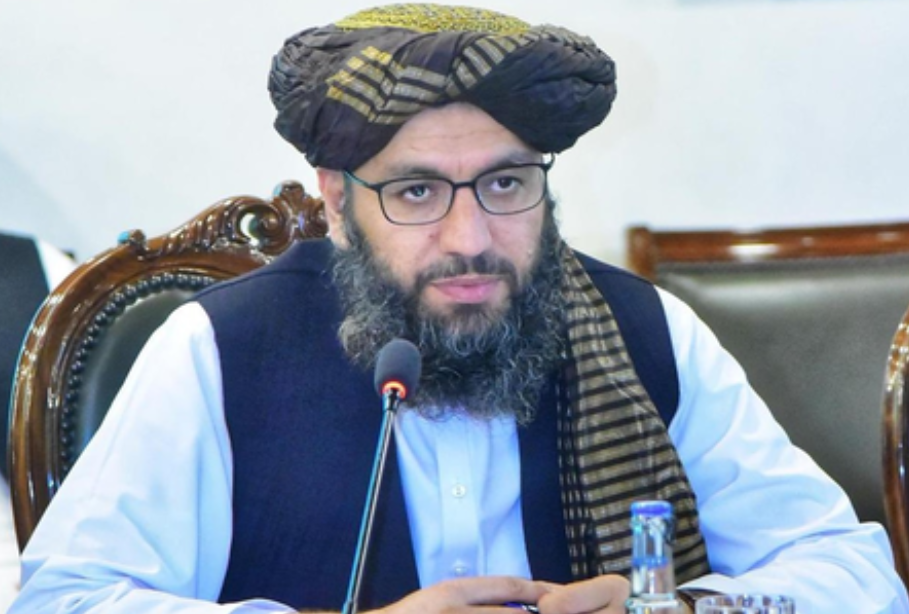

NEW DELHI — India’s reported acceptance of a Taliban-appointed representative at the Afghan Embassy in New Delhi has drawn limited criticism, with some observers describing the move as a diplomatic shift. However, the development reflects pragmatic engagement rather than formal recognition of the Taliban government in Kabul.
Taliban leader Mufti Noor Ahmad Noor is said to have arrived in New Delhi to assume charge as charge d’affaires at the Afghan Embassy. Indian authorities have not officially commented on the appointment, but the arrangement underscores New Delhi’s functional approach toward Afghanistan amid a complex regional landscape.
India’s decision complicates joint efforts by China and Pakistan to draw Afghanistan fully into the China-Pakistan Economic Corridor (CPEC), a key component of China’s Belt and Road Initiative (BRI). While Beijing and Islamabad have sought to expand their influence in Kabul, New Delhi’s limited engagement provides an alternative channel without extending diplomatic recognition.
A key factor behind India’s move is the presence of thousands of Afghan refugees in the country who require consular services. Embassy representation is essential for passport validation, visa processing, and legal stay in India. Refugees also need clearance from both the Afghan Embassy and the United Nations High Commissioner for Refugees (UNHCR) to validate their status and carry out basic financial transactions.
According to Faisal Payenda, chairman of the Afghan Refugee Community in India, an estimated 15,000 Afghan refugees live in Delhi alone.
Globally, several countries have adopted similar arrangements by hosting Taliban-appointed diplomats as “charge d’affaires” or “representatives,” stopping short of granting ambassadorial status or formal recognition. China has followed a comparable model, using economic engagement to maintain influence while publicly withholding recognition of the Taliban government.
To date, Russia remains the only country to have formally recognised the Taliban regime. China, despite deepening ties with Kabul, continues to insist on Taliban assurances regarding Uyghur militants and broader counterterrorism cooperation, maintaining what analysts describe as an “engagement without endorsement” policy.
For India, allowing Mufti Noor Ahmad Noor to take charge at the Afghan Embassy is viewed as a practical step to ensure consular and humanitarian coordination. New Delhi has consistently maintained that it does not recognise the Taliban regime, even as it remains a key provider of humanitarian aid and relief to Afghanistan.
The Taliban’s outreach to India also reflects its efforts to seek legitimacy beyond Pakistan and China. Strained relations with Islamabad, including repeated border closures, have disrupted trade and movement, prompting Kabul to diversify its regional engagements.
India’s cautious approach creates a counterbalance, enabling limited cooperation without forcing a political stance on recognition. Analysts say the Taliban is likely to continue balancing relations with regional powers such as India, China, and Russia as it seeks broader international acceptance.
Despite ongoing challenges, observers argue that India should continue engagement through humanitarian assistance and reconstruction efforts in Afghanistan to build long-term goodwill and counter competing regional influences. (Source: IANS)