Piyush Goyal Heads to Brussels for High-Stakes India–EU Free Trade Talks
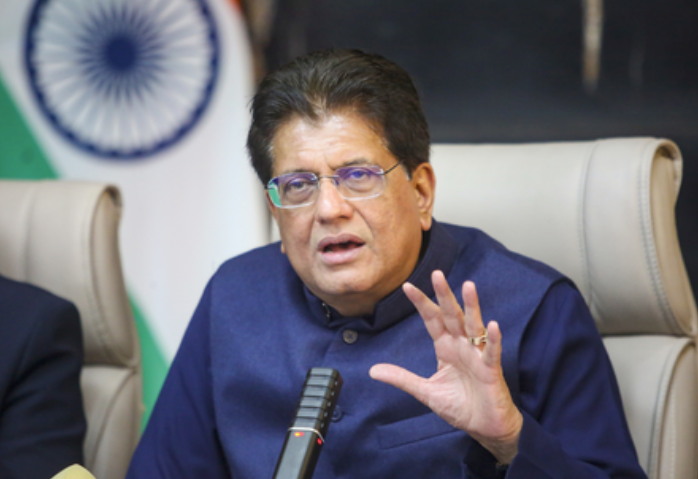

NEW DELHI, India — Union Commerce and Industry Minister Piyush Goyal will travel to Brussels this week for a two-day official visit aimed at advancing negotiations on the long-pending India–European Union Free Trade Agreement, signaling a renewed push to conclude the deal.
The visit, scheduled for January 8 and 9, comes amid intensified diplomatic and technical engagement between New Delhi and Brussels as both sides work to resolve outstanding issues and move toward a comprehensive agreement.
India is pressing for zero-duty market access for several labor-intensive sectors, including textiles, leather, apparel, gems and jewelry, and handicrafts, which are seen as critical for employment generation and export growth.
During the visit, Goyal is expected to hold high-level discussions with the European Union’s Commissioner for Trade and Economic Security, Maros Sefcovic. The talks are aimed at providing strategic direction to negotiating teams, narrowing differences on unresolved chapters, and accelerating progress toward a balanced and ambitious pact.
Officials said the ministerial engagement follows a week of intensive technical discussions in Brussels and builds on groundwork laid during recent high-level meetings between senior trade officials from India and the European Commission. Those talks focused on clarifying positions across key areas of the proposed agreement and identifying pathways to bridge remaining gaps.
The negotiations come at a pivotal moment in India–EU economic relations. Talks were formally re-launched in June 2022 after a gap of more than nine years, reflecting a renewed commitment on both sides to deepen economic integration. Since then, India and the EU have completed 14 formal rounds of negotiations, along with multiple ministerial-level interactions, the most recent of which took place in December 2025.
Both sides have repeatedly emphasized strong political will to conclude a comprehensive and modern trade agreement. Officials say the upcoming discussions are expected to reaffirm a shared commitment to a rules-based trading system and a partnership that protects the interests of farmers and micro, small, and medium enterprises while better integrating Indian industries into global supply chains.
The European Union remains India’s largest trading partner and a major source of investment. Bilateral trade in goods saw a notable increase in the 2024–25 financial year. The proposed agreement is being framed not only as a trade pact, but as a broader economic partnership designed to address evolving global economic realities. (Source: IANS)