
Microsoft Defends Global Data Center Expansion Amid Trump’s Threat of Penalties
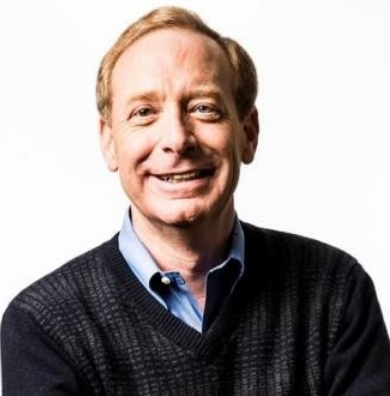

WASHINGTON–Microsoft President Brad Smith has defended the company’s overseas data center operations following President Donald Trump’s warning that U.S. technology companies could face significant penalties for building facilities abroad, arguing that cloud services must remain close to the customers they serve.
Speaking on CBS’s “Face the Nation,” Smith emphasized the distinction between data centers used to train advanced artificial intelligence models and facilities that support everyday cloud computing services, including business applications, video streaming and gaming.
“My sense is that the president is making an important point, but there’s some critical nuance we need to think about as well,” Smith said.
While acknowledging the importance of maintaining advanced AI development capabilities in the United States, Smith cautioned against applying the same restrictions to all data center operations.
“They’re cloud services to stream a video, play a video game, run your business. And those have to be located close to customers,” he said.
Smith noted that cloud services increasingly incorporate AI capabilities into business software and consumer applications, making international infrastructure essential for serving global markets.
Using Finland as an example, he explained why overseas customers cannot always be adequately served by facilities located in the United States.
“You can’t support Helsinki from New Jersey any more than you can keep the lights on in Helsinki from an electricity power plant in New Jersey,” Smith said. “Those have to be located locally.”
The comments followed Trump’s announcement Friday that his administration would seek to prevent American companies from moving data center operations overseas, threatening what he described as “tremendous penalties” against companies pursuing such projects.
However, Treasury Secretary Scott Bessent acknowledged that the administration had not yet clarified how the proposed restrictions would operate.
“I haven’t spoken to the president about that,” Bessent said when questioned about the proposal.
Bessent suggested that Trump’s primary concern involved preventing the transfer of critical American technology overseas. He compared the issue to semiconductor manufacturing, where reliance on foreign production has raised national security concerns.
The Treasury Secretary also called on technology companies to communicate more effectively with American communities about their infrastructure investments and address public concerns surrounding data center development.
The proposed restrictions could have implications for Microsoft’s international expansion, including its substantial investment commitments in India.
In December 2025, Microsoft announced plans to invest $17.5 billion in India between 2026 and 2029 to expand cloud and AI infrastructure, workforce training and ongoing operations.
The investment builds on an earlier $3 billion commitment and includes plans to expand data center capacity in Chennai, Hyderabad and Pune.
The $17.5 billion represents a multiyear investment commitment rather than funds already fully deployed.
Neither Smith nor Bessent specifically identified India as a potential target of the proposed restrictions.
Smith also did not announce any changes to Microsoft’s existing international investment plans during Sunday’s interview.
His comments highlighted the distinction between preserving American leadership in advanced AI development and maintaining international cloud infrastructure necessary to serve businesses and consumers in overseas markets. (Source: IANS)