India-US Relations Face Growing Differences Over Strategic Priorities, Former Diplomat Says

New Delhi — The strategic partnership between India and the United States is facing growing challenges as differences over foreign policy priorities, regional security and strategic autonomy test a relationship that has strengthened over the past 25 years, according to former Indian Foreign Secretary Nirupama Rao.
In an analysis published by India Narrative, Rao said the relationship has long been built on Washington’s recognition that a stronger India could help maintain the balance of power in Asia, diversify global supply chains and support a free and open Indo-Pacific.
However, she argued that disagreements over Russia, Iran, China and other geopolitical issues are exposing fundamental differences in how the two countries understand their partnership.
“The present difference between India and the United States is about more than oil. There is perhaps a deeper disagreement over the meaning of partnership. Washington often treats strategic convergence as a reason to demand political compliance. In New Delhi, partnership is understood as cooperation between sovereign powers that will continue to differ over Russia, Iran and the management of China,” Rao wrote.
“Once those differences are revealed as public tests of loyalty, diplomacy yields to theatre. Accommodation becomes harder precisely because it is made to look like submission,” she added.
Rao also expressed concern over President Donald Trump’s repeated claims of mediating between India and Pakistan, arguing that such statements risk reviving Washington’s traditional approach of viewing the two South Asian countries through the same regional security framework.
She noted that India has spent years seeking recognition as a major global power with economic, technological and maritime interests extending far beyond its relationship with Pakistan.
“The objection is more than just a matter of pride. India has global economic, technological and maritime interests that cannot be understood chiefly through the narrow prism of its quarrel with a neighbour,” Rao wrote.
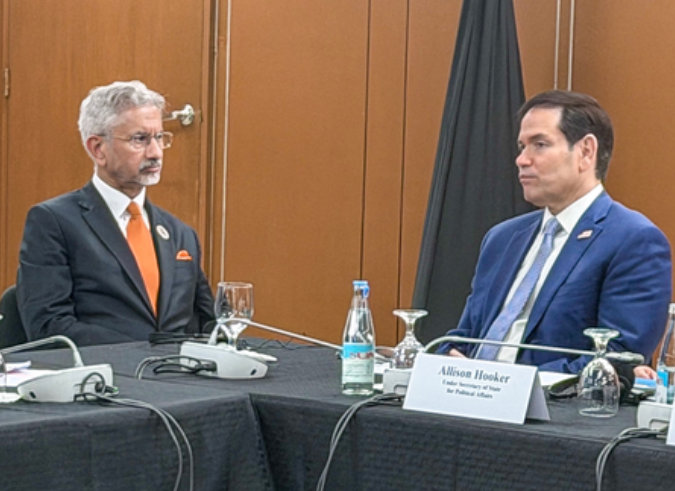
The analysis also referenced recent remarks by External Affairs Minister S. Jaishankar at the Asia Society in New York, where he reaffirmed India’s commitment to strengthening relations with the United States while emphasizing the importance of understanding India’s security concerns.
Jaishankar warned that a failure to recognize India’s longstanding concerns about cross-border terrorism could undermine bilateral relations. He described terrorism originating from a neighboring country as a deliberate policy pursued over decades.
Rao argued that India’s response to external pressure should focus on strengthening its economic and strategic capabilities rather than relying on nationalist rhetoric.
She identified diversified defense procurement, energy security, technological development, manufacturing capacity and stronger institutions as essential foundations for maintaining India’s strategic independence.
“That requires diversified defence supplies, greater energy security, technological capability, manufacturing strength and institutional resilience. Autonomy without those foundations would be rhetoric resting upon dependence. India must understand the costs it could bear and build the means to bear them,” she wrote.
Despite the tensions, Rao stressed that India should continue deepening its relationship with Washington, given the substantial strategic and economic interests shared by both countries.
“India needs American technology, investment and cooperation in sustaining a favourable Asian balance. The United States, for its part, needs an India capable of resisting Chinese predominance. Both countries have reason to preserve what they have built, and neither gains when each disagreement becomes a public referendum on the relationship,” she wrote.
Her analysis suggests that the future of India-US relations will depend on both governments’ ability to manage disagreements without allowing individual disputes to overshadow their broader strategic interests. (Source: IANS)