India-U.S. Partnership Deepening Despite Differences, Indian Envoy Says

Washington — The India-U.S. relationship continues to grow stronger despite occasional disagreements, India’s deputy chief of mission to the United States said, describing the partnership as one of the most consequential of the 21st century.
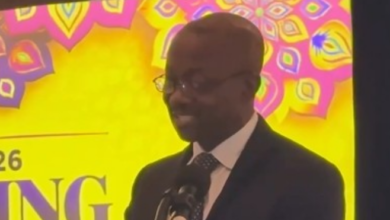
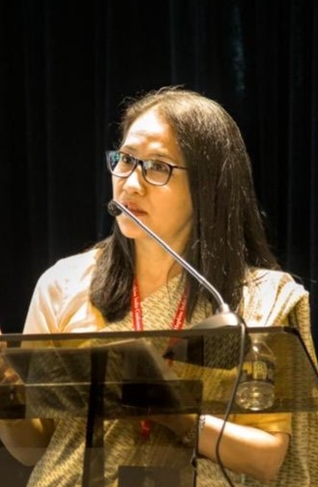
Speaking at a Capitol Hill event, Namgya C. Khampa said relations between New Delhi and Washington are supported by shared strategic interests, expanding economic engagement and growing cooperation in technology, defense and regional security.
“The India US Partnership has been described as one of the most seminal and defining partnerships of the 21st century,” Khampa said.
“I think that that description is justified, not because we are 100 per cent aligned and agree on every issue, because we do not necessarily, as is natural, but because the strategic logic underpinning the relationship has become stronger with each past year.”
India and the United States are negotiating measures intended to increase trade, strengthen technology partnerships and deepen security coordination across the Indo-Pacific.
Khampa said developments during the past year demonstrated the relationship’s durability.
“The year that has gone by and what we have managed to build together over the last year shows us the resilience of the partnership,” she said.
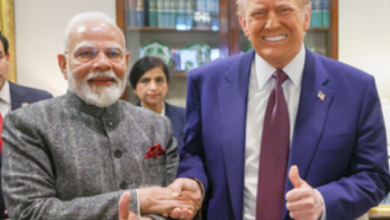
She pointed to a recent meeting between Prime Minister Narendra Modi and President Donald Trump, saying the two leaders remain committed to advancing bilateral relations.
“As you all know, they enjoy a warm friendship and a bond and a shared commitment to advancing the relationship,” Khampa said.
She also highlighted Secretary of State Marco Rubio’s recent visit to India, which included bilateral meetings and participation in a gathering of Quad foreign ministers.
Trade remains a central part of the relationship, Khampa said, with negotiators working to conclude a bilateral trade agreement.
“The determination on both sides to conclude the bilateral trade agreement, and to enlarge the opportunities for shared economic prosperity,” Khampa said.
Referring to an interim trade framework reached earlier this year, she added: “We remain optimistic we’ll get there soon.”
Khampa said the objective extends beyond reducing tariffs and includes developing “a stronger, more deeper, and more mutually beneficial and ambitious economic partnership”.
Energy has also emerged as a rapidly expanding area of cooperation.
“Energy has emerged, I think, as one of the most promising areas of bilateral cooperation,” she said.
India’s rising energy demand and the United States’ energy resources create a natural partnership, particularly in crude oil, liquefied natural gas and civil nuclear energy, Khampa said.
Technology is expected to define the next phase of bilateral relations.
“Technology really is an area that the future of this partnership lies,” she said.
Khampa identified artificial intelligence, semiconductors, advanced computing, quantum communications and other critical technologies as priorities for both governments. The two countries are also working to diversify supply chains and reduce their dependence on concentrated technology centers, she said.
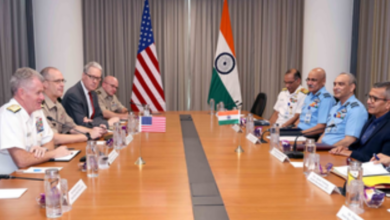
Defense and security cooperation now includes military engagement, maritime security, intelligence sharing, critical technologies and counterterrorism efforts.
Khampa noted that India and the United States signed a 10-year defense framework agreement last year establishing a roadmap for future cooperation.
“It really provides us a basis to further deep cooperation and engagement and interoperability across the entire spectrum of defence and security engagement,” she said.
She also emphasized the importance of the Quad, which includes India, the United States, Japan and Australia, in promoting a stable and prosperous Indo-Pacific.
Khampa repeatedly highlighted the Indian diaspora’s role in strengthening relations between the two countries.
“Ultimately I think the strength of this partnership rests not just on governments and what the two governments are doing, but on our people,” she said.
More than 5 million Indian Americans live in the United States, helping transform official relations into a broader societal partnership.
“People are the ultimate custodians of this partnership,” Khampa said.
She praised Indian Americans’ contributions to business, medicine, technology, entrepreneurship, academia and public service, describing the community as an important bridge between the countries.
“Your voices matter, your perspective matters,” Khampa told the audience.
Khampa concluded by thanking Democratic and Republican lawmakers for supporting closer relations with India.
“We continue to count on congressional leadership and support as we take this relationship to newer heights,” she said. (Source: IANS)