India Maintained Power Supply to Bangladesh Despite Political Turmoil
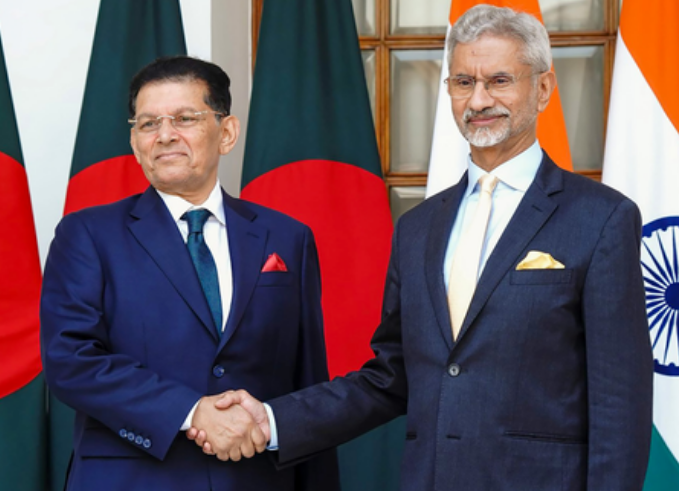

NEW DELHI — India continued supplying electricity to Bangladesh without major disruption after the August 2024 fall of former Prime Minister Sheikh Hasina’s government, even as political ties between the two countries entered a more difficult phase, according to a report.
The uninterrupted power flow reflected the depth of the energy partnership built over years through cross-border grids, pipelines and other joint infrastructure. By 2024, that system had become important to Bangladesh’s economy and was no longer dependent solely on the political climate between New Delhi and Dhaka.
The report in Eurasia Review said India’s power exports to Bangladesh remained largely unchanged through September 2024, even as official communication slowed and administrative processes, including visa normalization, became more complicated.
Citing data from India’s National Load Despatch Centre, the report said Bangladesh received nearly 47.7 million units of electricity from India on Sept. 18, 2024. The figure underscored how closely linked the two countries’ energy systems had become despite political turbulence.
The report said the India-Bangladesh power relationship had moved beyond reliance on “the goodwill of particular leaders or the warmth of any given diplomatic moment.” Instead, it was supported by long-term agreements, coordination between grid operators and infrastructure that would have been costly to interrupt.
Bangladesh’s factories, hospitals and urban power networks had come to rely on Indian electricity as a baseline supply source, while Indian grid operators had commercial obligations tied to the arrangements, the report said.
The continued supply was especially important because Bangladesh was already facing economic strain, including pressure on foreign exchange reserves, high fuel import costs and fragile public confidence after the political transition. A power disruption could have worsened factory shutdowns, urban load-shedding and public frustration.
Instead, the report said, industrial production remained at workable levels and the new administration avoided an additional crisis.
The report also credited India with avoiding the use of energy supplies as political leverage during Bangladesh’s transition.
“A country dependent on a neighbour for essential energy imports is, in principle, vulnerable to pressure from that neighbour during a period of internal weakness. India did not apply that pressure. It allowed institutional commitments to run their course, treating the energy relationship as something separate from the political complications that had arisen between the two governments. That restraint was itself a form of diplomacy — quieter and more durable than anything that could have been communicated in a press statement,” the report said.