Indian-American Candidates Face Political Challenges From Both Parties Ahead of Midterm Elections

WASHINGTON — Indian-American candidates entering the November 3 midterm elections are navigating political challenges within both major parties, as Republicans confront growing opposition to skilled immigration and Democrats face ideological divisions that have already contributed to several primary defeats.
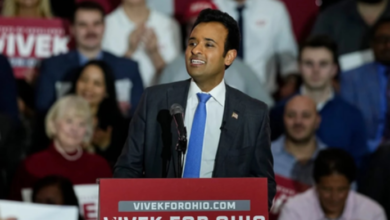
At least nine Indian-American Republicans are on the November ballot, according to community media tallies, led by entrepreneur Vivek Ramaswamy’s campaign for governor of Ohio.
Other candidates include Saritha Komatireddy, who is running for New York attorney general, three Republican nominees for the U.S. House of Representatives and several candidates seeking state legislative seats in New York, Tennessee, California and Michigan.
Their campaigns come as the Trump administration and Republican leaders pursue stricter immigration policies, including a proposed $100,000 fee on new H-1B visa petitions and the Labor Department’s suspension of PERM employment-based green card certifications for eight technology companies.
Indian professionals account for the largest share of H-1B visa beneficiaries, making the administration’s policies particularly consequential for the Indian-American community.
The debate over skilled immigration has also coincided with growing anti-Indian rhetoric in some conservative online circles, creating additional political challenges for Republican candidates of Indian descent.
Indian-American Democrats, meanwhile, have faced pressure from progressive challengers, with several losing primary contests earlier this year.
In Michigan’s 13th Congressional District, Rep. Shri Thanedar lost the August 4 Democratic primary to state Rep. Donavan McKinney, a democratic socialist supported by Sen. Bernie Sanders, Rep. Rashida Tlaib and Justice Democrats.
McKinney received 51.9% of the vote, compared with Thanedar’s 48.1%. Thanedar had previously separated himself from the Democratic Socialists of America in 2023.
A similar contest unfolded in Queens, New York, where Assemblywoman Jenifer Rajkumar, the first South Asian woman elected to state office in New York, lost her June 23 Democratic primary to David Orkin.
Orkin, a Democratic Socialists of America member backed by the organization’s New York City chapter, won 58.8% of the vote, while Rajkumar received 40.9%.
During the campaign, Rajkumar accused the organization of conducting a campaign of hate against her.
In Georgia, Indian-American Democrat Rahul Garabadu lost the June 16 runoff for state Senate District 7 to progressive candidate Ruwa Romman.
Romman, who received endorsements from Sanders and Rep. Alexandria Ocasio-Cortez, won 60.1% of the vote, compared with Garabadu’s 39.9%, according to the Georgia Secretary of State.
However, Indian-American candidates aligned with progressive politics have also found electoral support.
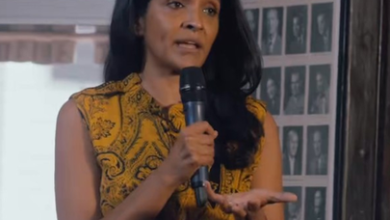
In Los Angeles, City Councilmember Nithya Raman is challenging incumbent Mayor Karen Bass in the November election.
Raman, who received Democratic Socialists of America support during her successful 2020 City Council campaign, led Bass 39% to 28% in a University of California, Berkeley Institute of Governmental Studies poll co-sponsored by the Los Angeles Times.
The survey, conducted September 15-20, found a substantial share of voters remained undecided. Raman and Bass are scheduled to participate Tuesday in the campaign’s only live televised debate.
In Texas, immigration attorney Pooja Sethi secured the Democratic nomination for state House District 47 in Austin after winning approximately 76% of the primary vote in March.
If elected in November, Sethi would become the first Indian-American member of the Texas Legislature.
The election contests highlight different political pressures facing Indian-American candidates across party lines.
Republican candidates are campaigning amid divisions over immigration policies that directly affect Indian professionals and their families, while Democratic candidates are confronting disputes over ideology, campaign financing and foreign policy.
Positions on Israel and Gaza, in particular, emerged as issues in the primary contests involving Thanedar and Rajkumar.
The results also demonstrate that candidates’ ethnic backgrounds do not necessarily determine their standing with voters, as policy positions and ideological differences increasingly shape contests within both parties.
With the November 3 elections approaching, Indian-American candidates are competing in races ranging from state legislatures to Congress and governorships, reflecting the community’s expanding participation in American politics. (Source: IANS)