
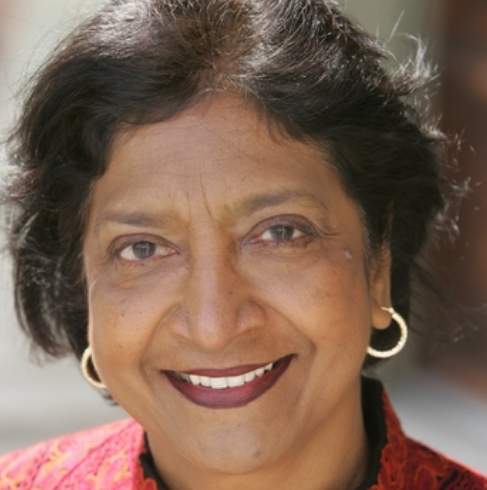

New Delhi — Indian-origin South African jurist Navanethem “Navi” Pillay, a former United Nations human rights chief and international judge known for her work on genocide and war crimes, was awarded the 2026 Nobel Peace Prize on Friday for her contributions to international law and human rights.
The Norwegian Nobel Committee recognized Pillay, 85, “for her efforts to promote peace and international law,” highlighting her decades of work advancing accountability for war crimes, crimes against humanity and genocide.
Born into a family of Indian Tamil descent in Durban, South Africa, Pillay became a pioneering legal figure during the apartheid era and later served in some of the world’s most prominent international judicial institutions.
The Nobel Committee praised her role in strengthening international justice, citing her judicial rigor, integrity and courage in defending human rights.
The committee emphasized that international legal institutions are facing increasing political pressure amid a growing number of armed conflicts. It said holding perpetrators accountable and ensuring justice for victims are essential to maintaining global peace.
Pillay began her legal career defending anti-apartheid activists and established her own law firm in 1967. She gained prominence for challenging discriminatory laws and exposing torture and unlawful interrogation practices.
In 1973, she secured a legal victory allowing political prisoners on South Africa’s Robben Island, including Nelson Mandela, access to lawyers and other fundamental rights.
Following the end of apartheid, Pillay became the first nonwhite woman appointed to South Africa’s High Court in 1995.
She subsequently joined the International Criminal Tribunal for Rwanda, where she became a judge and president in 1999. Her work helped establish that rape and sexual violence could constitute genocide and crimes against humanity.
She also contributed to landmark proceedings establishing accountability for hate speech and media propaganda used to incite atrocities.
Pillay joined the International Criminal Court in 2003 before leaving in 2008 to become the United Nations High Commissioner for Human Rights. She held that position until 2014, following an extension of her initial four-year term.
In 2019, she became an ad hoc judge at the International Court of Justice in a genocide case brought by Gambia against Myanmar. Hearings on the merits of the case concluded in January 2026.
Pillay also chaired the UN Independent International Commission of Inquiry on the Occupied Palestinian Territory from 2021 until November 2025.
In June 2024, the commission concluded that both Hamas and Israel had committed war crimes following the October 2023 attacks and subsequent military operations in Gaza.
In September 2025, the commission concluded that Israel had committed genocide during its military campaign in Gaza, an allegation Israel has rejected.
Earlier this year, Pillay received the Olof Palme Prize alongside fellow South African legal scholar John Dugard for their contributions to international justice and human rights.
The Nobel Committee said Pillay’s career demonstrates the importance of international law in resolving conflicts peacefully, particularly as courts and judicial institutions face mounting challenges worldwide. (Source: IANS)