US Bipartisan Congressional Delegation Meets Dalai Lama in Dharamsala
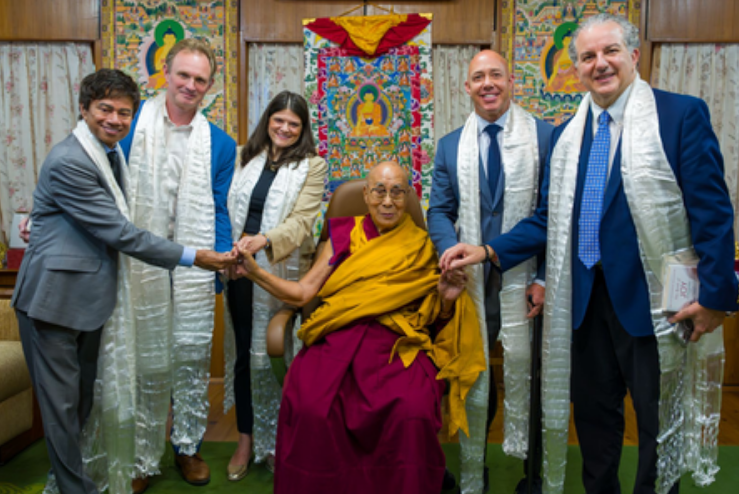

Dharamsala — A bipartisan U.S. congressional delegation led by House Foreign Affairs Committee Chairman Brian Mast met Tibetan spiritual leader the Dalai Lama at his residence in Dharamsala on Wednesday, as tensions between Washington and Beijing continue over Tibet and other issues.
The delegation included Representatives James Gallagher, Jimmy Patronis, Haley Stevens and Shri Thanedar. They were accompanied by Tibetan Prime Minister Penpa Tsering and Jigme Tsering of the New Delhi-based Office of the Dalai Lama.
A senior Central Tibetan Administration official said the visit demonstrated that the international community had not forgotten Tibet.
“Chinese repressive policies will not go unchallenged,” the official said.
Voice of Tibet, citing the 91-year-old Dalai Lama, said in a post on X that the Tibetan spiritual leader told the delegation that Tibetans around the world placed “great hopes” in him as they continued to preserve their struggle and traditions.
Speaking to reporters after the meeting, Mast said China was among the major subjects discussed and raised concerns about what he described as Beijing’s transnational repression.
“The threat from China in terms of transnational repression is far-reaching,” Mast said, alleging that Beijing monitors people and sends personnel to other countries to suppress activities it opposes.
“We believe in freedom and democracy for all of our people. These are fundamental differences between what China represents, what America represents, and what the people of Tibet seek,” he added.
Mast said the Dalai Lama also viewed a meeting between U.S. President Donald Trump and Chinese President Xi Jinping as important because they lead two of the world’s most powerful countries.
He said such talks would not diminish the delegation’s opposition to what it considers repression of people in China, including Tibetans and Uyghurs.
The delegation’s visit comes amid continued U.S.-China tensions over several issues, including human rights and Chinese policies in Tibet and Xinjiang.
China, which considers the Dalai Lama a separatist, has expressed serious concern over visits by U.S. lawmakers to Dharamsala.
The Dalai Lama has lived in India since fleeing Tibet in 1959.
Separately, the 17th Kashag of the Central Tibetan Administration released a revised version of its “Securing Tibet’s Future” vision paper, three years after the original document was introduced.
The revised paper is aimed at strengthening coordination between the CTA’s leadership and bureaucracy as it pursues what it describes as its two main responsibilities: seeking a resolution to the Sino-Tibet conflict and supporting the welfare of the Tibetan community in exile.
The document also calls for strengthening the CTA’s administrative capacity and improving the effectiveness of its operations. (Source: IANS)