Trump Praises Modi’s Anti-Drug Efforts, Backs Continued U.S.-India Cooperation
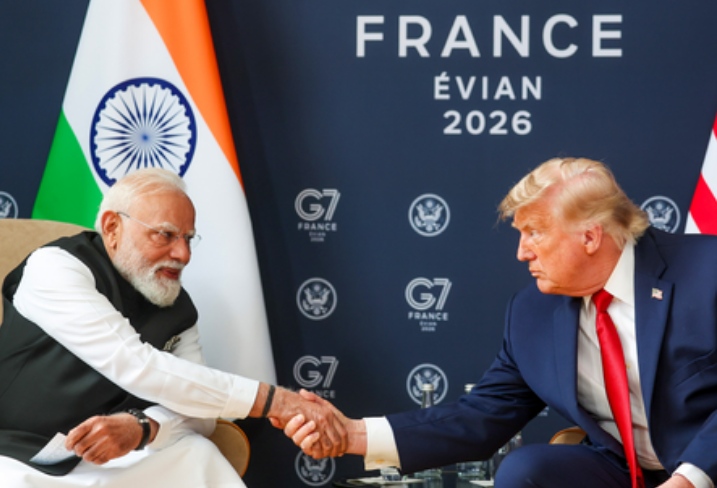

Washington — U.S. President Donald Trump has praised Prime Minister Narendra Modi’s efforts to curb illicit opium poppy cultivation and strengthen supply chain security, even as India remains on Washington’s list of major drug-transit or illicit drug-producing countries for fiscal year 2027.
India is among 23 countries on the broader list, but it was not among the four countries separately designated as having “failed demonstrably” to meet international counterdrug obligations. Those countries are Afghanistan, Bolivia, Myanmar and Colombia.
“I welcome Prime Minister Modi and the Government of India’s efforts to address illicit opium poppy cultivation and bolster supply chain integrity,” Trump said.
“I look forward to continued cooperation through the United States-India Drug Policy Framework.”
The presidential determination was submitted to Congress on Sept. 15 and released publicly the following day. It outlines the U.S. government’s assessment of major drug-producing and transit countries and international counterdrug cooperation.
Along with India, the list includes China, Pakistan, Afghanistan, Mexico and Colombia. The determination notes that inclusion on the list does not necessarily reflect the effectiveness of a government’s current counterdrug efforts or its cooperation with the United States.
Trump separately called for stronger action from several countries, including China, Canada and Mexico.
On China, Trump said Beijing remained a major source of precursor chemicals used to manufacture fentanyl, methamphetamine and other synthetic drugs. He called for additional chemical controls and stronger cooperation to support prosecutions.
Trump also urged Canada to step up efforts against clandestine drug laboratories and criminal networks involved in fentanyl and other synthetic drugs.
On Mexico, he credited President Claudia Sheinbaum’s government with increased drug seizures, the dismantling of clandestine laboratories and additional security deployments, while calling for stronger port inspections, supply chain safeguards and prosecutions of officials accused of assisting cartels.
The determination removed Venezuela from the group of countries designated as having failed demonstrably to meet their drug-control obligations, citing cooperation with its interim government.
The broader list is based on statutory definitions under the Foreign Assistance Act of 1961. Countries may be included because of geographic, commercial or economic factors that facilitate the production or movement of drugs and precursor chemicals, even when their governments are undertaking enforcement measures. (Source: IANS)