Pearls of Wisdom: The Post-50s Syndrome—The Life That Happened in a Few Seconds
Somewhere after 50, memory, mortality and the search for the self can make an entire lifetime feel like a fleeting moment.

By Upendra Mishra
BOSTON—I call it the post-50s syndrome. It can happen to almost anyone, although we experience it differently. Some people ignore it, dismissing it as a temporary phase of aging. Some fall deeply into it after years of self-reflection. And some experience it without even knowing what is happening to them.
For me, it began rather innocently.

One day I was working in my garden when, almost without warning, my mind began traveling backward through my life. First came childhood. Then my elementary school teachers, middle school, high school and university years. Then came the awkward years of chasing girls, making friends, traveling, falling in love, getting married, raising children, starting businesses and pursuing the many little pleasures and ambitions that make up a life.
And then something strange happened. It all seemed to happen in a few seconds. My entire life—decades of experiences, relationships, victories, disappointments, arguments, celebrations, journeys and ordinary days—flashed through my mind almost like a short movie trailer.
But, of course, it did not happen in a few seconds. It took more than half a century.
That was perhaps the first unsettling realization of the post-50s syndrome: a life that took decades to live can sometimes take only seconds to remember.
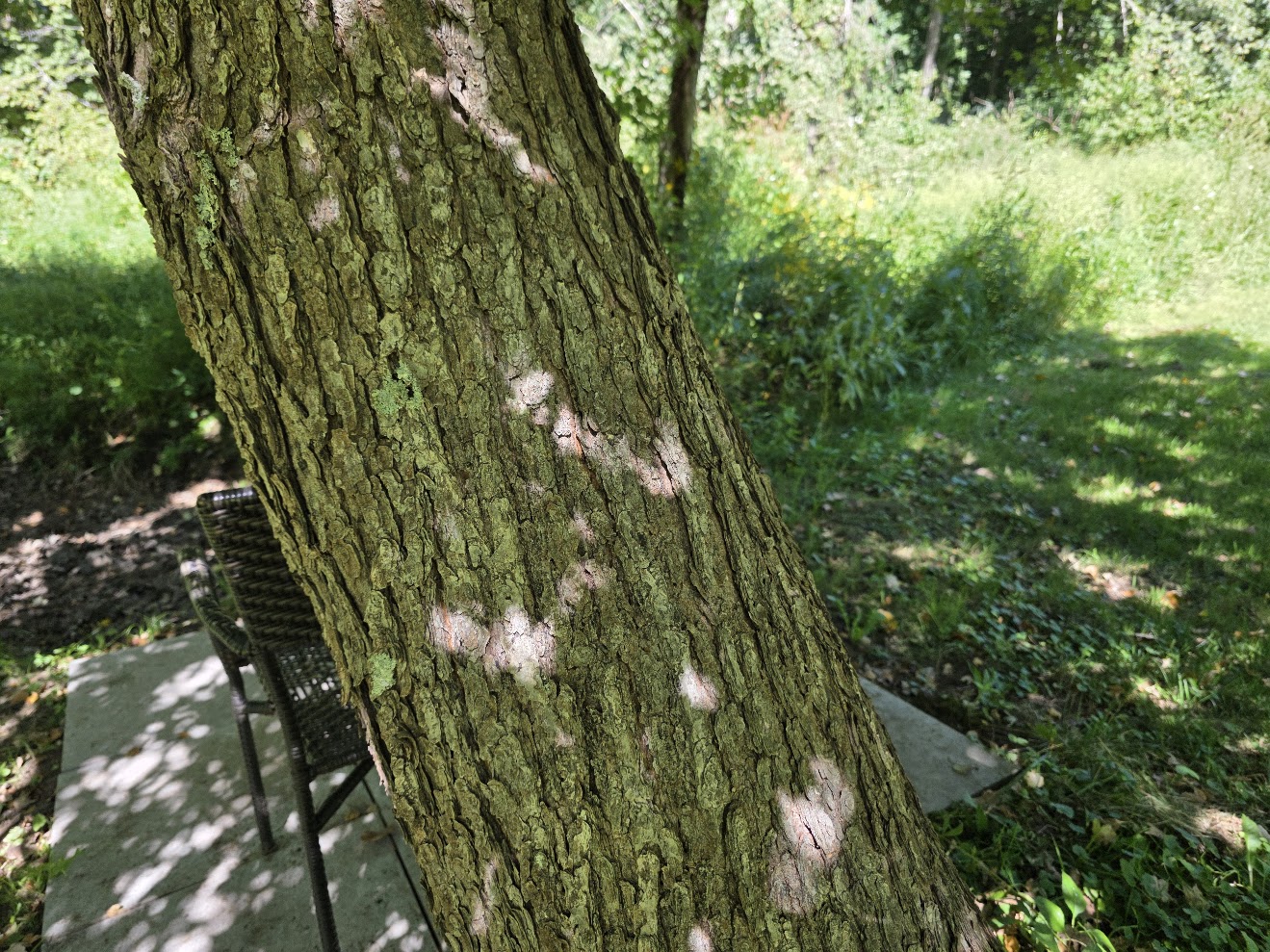
I looked up from the garden and saw a tree standing in front of me. I remembered that it had once been nothing more than a tiny sapling. When I was cleaning the garden years ago, I had noticed it several times. It was growing in an inconvenient place, and more than once I thought I should pull it out.
But somehow, I didn’t. I left it alone. The little sapling kept growing. Today, it is a gigantic tree. In the summer, it provides a generous patch of shade. I have even placed two chairs underneath it. Sometimes I sit there quietly, doing absolutely nothing. And whenever I do, I feel grateful that I did not pull out that little tree.
There is something strangely profound about that feeling. At the time, I thought I was simply leaving a weed or an unwanted sapling alone. Years later, I realize I had unknowingly made a small decision that would give me shade, beauty and companionship for years.
Perhaps life is full of such decisions.
We rarely know which tiny things we are nurturing and which things we are destroying. A conversation we thought was insignificant may become a lifelong friendship. A child we barely noticed may become someone important in our lives. A book read casually may alter the way we see the world. A place we almost did not visit may become a cherished memory.
And sometimes, a tiny sapling becomes the tree beneath which we sit decades later. That thought made me wonder about all the other things I had done in life.
Why did I argue with certain people? Why did I become angry over things that now seem so trivial? Why did I spend so much time trying to prove myself? Why did I love some people so deeply and disappoint others? Why did some relationships become permanent while others disappeared almost without a trace?
And, perhaps most importantly, what was I actually trying to accomplish? If an entire lifetime can eventually appear to us as a few flashes of memory, what exactly are we running after?
Is this life? And if this is life, what are we supposed to do with it?
The Mango Under the Tree
When I ask myself these questions, I often return to my childhood in India. I remember sitting beneath a mango tree in our mango orchard with my grandfather. One day, a beautifully ripe yellow mango fell from the tree. My grandfather picked it up and gave it to me.
I remember thinking: Why is he giving this to me? This is one of the sweetest mangoes in the entire orchard. Why doesn’t he eat it himself?
I insisted that he should have it. He smiled and said something I heard but did not understand: “I am like a ripe mango now. I can fall from the tree at any time. This is your time to eat.”
As a child, I listened to those words but could not comprehend their meaning. Today, I do. At that moment, my grandfather was not really talking about a mango. He was talking about time. He was talking about generations.
He was talking about the strange arrangement of life in which the young believe they have an endless supply of tomorrow, while the old understand that tomorrow is never guaranteed. I sometimes wonder what was going through my grandfather’s mind as he sat beside me.
Was he thinking about his own childhood? Did he remember his parents? Did he wonder where all those years had gone? Did he look at me and see not only his grandson, but another link in a chain that had already stretched backward through generations?
Perhaps he was experiencing the same questions I am experiencing now. And perhaps that is one of the humbling truths of being human. We imagine that our questions are uniquely ours.
They probably are not.
For hundreds, perhaps thousands, of generations, human beings have stood beneath trees, looked at the sky, watched their children grow, buried their parents and wondered the same things: Who am I? Why am I here? What is the meaning of life? What happens when it ends? What should I do with the time I have?
The names have changed. The civilizations have changed. The religions and philosophies have changed. But the questions remain remarkably similar.
Know Thyself
Ancient Greece carved the words Know Thyself—gnōthi seauton—into its philosophical tradition. Ancient India asked us to look inward through the Upanishadic inquiry into the nature of the Ātman, the Self. Hindu traditions speak of moksha or mukti, liberation from the cycle of bondage and ignorance.
Buddhism speaks of nirvana, liberation from craving, attachment and the suffering produced by our mistaken understanding of the self and reality. Taoism points toward living in harmony with the Tao, rather than constantly struggling against the natural movement of existence.
Different civilizations used different languages, metaphors and concepts, but beneath many of them was a similar invitation: Look within.
Do not spend your entire life trying to understand the world while remaining a stranger to yourself. Perhaps this is why the question becomes more urgent as we grow older.
When we are young, we are primarily concerned with becoming someone. We want an education. A career. Money. Recognition. A family. A house. A reputation.
We construct an identity and then spend decades protecting it. But somewhere after 50, the questions can begin to change. Instead of asking, What can I become? We begin asking: Who have I become?
And perhaps an even more uncomfortable question: Is this really who I am?
The Person We Created
This is where Carl Jung’s ideas become particularly interesting. Swiss psychiatrist and thinker Carl Jung argued that much of psychological life occurs outside our conscious awareness. We do not fully know ourselves because we are not fully conscious of ourselves.
As children, we begin developing a personality partly in response to our families, cultures, schools and society. We learn what is praised and what is rejected. We learn that certain behaviors make our parents happy. Other behaviors make them angry.
We learn what earns approval from teachers, friends and society. Slowly, we develop a public personality—a way of presenting ourselves to the world. Jung called one aspect of this constructed social personality the persona.
The persona is not necessarily false. We need it. A teacher needs to behave like a teacher. A parent needs to behave like a parent. A businessperson behaves differently in a boardroom than at the dinner table.
The problem begins when we mistake the mask for the entire face. We become so identified with the role we play that we forget there is a person underneath the role. We become a performer rather than an experiencer of life.
And then there is another part of Jung’s thinking that I find especially relevant to the post-50s experience: the shadow.
Meeting Our Shadow
The shadow, in Jungian psychology, represents those parts of ourselves that we have pushed out of conscious awareness. Some may be qualities society taught us were unacceptable: anger, jealousy, selfishness, fear, vulnerability, ambition or aggression.
But the shadow can also contain positive qualities we never learned to express—creativity, courage, independence, tenderness or even a desire for freedom.
What we reject does not necessarily disappear. It often goes underground.
We may tell ourselves, I am not an angry person. Yet we become furious when someone challenges us.
I am not jealous. Yet another person’s success makes us uncomfortable.
I don’t care about recognition. Yet we feel wounded when nobody notices our accomplishments.
The shadow can reveal itself precisely in the places where our reactions are disproportionately strong. Jung’s great insight was not that we should destroy the shadow. Rather, we should recognize it and integrate it. That is a very different idea.
Growing older, therefore, need not simply mean accumulating experience. It can mean becoming more honest about ourselves. Perhaps maturity is partly the courage to say:
Yes, I have been selfish.
Yes, I have been afraid.
Yes, I have sometimes wanted recognition.
Yes, I have hurt people.
Yes, there are parts of myself I have spent years hiding—even from myself.
This is not self-condemnation. It is self-knowledge. And without self-knowledge, how can there be genuine freedom?
Individuation: Becoming Whole
This leads to perhaps Jung’s most important concept for the second half of life: individuation. Individuation is not simply becoming more individualistic or independent.
It is the lifelong psychological process of becoming a more complete and integrated person—of discovering and reconciling the different parts of ourselves rather than allowing one socially acceptable version of ourselves to dominate everything else.
In the first half of life, we often build. We build careers. Families. Businesses. Homes. Reputations. Social identities. We learn how to function in the world. But Jung believed the psychological task can change in the second half of life.
The question is no longer only: How do I succeed in the world? It becomes: Who am I when I no longer need to prove myself to the world?
That can be an unsettling question. Because the identity we spent decades constructing may begin to feel strangely inadequate. The executive may retire. The children may leave home. The business may be sold. The body begins to change. Friends disappear. Parents are gone. The roles that once defined us begin falling away.
And suddenly we are left with ourselves. That can feel like a crisis. But perhaps it is also an invitation. Perhaps the post-50s syndrome is not a disease at all. Perhaps it is a summons to begin the second half of life.
The Tree and the Mango
Sometimes I think my grandfather understood this better than I did. He knew that a ripe mango eventually falls. He also knew that another mango will grow. That is the strange generosity of nature. One generation ripens and falls. Another generation grows.
The tree does not complain that the mangoes are falling. It simply continues. Perhaps we humans struggle because we become attached to being the mango rather than understanding the tree.
We want to remain young. Relevant. Powerful. Needed. We want to hold on to everything we have accumulated. But life keeps reminding us that holding on is not the same as living.
The mango eventually falls. The leaves fall. The branches change. The child becomes an adult. The parent becomes old. And one day, someone else will sit beneath the tree.
The Maple Sapling
That is also why I think about my maple tree. I left a tiny sapling because I could not be bothered to pull it out. Today, that little decision has become part of my life.
Two chairs sit beneath its shade. Sometimes I sit there alone. I look at the tree and wonder how many seasons it has witnessed. It has seen snowstorms and summer heat. It has seen my children grow. It has seen people come and go. It has silently occupied the same piece of earth while my own life has been moving at astonishing speed. The tree seems to know something I have spent decades forgetting: Growth does not need an audience.
It does not need applause. It does not need a résumé. It does not need to prove that it is growing. It simply grows. Perhaps there is wisdom in that.
Is This the Life?
So, is this the life? Maybe the answer is both yes and no. Yes, this is life—the ordinary accumulation of days, relationships, mistakes, achievements, disappointments, laughter, grief and love.
But perhaps that is only the outer layer. The deeper question is whether we ever become conscious of the life we are living. We can spend 80 years living and still never ask who was doing the living. We can accumulate possessions without knowing what we value. We can build a reputation without knowing ourselves.
We can be surrounded by people and remain strangers to our own inner world. That is why the ancient invitation to know thyself remains so powerful. Perhaps liberation does not necessarily mean escaping life. Perhaps it means seeing life clearly.
Nirvana, moksha, mukti, self-realization, individuation—these traditions come from very different philosophical worlds and should not be treated as identical concepts. But they share an intriguing family resemblance: the possibility of becoming less imprisoned by our compulsions, attachments and illusions about who we are.
Maybe freedom begins when we stop confusing our ego with our entire identity.
The ego asks: How am I doing? How do I compare? What do people think of me? What have I achieved?
The deeper self asks a different question: What is true? And perhaps, after 50, we finally have enough life behind us to begin asking it seriously.
The Second Half
Maybe growing older is not primarily about losing youth. Maybe it is about gaining perspective. The first half of life often teaches us how to enter the world. The second half may teach us how to step back from it.
We begin to understand that not every argument needs to be won. Not every insult needs an answer. Not every ambition needs to be pursued. Not every relationship needs to be preserved. Not every possession needs to be accumulated.
And not every question needs an immediate answer.
Sometimes wisdom is simply knowing what deserves our energy. I still have questions. Perhaps more than I had when I was young. But the questions have changed.
When I was young, I wanted answers so I could move forward. Now I sometimes want questions that help me pause. I sit under my maple tree and think about my grandfather beneath the mango tree thousands of miles away.
He gave me a mango because he believed his time was limited. I left a sapling because I did not think much about time at all. Between those two trees lies much of what I now understand about life. One reminds me that we are temporary. The other reminds me that what we leave behind can continue growing.
Perhaps that is enough wisdom for one lifetime. Perhaps the purpose of life is not to conquer the world, as I once imagined. Perhaps it is to understand ourselves well enough that, when our time comes to leave, we can do so without feeling that we never really lived.
The mango falls. The sapling becomes a tree. The child becomes the grandfather. And somewhere along the way, if we are fortunate, we finally begin to recognize ourselves.
Maybe that is what the post-50s syndrome really is. Not the end of life. But the moment we finally begin to see it.
(Upendra Mishra is the founder of Precise Marketing & Media and a leading advocate for rethinking how marketing drives business growth. Through his “Marketing Upside Down” perspective, he challenges the traditional focus on marketing activity and instead emphasizes revenue as the only metric that matters.With more than 30 years of experience, Upendra has developed the Precise Marketing System, a proven framework that helps companies uncover revenue leaks, focus on high-value opportunities, and build scalable growth engines. His approach has delivered measurable results, including helping a company grow from $14 million to $55 million in just three years. He is the author of Precise Marketing: The Proven System for Growing Revenue in a Noisy World, where he outlines his philosophy for succeeding in today’s crowded and uncertain marketplace. He is also the author of After the Fall: How Owen Lost Everything and Found What Truly Matters. For more, vivit: www.UpendraMishra.com)