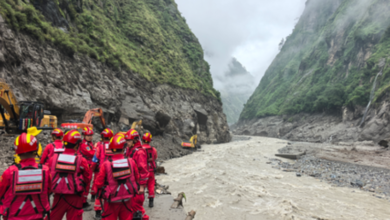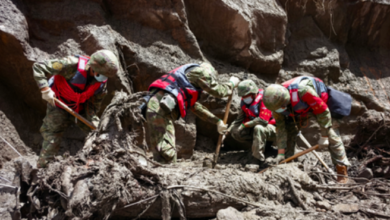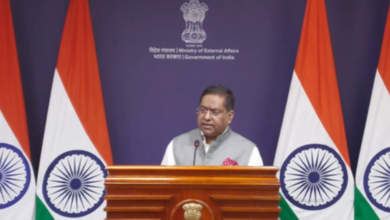
Nepal Flood Tragedy Puts Himalayan Regional Cooperation in the Spotlight
Experts and regional lawmakers call for real-time disaster data, stronger preparedness and climate-focused diplomacy as glacier instability raises cross-border risks
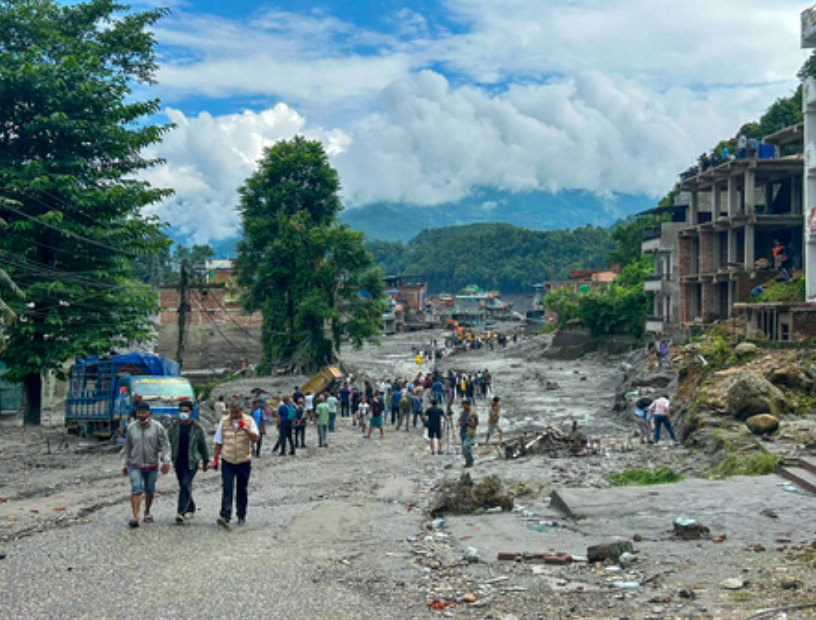

NEW DELHI — The devastating flash floods in Nepal have renewed calls for stronger regional cooperation across the Hindu Kush Himalaya, where disasters triggered by unstable glaciers, landslides and extreme weather can quickly cross national borders.
The tragedy has underscored the need for Himalayan nations to make ecological security a central part of their diplomatic relationships, according to reports from Nepal and regional experts.
Nepali newspaper Kantipur has called on Kathmandu to move quickly on what it described as “disaster diplomacy,” including efforts to finalize an implementation framework for a proposed mechanism with China to exchange real-time information on floods, landslides and potential glacial lake outburst floods.
A proposed warning system remains unfinished
China and Nepal have previously agreed in principle to share cross-border information about floods and landslides and identify potential risks from glacial lake outburst floods. However, according to the reports, a formal agreement establishing how the mechanism would operate has yet to be finalized.
The issue was raised by Nepal’s Foreign Minister Shisir Khanal during a visit to China in May, but a formal implementation arrangement has not yet been signed.
The recent disaster has added urgency to calls for such cooperation.
Beyond information sharing, experts and policymakers say long-term environmental risks need to be considered when countries plan roads, bridges, hydropower facilities and other major infrastructure near international borders.
Regional lawmakers call for collective action
The disaster was also discussed at the second Hindu Kush Himalaya Parliamentarians’ Meet in Thimphu, Bhutan, where lawmakers from across the region gathered this week.
According to the International Centre for Integrated Mountain Development, or ICIMOD, participants observed a moment of silence for the victims and their families.
The lawmakers emphasized stronger disaster preparedness, collective action and sustained regional cooperation to address climate risks that do not stop at national boundaries.
ICIMOD, an intergovernmental organization headquartered in Kathmandu, works across eight Hindu Kush Himalaya countries: Afghanistan, Bangladesh, Bhutan, China, India, Myanmar, Nepal and Pakistan.
The organization later analyzed satellite imagery of the disaster and concluded that a massive rock-and-ice avalanche occurred in Nepal, blocking the Lhende River and triggering a series of floods downstream.
Glacial collapse, not an earthquake
Initial reports about the event suggested that seismic activity may have been responsible. That assessment was later revised.
The U.S. Geological Survey said additional analysis of seismic waves and satellite imagery indicated that the event was a glacial collapse and debris flow rather than an earthquake.
The finding has shifted attention toward the increasing instability of high-altitude environments in the Himalayas.
Reports have pointed to climate change and nearby construction as possible contributing factors, although determining the precise causes of such a major collapse can take time.
Environmental publication Mongabay likewise reported that a glacier collapse and landslide along the Tibet-Nepal border triggered the flooding.
The incident illustrates the danger posed by unstable mountain slopes and glaciers situated above populated valleys and river systems.
The challenge of predicting sudden disasters
For communities immediately downstream, traditional early-warning systems may offer little protection when enormous masses of ice and rock collapse without sufficient advance warning.
That makes prediction and risk mapping particularly important, experts and reports have argued.
One proposed approach is comprehensive mapping of unstable, ice-covered slopes above specified gradients, allowing scientists and governments to identify areas where a sudden collapse could threaten communities downstream.
Such mapping would require cooperation across borders, particularly in the high Himalayas, where mountain systems and watersheds frequently span multiple countries.
The region’s vulnerability is becoming increasingly significant as global temperatures rise. Changes in glaciers, snow cover and permafrost can alter the stability of mountain slopes and increase the potential for sudden floods and landslides.
From disaster response to disaster diplomacy
The Nepal tragedy is therefore emerging as more than a national disaster. It is a warning about the interconnected environmental risks facing the entire Hindu Kush Himalaya.
Regional experts say countries need to move beyond responding to disasters after they occur and invest in joint monitoring, scientific research, data sharing and coordinated emergency planning.
For Nepal and its neighbors, the challenge is particularly urgent. Rivers, glaciers and mountain systems do not follow political boundaries, and a disaster originating high in the Himalayas can affect communities far downstream.
The lesson from the latest tragedy, regional observers say, is clear: effective Himalayan disaster preparedness will require countries to share not only water and mountains, but also information, science and responsibility. (Source: IANS)