Indian Railways Emerges as World’s Second-Largest Freight Carrier; Bulk Cargo, Electrification Drive Growth
Dedicated freight corridors, rising commodity loading, Gati Shakti terminals and a fully electrified broad-gauge network are strengthening rail’s role in India’s logistics ecosystem
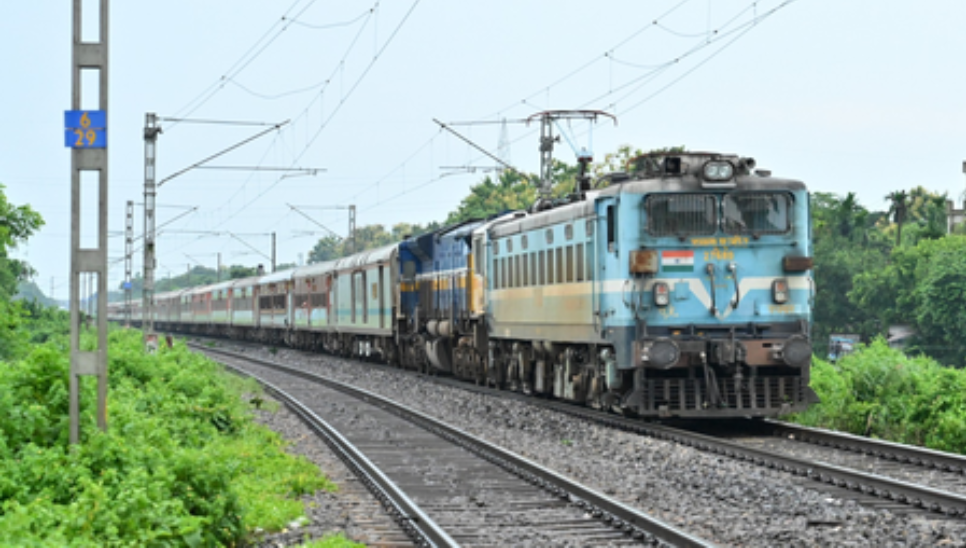

NEW DELHI— Indian Railways has strengthened its position as the world’s second-largest freight carrier, supported by its extensive rail network, dedicated freight corridors, policy initiatives and growing focus on cost-efficient and sustainable logistics.
A key factor behind the railway’s freight performance is its vast network spanning more than 68,000 km across the country, allowing it to serve as a critical link between mines, manufacturing centres, agricultural markets, ports and consumption hubs.
The commissioning of the Eastern Dedicated Freight Corridor (EDFC) and Western Dedicated Freight Corridor (WDFC) has further expanded freight-carrying capacity. The corridors enable heavy-haul and double-stack container operations while freeing capacity on conventional railway routes for both freight and passenger services.
Indian Railways also remains the backbone of bulk commodity transportation, with coal accounting for nearly half of its total freight movement. Iron ore, cement, foodgrains and fertilisers constitute other major segments of railway freight traffic.
According to Railways Ministry data, several major commodity groups recorded strong year-on-year growth in July 2026.
“Iron ore loading increased by 22.2 per cent, coal by 11.5 per cent, food grains by 11.5 per cent, fertilizers by 12 per cent and balance other goods by 12.1 per cent, reflecting strong demand from infrastructure, manufacturing and agricultural sectors,” the ministry said.
With demand for coal rising at thermal power plants, Indian Railways increased domestic coal supplies to power plants by 20 per cent in July compared with the corresponding month last year, according to the ministry.
Overall, Indian Railways handled around 1.7 billion tonnes of freight during 2025-26, underlining its growing role in India’s logistics network.
Rail freight is estimated to cost about 45 per cent less than road transportation on a per tonne-kilometre basis. A single freight train can also replace more than 300 trucks, helping reduce logistics costs while easing congestion and pressure on highway infrastructure.
Government efforts to strengthen multimodal connectivity and streamline logistics have provided an additional boost to rail freight.
Initiatives such as PM Gati Shakti and the National Logistics Policy are aimed at improving supply-chain efficiency and encouraging a greater shift of cargo movement from roads to railways.
The development of Gati Shakti Cargo Terminals (GCTs) is another component of the strategy to expand rail-based logistics.
As of August 7, a total of 142 Gati Shakti Cargo Terminals had been commissioned, with an estimated freight-handling capacity of 224 million tonnes per annum (MTPA).
The terminals have mobilised approximately Rs 10,000 crore in private investment, while freight handled through GCTs during 2025-26 stood at 146 million tonnes, according to government data.
Logistics companies, including the Container Corporation of India (CONCOR), have also played an important role in expanding containerised rail freight and supporting the transition towards more integrated logistics networks.
Technology and sustainability are further strengthening the competitiveness of rail freight.
With the broad-gauge network now fully electrified, Indian Railways has significantly reduced its dependence on fossil fuels and increased the efficiency of freight operations.
Double-stack container services and long-haul freight trains capable of carrying up to 360 TEUs have further improved capacity utilisation.
According to the Railways Ministry, these services can reduce transit times by up to 50 per cent and lower carbon emissions by nearly 70 per cent compared with road transportation.
The combination of dedicated freight infrastructure, high-volume bulk commodity movement, electrification, containerisation and multimodal logistics is positioning Indian Railways as a central pillar of India’s effort to build a more efficient and sustainable freight ecosystem. (Source: IANS)